Are Weighted Baby Sacks Safe?
We may earn a commission for purchases made using our links. Please see our disclosure to learn more.
If you’re staring at the ceiling at 2 a.m., googling “how to get my baby to sleep longer,” you’re not alone. You’ve probably seen weighted baby sacks pop up in your feed promising deeper sleep and fewer wakeups. But are they actually safe? And what should you try instead if you want better nights without risking your baby’s safety?
In this friendly guide, we’ll unpack what weighted sacks are, what leading pediatric groups say, how gentle pressure can affect tiny chests, smarter alternatives to consider first, and—because you asked—we’ll also review popular Amazon sleep sacks (weighted and unweighted) with quick pros/cons and a comparison table. By the end, you’ll feel clear, confident, and calm about your next move.
What are weighted baby sacks?
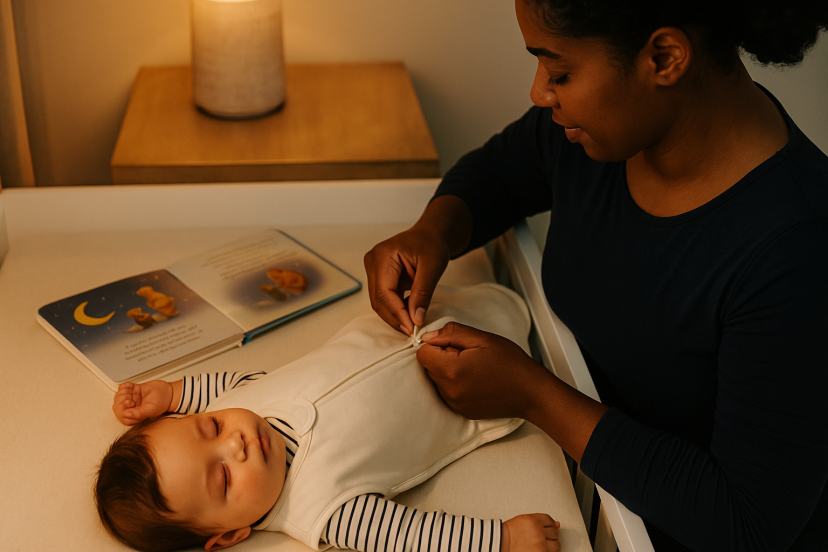
Weighted baby sacks (sometimes called weighted sleep sacks or “gently weighted” sacks) are wearable blankets with added weight or pressure pads, usually on the chest. The idea is to mimic a parent’s palm—like a hug—to help babies settle. (You’ll also see unweighted sleep sacks, which are just wearable blankets that replace loose bedding.)
Why parents consider weighted sacks
You’re tired. Your baby’s startle reflex is intense. Naps are short, nights are choppy. The promise of a little extra pressure that “feels like your hand” can sound magical. Many families report temporary improvements—but safety comes first, always.
The quick safety answer
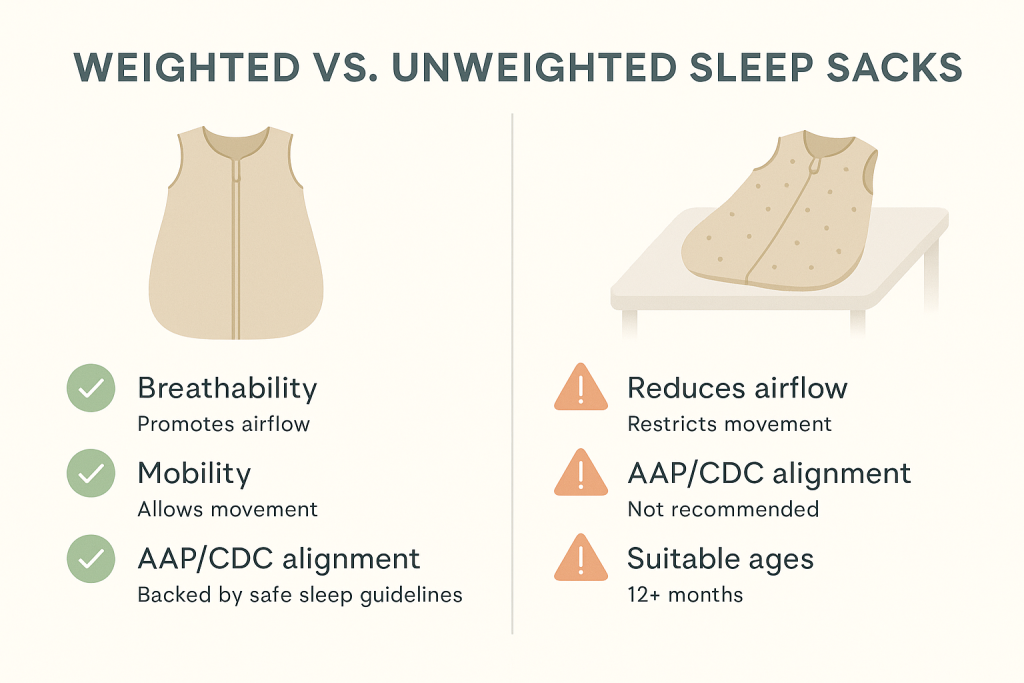
Major pediatric and public health organizations do not recommend weighted products for sleeping infants. That includes the American Academy of Pediatrics (AAP), the Centers for Disease Control and Prevention (CDC), and the U.S. Consumer Product Safety Commission (CPSC). Their guidance: avoid weighted sleepers, swaddles, sleep sacks, and blankets for infants.
What pediatric experts say (AAP, CDC, CPSC)
- AAP (2022 policy): Weighted swaddles or any weighted objects on/near a sleeping infant are not recommended. There’s no evidence they’re safe, and they may restrict breathing or movement.
- CDC (2024): “Products labeled as weighted—including weighted sleepers, swaddles, sleep sacks, and blankets—are not safe for infants.”
- CPSC statements (2024): The agency warns parents: “Don’t use weighted blankets or weighted swaddles.” Several major retailers have pulled weighted infant products citing these concerns.
Bottom line: these organizations are aligned. If a product adds weight for infant sleep, they say skip it.

How pressure can affect tiny chests
Even “gentle” weight can increase the effort needed to breathe for babies with small chests and immature respiratory control. That extra load can also reduce a baby’s ability to reposition, especially in sleep. These are the core concerns behind the AAP/CDC/CPSC guidance. (Some clinical work has tied face- or chest-related pressures and materials to measurable changes in oxygen/carbon dioxide—another reason experts advise caution.)
Age and development: rolling, reflux, and prematurity
As babies grow, rolling begins—and with rolling, freedom to move becomes essential for safe sleep. Infants who are premature, have reflux, low tone, or respiratory issues may be even more vulnerable to any added weight. That’s why “no weighted products” is applied broadly rather than by age bracket.
Safe sleep basics that never change
Think of these as your “always rules” for the first year:
- Back to sleep on a firm, flat surface.
- No loose bedding or pillows.
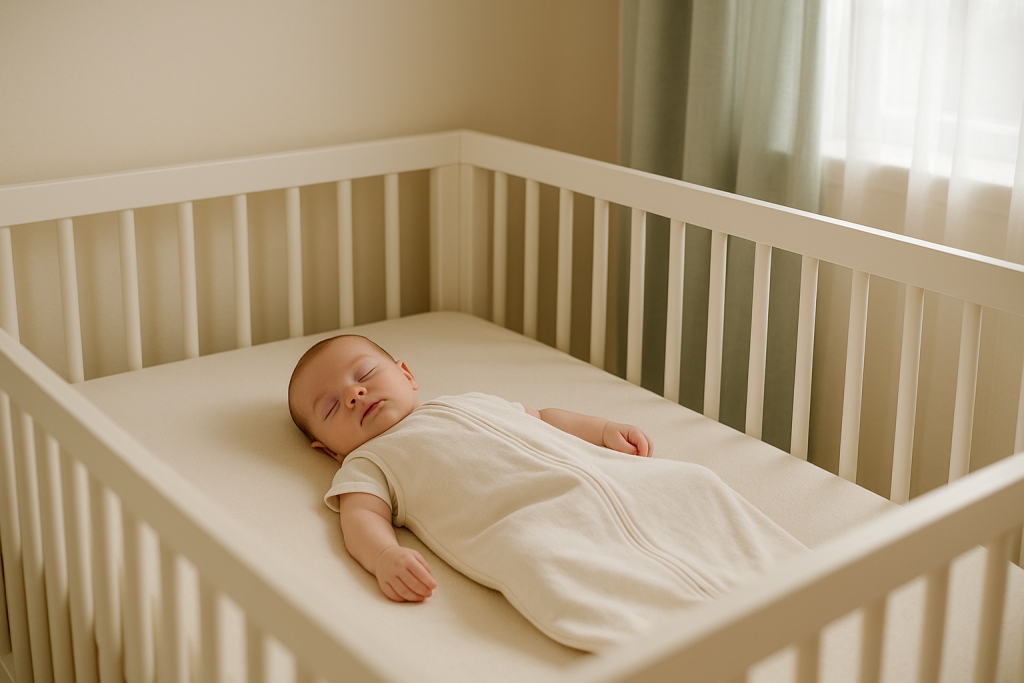
- Wearable blanket (unweighted) instead of blankets.
- Discontinue swaddling at the first signs of rolling.
Smarter alternatives to try first
You have options that align with safety guidance:
- Unweighted sleep sacks (properly sized, appropriate TOG).
- Room environment tweaks: dark, cool, white noise.
- Routines: a short, repeatable wind-down (feed, burp, cuddle, song).
- Daytime rhythm: age-appropriate wake windows help nights.
- Responsive settling: soothing in-crib without adding weight.
These are boring compared to a “miracle sack”—but they’re safe and effective over time.
Gentle routines that build better sleep
If you’re curious about easing toward independent sleep without tears-on-tears, read up on gentle sleep training basics—what it is, why it’s not “all or nothing,” and how to pace it kindly for your family. (Start here: a beginner-friendly guide to sleep training.)
Already bought one? Safety steps to discuss with your doctor
If a weighted baby sack is already in your drawer, bring it to your pediatrician appointment. Ask:
- “Given my baby’s health and size, is any added weight acceptable?”
- “If we shouldn’t use this, what’s your top unweighted alternative?”
- “How can we reduce night wakes without added weight?”
Many clinicians will advise against using it; having the conversation helps you move forward with a clear plan.
Red flags: when to stop immediately
Stop and call your pediatrician if you notice:
- Labored breathing, color changes, or unusual sleepiness.
- Rolling while swaddled (weighted or unweighted) or restricted movement.
- Overheating (sweaty neck, damp hair).
These are universal red flags—weighted or not.
How to read product claims and labels
Marketing can be persuasive. Before you buy:
- Look for explicit weight statements (or the lack of them).
- Favor unweighted designs that name their TOG and show sizing clearly.
- Be skeptical of claims implying medical benefits or “safer than the AAP” logic.
- Remember: a retailer listing ≠ a safety endorsement. Big sellers have pulled weighted infant products after safety concerns.
Amazon picks: weighted & unweighted options (with notes)
Important: The AAP, CDC, and CPSC advise against weighted products for infants. If you choose to purchase despite that guidance, do so only with your pediatrician’s approval. We include two weighted brands because parents ask about them; we also include three unweighted alternatives aligned with expert recommendations.
1) Nested Bean Zen Sack® Classic (gently weighted)
What it is: A “lightly weighted” sack with a chest pad meant to mimic your hand.
Features: 100% cotton; ~0.5 TOG; 2-way zipper; sizes to 24 months.
Pros: Soft, easy diaper changes; many colorways.
Cons: “Weighted” design conflicts with AAP/CDC/CPSC guidance.
Best for: Parents who, after medical guidance, still plan to try a lightly weighted option.
Review snapshot: Fans say the chest pad helps settling; critics cite safety guidance and mixed results.
2) Dreamland Baby Dream Weighted Sleep Sack
What it is: A weighted wearable blanket with distributed beads (“gently weighted”).
Features: Various sizes and fabrics; even weight distribution.
Pros: Some parents report longer stretches.
Cons: Conflicts with AAP/CDC/CPSC guidance; availability may vary by region/retailer.
Best for: Only with pediatrician approval; consider unweighted Dreamland alternatives instead.
Review snapshot: Strong fanbase; ongoing safety controversy and retailer pullbacks.
3) HALO SleepSack (unweighted)
What it is: Classic unweighted wearable blanket that replaces loose bedding.
Features: Cotton options; swaddle versions for newborns; clear TOG info; 2-way zips.
Pros: Widely recommended; hospital-used; aligns with safe sleep guidance.
Cons: Sizing can run specific; check chart.
Best for: Most families seeking a safe, simple sack.
Review snapshot: Praised for ease and consistency.
4) Burt’s Bees Baby Beekeeper Wearable Blanket (unweighted)
What it is: 100% organic cotton sack in multiple TOGs and sizes.
Features: GOTS-certified organic cotton; roomy design.
Pros: Breathable, budget-friendly; lots of prints.
Cons: Arm openings can feel snug for some babies—check size chart.
Best for: Parents wanting organic fabrics and value.
Review snapshot: Loved for softness and simple care.
5) Kyte Baby Sleep Bag (unweighted)
What it is: Bamboo-rayon sleep bag in several TOGs (0.5–2.5), sizes, and colors.
Features: Buttery-soft feel; good temperature range options; zipper garage.
Pros: Comfort-forward; many TOG choices.
Cons: Pricier than basic cotton sacks.
Best for: Families prioritizing softness and premium feel.
Review snapshot: Frequently praised for fabric and warmth-to-weight balance.
Comparison table: five popular sacks at a glance
| Model | Key Spec(s) | Warranty | Approx Price/Tier | Best For |
| Nested Bean Zen Sack Classic (gently weighted) | 100% cotton; ~0.5 TOG; 2-way zipper | Manufacturer policy varies; see listing | Mid | Parents who still consider “lightly weighted” after clinician input |
| Dreamland Baby Dream Weighted Sleep Sack | Evenly distributed weight; multiple sizes | Manufacturer policy varies; see listing | Premium | Only with pediatrician approval; otherwise consider unweighted alternatives |
| HALO SleepSack (unweighted) | Cotton; swaddle or sack; clear sizing | Manufacturer policy varies; see listing | Budget–Mid | Most newborns/infants; simple, safe swap for blankets |
| Burt’s Bees Baby Beekeeper (unweighted) | 100% organic cotton; multiple TOGs | Manufacturer policy varies; see listing | Budget | Value seekers wanting organic fabrics |
| Kyte Baby Sleep Bag (unweighted) | Bamboo-rayon; multiple TOGs | Manufacturer policy varies; see listing | Mid–Premium | Comfort-focused families and varied room temps |
(Availability and pricing tiers can change by size/color and region.)
Quick decision guide for tired parents
- Want to follow expert guidance? Choose an unweighted sleep sack with the right TOG for your room, and build consistent routines.
- Already own a weighted sack? Pause and talk with your pediatrician before use.
- Feeling stuck? Focus on nap timing, wake windows, and gentle in-crib soothing. It’s not flashy—but it works.
Research: What science says and what parents ask
- AAP Clinical Policy (2022): The AAP’s comprehensive safe-sleep policy advises no weighted swaddles, sacks, or blankets for infants and provides detailed evidence behind the recommendation. It also reiterates back-sleeping on a firm, flat surface and stopping swaddling at first signs of rolling. Read the policy: AAP 2022 Sleep-Related Infant Deaths recommendations.
- CDC Guidance (2024): The CDC’s safe sleep page clearly states that weighted sleepers, swaddles, sleep sacks, and blankets are not safe for infants and offers practical steps to create a safe sleep space. Read the CDC page: Helping Babies Sleep Safely.
Context you may have seen in the news: Multiple retailers halted sales of weighted infant products after agency warnings, and litigation involving major weighted brands is ongoing—underscoring the uncertainty and caution around these products.
FAQs
Do weighted baby sacks help with the startle (Moro) reflex?
They may feel calming for some babies, but major health groups advise against using added weight during sleep because of breathing and movement risks. Try swaddling for newborns (until rolling) or an unweighted sleep sack instead.
Is it safe for newborn babies to use weighted baby sacks?
No. The AAP, CDC, and CPSC do not recommend them for any infant age. For safer options, use a properly sized unweighted sleep sack and follow safe sleep guidelines.
What TOG should I choose for an unweighted sack?
Match TOG to room temperature (e.g., ~0.5–1.0 TOG for warmer rooms; higher TOG for cooler rooms). Dress baby lightly and avoid overheating. Check each brand’s TOG chart.
Can I use a weighted sack once my baby rolls?
Rolling increases the need for free chest expansion and movement—another reason experts say no to weighted products. Choose an unweighted sack and stop any swaddle once rolling begins.
What are the safest alternatives to weighted baby sacks?
Unweighted sacks (HALO, Burt’s Bees, Kyte Baby, ergoPouch), a consistent bedtime routine, and age-appropriate wake windows. If you want to improve sleep skills gently, start with gradual, responsive techniques (see the linked sleep training intro above).
Conclusion
If you remember just one thing, let it be this: Your baby’s safety matters more than any quick fix. While weighted baby sacks sound comforting, the most trusted pediatric sources say to avoid them. The good news? You don’t need weights to build great sleep. A steady routine, an unweighted wearable blanket with the right TOG, and age-appropriate timing can gently transform your nights.
You’re doing a wonderful job—even on the wobbly days. Start small this week: pick one routine tweak, choose a safe unweighted sack, and keep the bedtime tone calm and predictable. Better nights are coming. You’ve got this. 💛