Benefits Of Bamboo Baby Bedding
We may earn a commission for purchases made using our links. Please see our disclosure to learn more.
You know that moment at 2 a.m. when you’re staring at the baby monitor thinking, “Are they too hot? Too cold? Why is their cheek red? Is it the sheet?”
That’s often where the search for bamboo baby bedding begins.
You hear words like “breathable,” “hypoallergenic,” and “eco-friendly” and you’re trying to figure out: Is this actually better for my baby… or just good marketing?
In this guide, we’ll walk through what bamboo baby bedding really is, how it can help your little one sleep more comfortably, what’s hype vs fact, how to choose the right set, and even a few carefully picked product ideas and research-backed insights so you can feel confident about what’s touching your baby’s skin.
Quick note: This article includes affiliate links, which may earn a small commission at no extra cost to you.
What Makes Bamboo Baby Bedding Different?
When you see “bamboo” on crib sheets or baby blankets, it almost always means viscose (or rayon/lyocell) made from bamboo – not raw bamboo stalks woven into fabric.
Bamboo fibers are cellulosic (plant-based), and when processed well they tend to be:
- Very soft and smooth
- Highly breathable
- Good at managing moisture (pulling sweat away from the skin)
Textile research on bamboo-based fabrics shows strong moisture vapor transfer and air permeability, which are two big reasons they feel cooler and less “clammy” than many conventional synthetics.
In baby language: they help your little one feel less sticky and more comfy.
Key Benefits Of Bamboo Baby Bedding For Your Little One
Here’s why parents keep raving about bamboo baby bedding:
- Soft on delicate skin – Bamboo fibers create a silky-smooth surface that feels gentle on cheeks, tummies, and chubby legs.
- Great for warm sleepers – The fabric’s breathability and moisture-wicking help keep baby from overheating as easily.
- Comfortable in changing seasons – Good bamboo fabrics help buffer temperature swings, so your baby isn’t freezing at 3 a.m. and sweaty at 5 a.m.
- Potentially gentler for allergy-prone babies – Some bamboo bedding resists dust-mite buildup and helps keep moisture low, which can matter for babies with allergies or eczema, though “hypoallergenic” isn’t a regulated term.
Think of it as creating a tiny, breathable microclimate around your baby’s body.
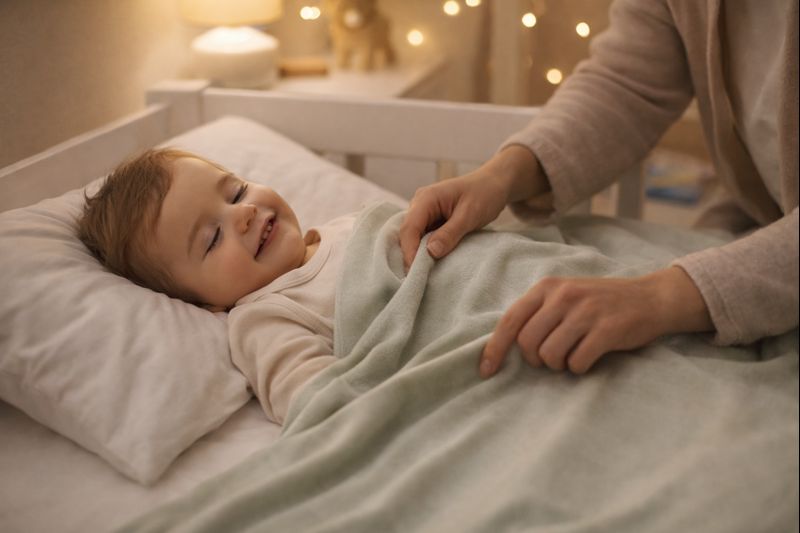
Is Bamboo Baby Bedding Safe For Newborns?
Short answer: Yes, bamboo fabric can be safe for newborns – but safety depends more on how you use bedding than what it’s made of.
Safe sleep organizations and the American Academy of Pediatrics (AAP) consistently recommend:
- A firm, flat mattress
- A snug, fitted sheet (bamboo is fine here)
- No loose blankets, pillows, quilts, or bumpers in the crib for babies under 12 months
- Using a wearable blanket or sleep sack instead of loose blankets
So for newborns, the safest way to use bamboo is:
- A well-fitting bamboo crib sheet
- Optional bamboo sleep sack or swaddle (if your baby is at an appropriate age and still swaddling safely)
The fiber itself isn’t the safety issue. Loose, fluffy items are.
Bamboo Baby Bedding For Sensitive Skin And Eczema
If your baby tends to get mystery rashes, dry patches, or eczema, fabric choices matter.
Bamboo-based fabrics:
- Have a smooth, less abrasive surface than many rough cotton weaves
- Handle moisture well, which can help reduce that sweaty/irritated cycle in warm climates
- Are often used in hypoallergenic baby bedding lines marketed for sensitive skin
Some pediatric dermatology resources and baby-care brands note that breathable, moisture-wicking fabrics (including bamboo) may help reduce irritation in eczema-prone babies, but they’re not a cure. The main rules still apply: fragrance-free detergent, gentle washes, and following your pediatrician’s skincare plan.
A simple mental check: if your baby gets less rashy on bamboo pajamas vs cheaper, scratchy synthetics, they’ll probably enjoy bamboo crib sheets too.
Temperature Regulation And Breathability: Helping Babies Sleep Cooler
Overheating is a known risk factor in unsafe sleep environments, which is why experts constantly talk about “not too hot, not too cold.”
Studies comparing bamboo-based fabrics with cotton and standard viscose show that regenerated bamboo often offers:
- Better moisture absorption
- Strong moisture vapor transmission (letting sweat evaporate more easily)
- Good air permeability, which helps the fabric “breathe”.
That combo helps your baby:
- Sweat less and dry faster
- Feel less clammy in humid rooms
- Maintain a more stable skin temperature through the night
If you live somewhere warm or don’t have perfect AC, breathable bamboo baby bedding can make noticeable difference in those sticky early-morning hours.
Eco-Friendly And Sustainable Baby Bedding Choice
Part of the appeal of bamboo baby bedding is the eco halo. Bamboo plants:
- Grow extremely fast
- Need relatively little land
- Often require fewer pesticides than some conventional crops
However, most bamboo bedding is “viscose from bamboo”, which is made using chemical processing. Modern, closed-loop systems can recover and reuse most of these chemicals, but not every manufacturer does this perfectly.
So, what’s a realistic takeaway?
- Bamboo bedding can be more sustainable than many polyester-heavy or conventional cotton options.
- Look for brands that mention eco-certifications (like OEKO-TEX Standard 100) and responsible manufacturing.
Eco-friendly-ish? Yes. Magical zero-impact? No. But it’s a solid step toward sustainable baby bedding when you choose good brands.
Types Of Bamboo Baby Bedding You’ll See In Stores
You’ll see “bamboo” pop up on lots of nursery items. Common ones:
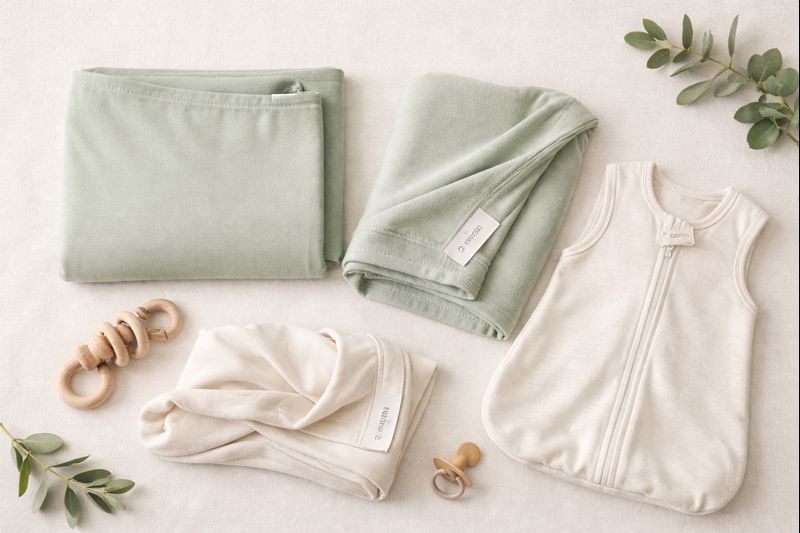
- Organic bamboo crib sheets – Everyday essential; where your baby spends the most time sleeping.
- Bamboo swaddle blankets / muslin wraps – Great for newborns (used safely and age-appropriately) and later as stroller covers.
- Bamboo wearable blankets (sleep sacks) – A safer alternative to loose blankets for babies under 1 year.
- Bamboo baby blankets – Lovely for supervised naps on your chest, stroller walks, or tummy time.
- Toddler bamboo bedding – Lightweight blankets, toddler pillowcases, and sometimes full toddler bed sets.
The trick is matching the right item to the right age and using it within safe sleep guidelines.
Creating A Calming Bedtime Routine With Bamboo Baby Bedding
Bamboo bedding is just fabric… until you turn it into a sleep cue.
You might build a routine like:
- Warm bath
- Gentle baby massage
- Pajamas + bamboo sleep sack
- Dim lights, white noise, cuddle on their breathable baby blanket (for supervised cuddles)
- Into the crib with a clean, soft bamboo crib sheet
Over time, that cool, silky feel becomes part of the “it’s time to relax” message.
You can even narrate it:
“Soft sheet, cozy sleep sack, dim lights… it’s sleepy time now.”
Tiny rituals like that help baby connect the sense of touch (their bedding) with the habit of winding down.
Affiliate Product Picks: Bamboo Baby Bedding You’ll Love
Here are some bamboo baby bedding picks from Amazon to give you a starting point. Always double-check details, ratings, and current reviews before buying.
1. Crib Fitted Sheet by Pure Bamboo
What it is: A luxuriously soft, solid-color crib sheet made from viscose derived from bamboo, sized for standard crib mattresses.
Features:
- 100% viscose derived from bamboo
- Deep pockets to hug the mattress securely
- Smooth, cooling feel that works well for warm sleepers
Best for: Parents who want a simple, ultra-soft bamboo crib sheet as their everyday base layer.
2. Kyte Baby Soft Crib Sheet
What it is: A super soft, well-loved crib sheet from a brand many parents already use for bamboo pajamas.
Features:
- Rayon made from bamboo, known for its silky drape
- Snug fit for standard crib mattresses
- Comes in beautiful, modern nursery colors
Best for: Parents who already love organic bamboo crib sheets and want a “buy once, use constantly” option.
3. Little Sleepies Cloud Blanket
What it is: A lightweight, large bamboo blanket designed for babies and toddlers.
Features:
- Viscose from bamboo with a little stretch for that “cloud” feel
- Lightweight and breathable – nice for hot sleepers
- Cute, kid-friendly prints
Best for: Supervised snuggles, stroller naps, or toddlers who are old enough for a blanket in bed.
4. BubblePanda Rayon Made from Bamboo Baby Blanket
What it is: A neutral, ultra-soft bamboo blanket with a very cozy feel.
Features:
- 97% bamboo-based rayon with a bit of spandex for stretch
- Hypoallergenic and breathable design
- Works across seasons thanks to temperature-regulating properties
Best for: Parents who want one versatile bamboo baby blanket for car rides, tummy time, and later toddler use.
5. Caden Lane Bamboo Viscose Swaddle & Receiving Blanket
What it is: A soft bamboo swaddle blanket that doubles as a lightweight receiving blanket.
Features:
- Bamboo viscose fabric designed to be soft, breathable, and temperature-regulating
- Generous size for swaddling or later use as a light cover
- Gender-neutral prints and colors
Best for: Newborns who love a snug wrap, and parents who want a bamboo swaddle blanket that can grow into stroller or car-seat duty.
Bonus: Supportive Sleep Routine Tool – Toddler Clock
When your little one gets older and starts testing bedtimes, pairing cozy bamboo bedding with a gentle sleep cue can be a game changer.
A toddler sleep training clock can help your child learn when it’s time to stay in bed and when it’s okay to get up, using simple colors or icons instead of numbers. It works beautifully alongside familiar bamboo sheets and blankets to create a calm, predictable bedtime environment.
Research-Backed Benefits Of Bamboo Fabrics For Baby Sleep
Let’s ground this in actual science, not just marketing blurbs.
1. Comfort Properties Of Bamboo vs Cotton
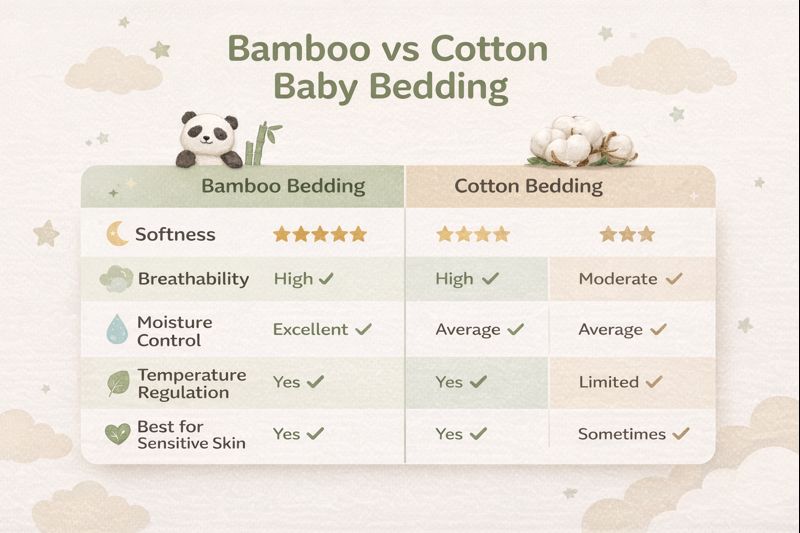
A comparative study on regenerated bamboo, cotton, and viscose rayon fabrics looked at comfort-related properties like moisture absorption, air permeability, and thermal behavior. It found that bamboo-based fabrics showed strong moisture management and good breathability, supporting their use in clothing and bedding designed for warm, humid conditions.
That lines up with what many parents notice in real life: babies in bamboo often feel cooler and less sweaty, especially in warmer rooms.
2. Bamboo Fibers: Softness, Breathability, And Antimicrobial Potential
A 2024 review chapter on bamboo fiber properties summarized that bamboo-based textiles are valued for their softness, breathability, moisture handling, and inherent antimicrobial characteristics, making them strong candidates in sustainable textile markets, including baby products.
While “antimicrobial” claims in consumer marketing can be exaggerated, the underlying research supports the idea that bamboo fabrics can help create a cool, drier, and more comfortable microclimate around the skin – especially helpful for babies who run warm or drool/sweat a lot.
Common Myths About Bamboo Baby Bedding
Let’s quickly bust a few myths:
“Bamboo baby bedding is 100% natural and chemical-free.”
Not exactly. The plant is natural; most bamboo fabric is chemically processed into viscose or rayon. Responsible factories use closed-loop systems to reduce environmental impact, but it isn’t the same as raw linen or unprocessed cotton.
“Bamboo bedding prevents allergies or SIDS.”
No fabric can guarantee that. Bamboo can be a good option in hypoallergenic baby bedding because it’s smooth, breathable, and less hospitable to dust mites, but it doesn’t replace medical care or safe sleep practices.
“All bamboo baby bedding is eco-friendly.”
Some products are great; others are just greenwashed. Check fiber content, certifications, and brand transparency.
FAQs About Bamboo Baby Bedding
How is bamboo baby bedding different from cotton?
Bamboo baby bedding is usually softer, drapier, and more moisture-wicking than standard cotton, thanks to the structure of regenerated bamboo fibers. Studies show bamboo-based fabrics often move moisture and heat more efficiently, which can help warm sleepers feel cooler and drier.
Can my newborn use a bamboo blanket in the crib?
For babies under 12 months, experts recommend no loose blankets of any kind in the crib, even lightweight bamboo ones. Use a snug bamboo crib sheet plus a wearable blanket or swaddle instead, and keep the sleep surface clear of extras.
How many bamboo crib sheets do I really need?
A practical rule: 3–4 bamboo crib sheets.
- One on the mattress
- One clean backup
- One or two in the laundry rotation
If you have a reflux-y baby or frequent blowouts, adding an extra sheet (or two) is sanity-saving.
Does bamboo baby bedding pill or shrink?
It can, if it’s washed on high heat, over-dried, or handled roughly. Cold or warm gentle cycles, mild detergents, and low-heat drying (or line-drying) help minimize shrinking and pilling so your bamboo bedding stays soft and smooth longer.
Is bamboo baby bedding worth the extra cost?
If your baby has sensitive skin, runs hot at night, or you live in a warm/humid climate, bamboo baby bedding often feels worth it because of the comfort upgrade. If your budget is tight, you can start with one or two bamboo crib sheets as your “nice” set and rotate them with simpler cotton backups.