What Is Crib Padding? Benefits, Risks, and Alternatives
We may earn a commission for purchases made using our links. Please see our disclosure to learn more.
If you’ve ever stood over a crib at 2:00 a.m. thinking, “Why does this look so… hard?”—you’re not alone. Crib padding sounds like the obvious “make it safer and cozier” move. And honestly? The urge makes total sense. You want comfort. You want protection. You want sleep.
But here’s the twist: crib padding can mean a bunch of different things—and some of them help, while others can add risk. In this guide, I’ll walk you through what crib padding usually refers to, why parents want it, what the real safety concerns are, and the best alternatives that still give you that “my baby is protected” feeling.
Affiliate disclosure: This article includes product recommendations; if you buy through my links, I may earn a small commission at no extra cost to you.
Crib padding: what parents usually mean
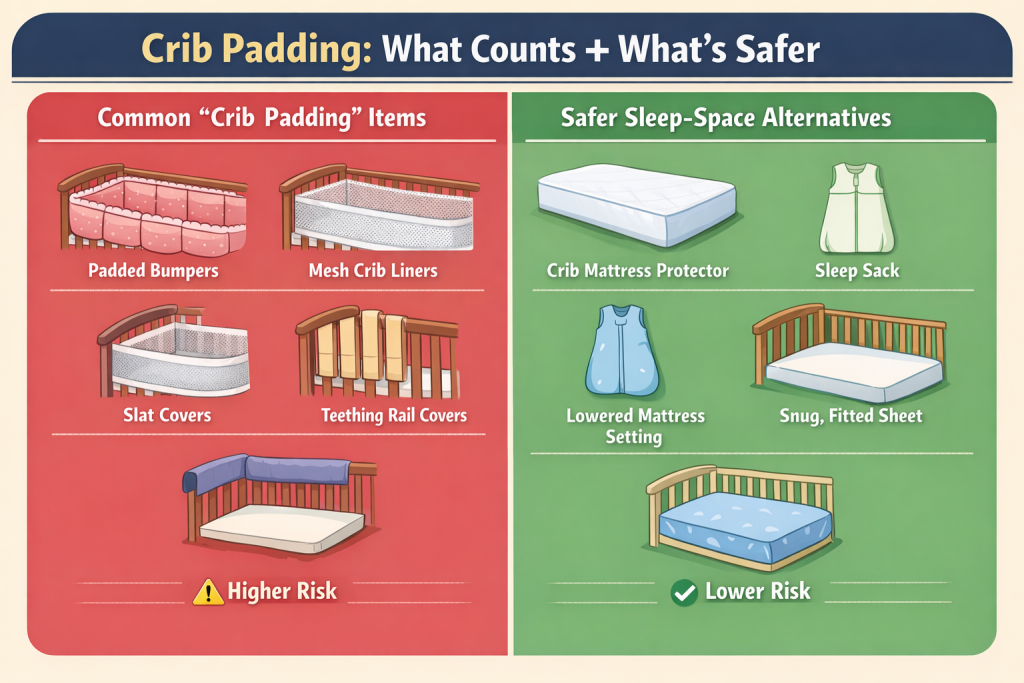
When people say crib padding, they usually mean one of these:
- Crib bumpers (classic padded bumper pads that line the inside of the crib)
- Crib liners (often breathable mesh panels that wrap around the crib slats)
- Vertical crib slat covers (individual padded pieces over each slat)
- Crib rail padding / rail covers (for teething babies who chew the top rail)
- Extra “padding” on the mattress (toppers, quilts under the sheet, etc.)
So if you’re thinking, “Wait… I just meant something soft so my baby doesn’t bonk their head,” yep—same umbrella. The key is choosing the version that solves the problem without creating a new one.
Why parents reach for crib padding
Let’s be real: babies can look tiny in a big crib. And when they start wiggling, rolling, or scooting, a crib can feel like a wooden cage match.
Parents usually want crib padding because:
- Baby’s head bumps the slats
- Arms/legs poke through and get “stuck”
- Baby is teething and chewing the rail like it owes them money
- The crib looks “unfinished” without soft nursery bedding
- Grandparents (or Instagram) say the crib should look “cozy”
And emotionally? You’re trying to create that safe nest feeling—like padding the sharp corners of life a little. Totally human.
The safety reality: where crib padding can go wrong
Here’s the part nobody loves hearing, but it matters:
Soft items inside a crib can raise risks because babies can’t reliably move their faces away, especially when they’re little and sleepy. When padding sits where a baby’s face can press into it (or when strings/ties come into play), the risk conversation gets serious.
What can go wrong with certain types of crib padding:
- Breathing obstruction if baby’s nose/mouth presses into soft padding
- Entrapment (wedging between padding and mattress)
- Strangulation hazards from ties/loose pieces
- Overheating if bedding gets bulky
That doesn’t mean your baby will automatically be harmed—but it does mean crib padding isn’t a “neutral” choice. It’s one of those parenting decisions that feels sweet and protective… while the safety math can say otherwise.
What pediatric experts and U.S. rules say
If you’re in the U.S. (or buying from U.S. marketplaces), it helps to know that crib bumpers have been treated as a major safety concern, and the legal landscape reflects that.
Instead of trying to “pad the crib,” most safe-sleep guidance focuses on keeping the sleep space simple:
- A firm mattress
- A tight fitted sheet
- No loose soft items in the crib
- Warmth from sleep clothing (like a sleep sack), not blankets
I’ll link the most important official guidance and study findings in the Research-Backed section below so you can read it straight from the source.
Types of “crib padding” and how to think about each
Let’s break it down in plain language—because “padding” isn’t one thing.
Padded crib bumpers (the classic puffy kind)
These are the traditional bumper pads. They’re thick, cushiony, and visually “nursery-perfect”… and they’re the type most strongly linked to safety concerns.
Vertical crib slat covers
These look like little padded sleeves on each slat. They can still create soft surfaces near baby’s face and may involve attachments.
Breathable mesh crib liners
These are marketed as “safer than bumpers.” They’re thinner and allow airflow—but they still count as something installed inside the crib, so you want to be extra careful with fit, installation, and your baby’s age/mobility.
Crib rail covers (for teething)
These cover the top rail only, usually on the outside or top edge. They’re less about “padding inside the crib” and more about protecting the crib (and baby’s gums).
Extra padding under the sheet (toppers/quilts)
This one sounds harmless, but it can change how firm the sleep surface feels. Generally, it’s best to use only what the crib mattress manufacturer approves.
“My baby keeps bumping the rails”—what’s normal
This is such a common worry. The good news: most crib bumps look dramatic but aren’t usually dangerous.
A few truths that calm nerves:
- Babies move a lot in active sleep.
- A light “bonk” is often more startling to you than painful to them.
- As babies gain control, they naturally bump less.
What you can do instead of adding crib padding:
- Lower the mattress as soon as baby can sit/stand (prevents bigger hazards)
- Use a sleep sack so baby doesn’t fling limbs as easily
- Make sure the crib is assembled correctly and the mattress fits snugly
If your baby bumps the rails and cries every time, that’s worth troubleshooting—but the solution usually isn’t adding soft padding around the whole crib.
“Limbs stuck in the slats”—how to prevent it
This one feels scary, I know. Seeing a little arm poke through the slats can trigger instant panic.
Try these safer fixes first:
- Sleep sacks (they reduce leg “threading” through slats)
- Check that your baby isn’t wearing something that catches (oversized pajamas)
- Ensure the crib meets modern slat spacing standards (most do)
A lot of “stuck limbs” situations are more “awkward” than “dangerous,” but if it’s happening constantly, it’s fair to look for solutions that don’t add plush padding near the face.
Teething season: protect the crib rail, not the sleep space
When babies start teething, the crib rail becomes a chew toy. That’s when parents start searching crib padding again—except this time, it’s really crib rail protection they need.
A crib rail cover (teething rail guard) can help:
- Protect baby’s gums from hard wood
- Protect the crib from bite marks
- Reduce paint/finish exposure from chewing
The main idea: cover the top rail rather than lining the whole interior of the crib.
The “cozy” look vs the “safe” setup
Some nurseries are styled like tiny boutique hotels—pillows, quilts, bumpers, plush everything. They photograph beautifully.
But safe sleep is kind of like packing a carry-on: less is safer.
If you want the crib to feel warm and comforting without adding soft items inside it:
- Put the “cozy” into the room, not the crib
(soft lighting, curtains, a rug, a chair for you) - Dress baby in warmth: layers on baby, not loose items around baby
The crib mattress matters more than padding
If you’re trying to make the crib “softer,” I’m going to say something slightly annoying but true:
The mattress choice does more for comfort and safety than any crib padding ever will.
A supportive, well-fitted crib mattress plus a tight sheet creates a stable sleep base. If the mattress is poor quality or doesn’t fit snugly, no amount of padding around the edges will fix that.
Temperature, clothing, and layers: safer comfort hacks
Sometimes what parents really want from crib padding is: “I don’t want my baby to feel cold or uncomfortable.”
Try these instead:
- Keep the room at a comfortable temperature (not too warm)
- Use breathable pajamas
- Use a wearable blanket / sleep sack for warmth
- Avoid heavy layers that trap heat
Think of it like this: crib padding is trying to make the crib act like a pillow fort. A sleep sack is like a cozy jacket—warmth stays where it belongs.
A quick bare-crib checklist
If you want a simple, repeatable standard (especially when you’re tired), here it is:
- ✅ Firm crib mattress
- ✅ Tight fitted sheet (nothing loose)
- ✅ Baby on back (unless your pediatrician advises otherwise for medical reasons)
- ✅ No pillows, quilts, loose blankets, or stuffed animals in the crib
- ✅ Sleep clothing for warmth (pajamas/sleep sack)
If the crib looks “too empty,” that’s usually a sign you’re doing it right.
Research-backed guidance
Here are two sources I trust because they’re clear, evidence-driven, and not trying to sell you a “cozy bundle.”
- Crib bumper risks and documented incidents: Study summary on infant deaths and injuries linked to crib bumpers.
Notable point: The summary describes a review of CPSC data and reports deaths and near-suffocation incidents tied to crib bumpers (with many cases described as preventable if bumpers weren’t present). - What’s banned and how “crib bumpers” are defined in U.S. guidance: CPSC guidance on the crib bumper ban (effective November 12, 2022) and what counts as a “crib bumper”
Helpful detail: This guidance explains that “crib bumpers” (including some vertical slat covers) are treated as banned hazardous products for sale in the U.S., and it also notes that non-padded mesh crib liners are not included in that definition.
Product picks: safer alternatives to traditional crib padding
These picks focus on what most parents really want from crib padding—comfort, protection, easier cleanup—without turning the crib into a cushy obstacle course.
Before you buy anything “padding-related,” it also helps to make sure your sleep surface is solid and well-fitted. Here’s a helpful guide on choosing a supportive crib sleep surface: baby mattress options and how to choose one safely
1) Yoofoss Waterproof Crib Mattress Protector (2 Pack)
What it is: A waterproof, quilted barrier that protects the mattress from leaks and spit-up—without adding loose, bulky layers.
Features:
- Waterproof protection to extend mattress life
- Quilted feel for a touch of softness (while staying fitted)
- Easy wash routine for real-life messes
Best for: Parents who want “padding vibes” through a fitted, practical layer—especially during diaper leaks or potty-training phases.
2) Crib Mattress Protector Sheets Waterproof (2 Pack), Quilted 52″ x 28″
What it is: A fitted, quilted waterproof cover designed for standard crib mattresses.
Features:
- Quilted top for comfort
- Waterproof core for protection
- Fitted style (stays in place better than loose pads)
Best for: Anyone who wants a simple, reliable “set it and forget it” layer that doesn’t bunch up.
3) SLEEP ZONE Waterproof Crib Mattress Protector (1 Pack)
What it is: A single-pack waterproof protector for parents who prefer one high-quality layer rather than stacking.
Features:
- Waterproof protection
- Designed to fit standard crib sizing
- Good option if you rotate laundry frequently
Best for: Minimalist setups and smaller homes where you’re not storing a mountain of extras.
4) 2 Pack Crib Sheets + 2 Pack Waterproof Crib Mattress Protectors Set
What it is: A practical bundle that covers the two things you change most often: sheets and protectors.
Features:
- Sheet + protector pairing for faster middle-of-the-night swaps
- Waterproof layer included
- Good value if you’re building a nursery from scratch
Best for: New parents who want fewer 3 a.m. laundry emergencies.
5) SwaddleDesigns 6-Way Omni Swaddle Sack (transitional wearable blanket)
What it is: A wearable sleep solution that can reduce the urge to “pad the crib” by keeping baby snug and less flaily.
Features:
- Multiple ways to adjust as baby grows
- Helps replace loose blankets
- Can reduce limb “threading” through slats
Best for: Babies who startle easily, wake themselves up with arm swings, or seem to want that contained, cozy feeling.
FAQs + gentle wrap-up
Is crib padding safe for newborns?
Usually, the safest approach is a bare crib: firm mattress, fitted sheet, and no loose soft items. If you mean a fitted mattress protector, that’s typically a safer direction than padding around the crib walls.
Compared to padded bumpers, are breathable mesh crib liners safer?
Mesh liners are designed to allow airflow, but they’re still an added item in the crib. If you use one, make sure it’s non-padded, installed exactly as directed, and stays tight and secure.
What can I use instead of crib padding to stop bumping?
Try a sleep sack, a properly fitted mattress, and adjusting the sleep setup (like room temperature and sleepwear). Most rail bumps reduce naturally as your baby gains control.
Can I put extra padding under the crib sheet?
It’s best not to add extra padding unless the mattress manufacturer approves it, because it can change firmness and fit. A snug waterproof protector is usually a safer, more controlled “comfort” upgrade.
When can babies have blankets or pillows in the crib?
Babies don’t need pillows or loose blankets in the crib early on. Warmth is safer through sleep clothing (like sleep sacks). For timing that fits your child’s age and development, your pediatrician is the best guide.
Wrap-up: If you take one thing from this article, let it be this: the goal of crib padding is love and protection—but the safest way to show that love is often the simplest setup. A firm sleep surface, fitted layers, and wearable warmth usually beat “extra softness” every time.