How Organic Baby Clothes Promote Better Sleep
We may earn a commission for purchases made using our links. Please see our disclosure to learn more.
You know that moment at 2:17 a.m. when your baby is finally drifting off… and then suddenly squirms, fusses, and wakes like they just remembered they left the oven on?
A lot of baby sleep advice focuses on routines, white noise, and wake windows (all helpful). But there’s a quieter factor parents often overlook: what’s touching your baby’s skin all night. That’s where Organic Baby Clothes can make a real difference—especially if you’re dealing with sensitive skin, overheating, scratchy seams, or that mysterious “why are you mad?” discomfort.
In this guide, you’ll learn how organic fabrics support sleep comfort, what labels actually mean, how to build a simple sleep wardrobe, and which Amazon picks are worth your money (without going full “baby boutique ransom note”).
Why pajamas can make or break bedtime
Babies can’t say, “This fabric is itchy,” or “This neckline is annoying.” They just… protest. Loudly.
When sleepwear feels rough, traps heat, or rubs in the wrong spot, babies wiggle more. More wiggles = more wake-ups. Think of it like trying to fall asleep in a sweater that’s slightly scratchy. Not unbearable… but also not restful.
Organic sleepwear tends to help because it’s often:
- Softer from the start
- More breathable
- Made with fewer harsh finishing chemicals (depending on certification)
And yes, comfort counts—especially during long stretches of nighttime contact.
The “skin comfort” connection (and why babies notice everything)
Baby skin is thinner and more delicate than adult skin. That’s why tiny irritations—tags, stiff waistbands, rough stitching—can feel huge to them.
If your baby has eczema or sensitive skin
If you’re seeing red patches, dry spots, or frequent scratching, switching to softer, gentler fabric can reduce friction. Organic cotton is often a go-to because it’s naturally breathable and widely available in baby basics.
If your baby runs hot
Some babies are little furnaces. Breathable fabrics help them stay comfortable without overheating, which is important for both sleep quality and safe sleep practices.
Organic cotton vs. conventional cotton: what actually sets them apart?
Both are cotton. The difference is mostly about how it’s grown and processed.
Conventional cotton farming commonly relies on synthetic pesticides. Organic cotton standards restrict synthetic pesticides and emphasize more controlled chemical inputs. This matters because cotton is worn directly on skin—and baby sleepwear is basically an all-night hug.
Is organic automatically perfect? No. But it often pushes brands toward cleaner processing and better transparency.
Certifications that actually mean something (and what to ignore)
If you only remember one thing: “Organic” on the product title isn’t the same as certified organic textiles.
Look for GOTS when you can
GOTS (Global Organic Textile Standard) is one of the strongest labels because it covers both organic fiber content and processing restrictions (like certain chemical inputs). The actual standard spells out prohibited/restricted substances and requirements for approved chemical inputs.
OEKO-TEX is about chemical safety, not organic farming
OEKO-TEX Standard 100 focuses on testing for harmful substances in finished textiles. It’s useful—especially for baby items—even if the cotton isn’t organic.
Beware vague labels
Phrases like “natural,” “eco-friendly,” or “green” aren’t regulated the same way. Treat them like marketing seasoning, not proof.
Why softness isn’t just “nice”—it’s sleep support
Softness helps babies settle because it reduces micro-irritations that can keep them lightly aroused. If you’ve ever had a shirt seam that annoyed you just enough to keep adjusting, you get it.
Organic cotton also often skips heavy chemical softeners (depending on brand and certification), so the softness comes more from fiber quality and weave—not coatings that wash out quickly.
Breathability and temperature: the underrated sleep superpower
Baby sleep isn’t just about tiredness—it’s about comfort and regulation.
Heavy, less-breathable fabrics can trap warmth. And overheating is a big no for safe sleep. The American Academy of Pediatrics notes that infant sleep clothing like a wearable blanket can be preferable to loose blankets while keeping baby warm.
That doesn’t mean “bundle them like a burrito.” It means: choose breathable layers and adjust based on your room temperature.
A simple rule that actually works
Dress baby in about one layer more than you’d wear for that room. The AAP’s parent-facing guidance echoes the same idea and recommends wearable blankets instead of loose blankets.
Non-toxic dyes and finishes: what’s the big deal?
Here’s the honest truth: textiles can pick up chemicals during processing—like wrinkle-resistant finishes, resins, and some dyes.
A 2022 paper discussing early-life exposure to formaldehyde through clothing notes that clothes are in direct contact with skin and that formaldehyde in clothing is associated with dermatitis/eczema and sensitization.
You don’t need to panic-buy everything beige. You just want to choose brands that:
- disclose certifications
- avoid heavy finishes for baby sleepwear
- wash well without needing “special coatings”
The fit factor: too tight, too loose, too annoying
Even perfect fabric won’t help if the fit is frustrating.
What to prioritize for sleep
- Roomy enough for hip/knee movement
- No tight cuffs that leave marks
- Zippers or snaps that don’t bunch under the chin
- Fold-over mittens (helpful for scratchers)
And if your baby is between sizes? Size up for sleep. Nobody sleeps well in “slightly snug.”
Sleepwear myths that keep parents stressed
Let’s clear a few things up.
Myth: “Organic means the baby will sleep through the night.”
I wish. Organic baby pajamas won’t replace night feedings or developmental wake-ups.
But they can remove one common barrier: discomfort. You’re basically stacking the odds in your favor.
Myth: “Organic is only for crunchy families.”
Organic Baby Clothes aren’t a personality trait. They’re just a practical option for comfort, skin sensitivity, and peace of mind.
Building a simple organic sleep wardrobe (without overbuying)
You do not need 27 outfits. You need a rotation that survives laundry.
A realistic starter set
- 5–7 organic bodysuits (base layer)
- 3–5 sleepers / pajamas
- 1–2 wearable blankets (if you use them)
- 2 fitted crib sheets (because… life happens)
- optional: swaddles (newborn stage)
If you’re also working on a safer sleep setup overall, this guide on crib safety and what to avoid with crib padding can help you think through the sleep space choices alongside clothing: crib padding safety considerations and safer alternatives
Laundry tips that keep organic cotton soft
Organic cotton is usually easy-care, but your detergent and routine matter.
Keep it simple
- Use fragrance-free detergent if baby has sensitive skin
- Skip fabric softener (it can coat fibers and reduce breathability)
- Wash in cool or warm water
- Dry low or line-dry when possible
And if you want that “soft hotel towel” feeling? Add dryer balls. (Yes, even parents deserve small wins.)
When organic baby clothes matter most (and when they don’t)
If budget is tight, prioritize organic for:
- sleepwear (long hours of skin contact)
- items that touch sweaty areas (neck, back, folds)
- babies with eczema/sensitivity
- newborn stage (constant contact + lots of sleep)
Less critical:
- occasional outfits worn briefly
- jackets/coats worn over layers
Affordable vs premium: what you’re actually paying for
Sometimes you’re paying for:
- certification costs (like GOTS)
- better stitching and construction
- higher-quality cotton
- ethical manufacturing practices
Sometimes you’re paying for… vibes.
A good middle ground is: buy certified organic for sleep staples, then fill in cute “just for photos” outfits as needed.
Product Picks: Organic sleep essentials that parents actually use
Affiliate disclosure: As an Amazon Associate, I may earn from qualifying purchases at no extra cost to you.
1) Burt’s Bees Baby Beekeeper Wearable Blanket (100% Organic Cotton)
Why it’s here: a popular wearable blanket alternative to loose bedding.
- Features: sleeveless design, breathable organic cotton, zipper closure
- Best for: parents who want a safer, simple sleep layer
- Use case: babies who kick off blankets (and parents who are done re-tucking at midnight)
2) HonestBaby 5-Pack Short Sleeve Bodysuits (100% Organic Cotton)
Why it’s here: practical base layers that get used constantly.
- Features: multipack value, envelope neck, easy snaps
- Best for: everyday wear + sleep layering
- Use case: families who want a reliable “laundry-proof” rotation
3) KeaBabies 3-Pack Organic Baby Swaddle Sleep Sacks (Soothe Swaddle)
Why it’s here: a swaddle option designed to feel secure and breathable.
- Features: organic cotton, adjustable wrap, ergonomic/hip-friendly design notes
- Best for: newborn stage and startle reflex season
- Use case: parents who want “easy swaddle mode” without perfect folding skills
4) Burt’s Bees Baby Essential Organic Cotton Fitted Crib Sheet
Why it’s here: breathable bedding matters just as much as pajamas.
- Features: organic cotton, fitted design, lots of pattern options
- Best for: families who want soft sheets that wash well
- Use case: backup sheets for middle-of-the-night changes
5) KeaBabies 2-Pack Organic Crib Sheets (Jersey Cotton)
Why it’s here: two-pack value + breathable jersey feel.
- Features: fitted sheets, soft knit, prints/colors
- Best for: parents building a practical nursery setup
- Use case: easy sheet swaps without stress
Research-backed: what experts say about sleep comfort and safer sleep clothing
You don’t need a PhD to choose baby pajamas—but it helps to know where expert guidance lines up with real-life parenting.
Wearable blankets are recommended over loose blankets for sleep warmth
The AAP’s 2022 policy on sleep-related infant deaths notes that infant sleep clothing such as a wearable blanket is preferable to blankets and other coverings to keep infants warm while reducing risks. (That’s one reason organic sleep sacks are such a popular “comfort + safety” combo.)
Helpful read: AAP 2022 safe sleep guidance on wearable blankets and sleep clothing
Textile chemicals can matter for sensitive skin
A 2022 review on early-life exposure to formaldehyde through clothing explains that clothing sits in direct contact with skin and associates formaldehyde presence with dermatitis/eczema and sensitization—one reason many parents lean toward certified, lower-chemical options for sleepwear.
Helpful read: research review on formaldehyde in clothing and early-life exposure
FAQs
Do organic baby clothes help babies sleep better?
They can help indirectly by reducing itchiness, irritation, and overheating. Better comfort often means fewer “micro wake-ups,” especially for sensitive-skin babies.
What should I prioritize when choosing organic baby pajamas?
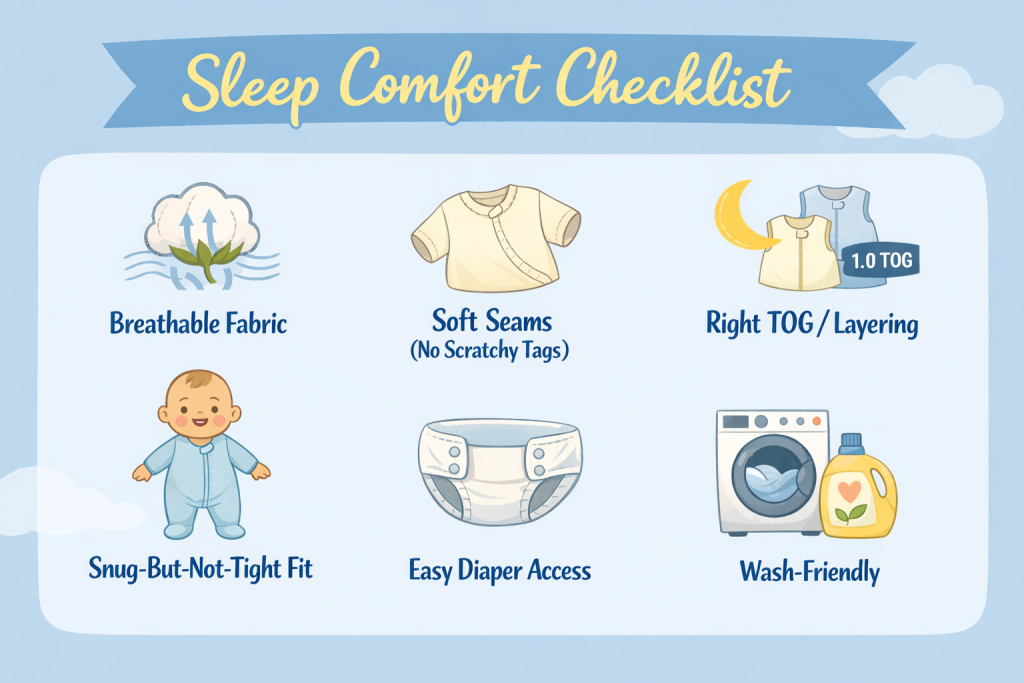
Prioritize breathable fabric, smooth seams, easy closures (zippers/snaps), and meaningful certifications (like GOTS). Avoid scratchy tags and stiff finishes.
Are organic cotton baby clothes worth it for eczema?
Many parents find organic cotton gentler because it’s breathable and often processed with fewer harsh finishes. It’s not a medical treatment, but it can reduce friction triggers.
Which fabric supports better sleep—organic cotton or bamboo?
Organic cotton is dependable, breathable, and widely certified. Bamboo viscose can feel very soft, but processing varies. If you want clearer standards, certified organic cotton is usually simpler to evaluate.
How many organic baby outfits should I have on hand?
For sleep comfort: 5–7 bodysuits, 3–5 sleepers, 1–2 wearable blankets, and 2 crib sheets is a solid, realistic start. Add more only if laundry timing demands it.
Conclusion
If baby sleep feels like a nightly puzzle, you don’t need to solve it with one “magic trick.” You just want to remove friction—literally and figuratively. Organic Baby Clothes won’t stop every wake-up, but they can make your baby’s sleep environment softer, cooler, and more comfortable, which is a pretty great place to start.
Try one small upgrade first: organic pajamas or a breathable wearable blanket. Then watch what happens over a few nights. Sometimes the biggest parenting wins come from the simplest comfort tweaks.