When to Stop Pacifier and How to Make It Easier
We may earn a commission for purchases made using our links. Please see our disclosure to learn more.
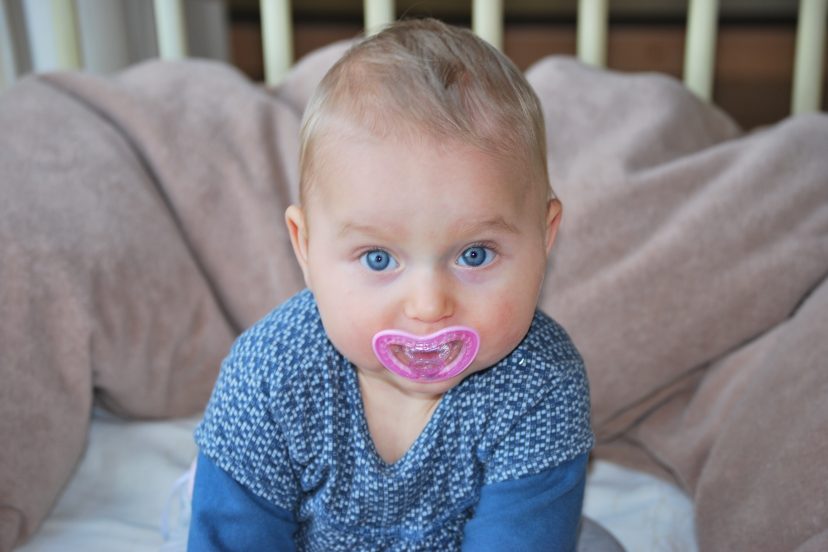
At 2 a.m., the pacifier can feel like a tiny miracle worker. One second your baby is fussy, the next second the room is quiet and you’re standing there like, “Well… that worked better than my entire personality.”
Then, a few months later, a new question shows up: when to stop pacifier use without turning bedtime into a protest rally.
That question is so common because pacifiers sit right at the crossroads of newborn care, sleep, soothing, dental health, and parental sanity. The good news? You do not have to guess. There is a gentle middle ground between “take it away tomorrow” and “I guess we’ll send it to college with them.”
This article may include affiliate recommendations. If you buy through suggested products, I may earn a small commission at no extra cost to you.
Why pacifiers feel like magic in the newborn stage
In the early newborn weeks, sucking is not just a habit. It is a built-in calming reflex. For many babies, a pacifier helps settle fussiness, supports sleep, and gives them a way to soothe between feeds.
That is part of why the American Academy of Pediatrics recommends offering a pacifier at nap time and bedtime, especially once breastfeeding is going well. HealthyChildren says this often means waiting about 3 to 4 weeks for breastfeeding babies, while CDC also notes that pacifiers can be offered once breastfeeding is well established.
And yes, this matters. In 2022, the CDC reported about 3,700 sudden unexpected infant deaths in the United States, including 1,529 deaths from SIDS. Pacifier use at sleep time is one of several recommended safe-sleep measures.
So if your newborn likes a pacifier, that is not “bad parenting.” It is often just one tool in the soothing toolbox.
When to stop pacifier: the short answer
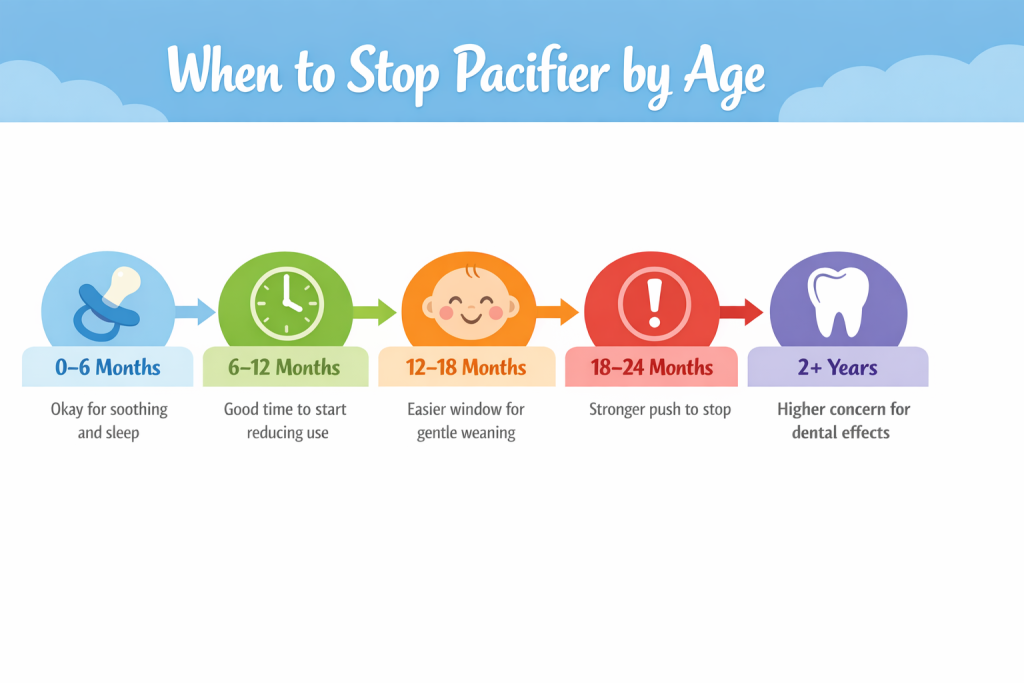
Here is the simple version: start thinking about weaning sometime between 6 and 12 months, aim to be mostly done before age 2, and try not to let the habit stretch much beyond that unless your pediatrician or dentist gives you a specific reason.
Why the range? Because families are not robots.
A 7-month-old who only uses a pacifier for sleep is different from an 18-month-old who wants it in the car, stroller, grocery store, bath, and probably during serious emotional negotiations over banana slices.
The goal is not perfection. The goal is to phase it out before the downsides start outweighing the benefits.
Why 6 to 12 months is a turning point
This is the window many experts circle for a reason.
The AAP and AAFP guidance says pacifier use should be reduced or stopped in the second six months of life to help lower the risk of otitis media, also known as middle ear infections. That lines up with broader pediatric data showing acute otitis media peaks in early childhood, especially around 6 to 15 months.
In plain language: what helped soothe your baby at 2 months may become less helpful at 9 months.
Also, earlier weaning is usually easier. A baby under 1 year often adapts faster than a strong-willed toddler who already treats the pacifier like a beloved coworker.
Why you do not want the habit to drag on for years
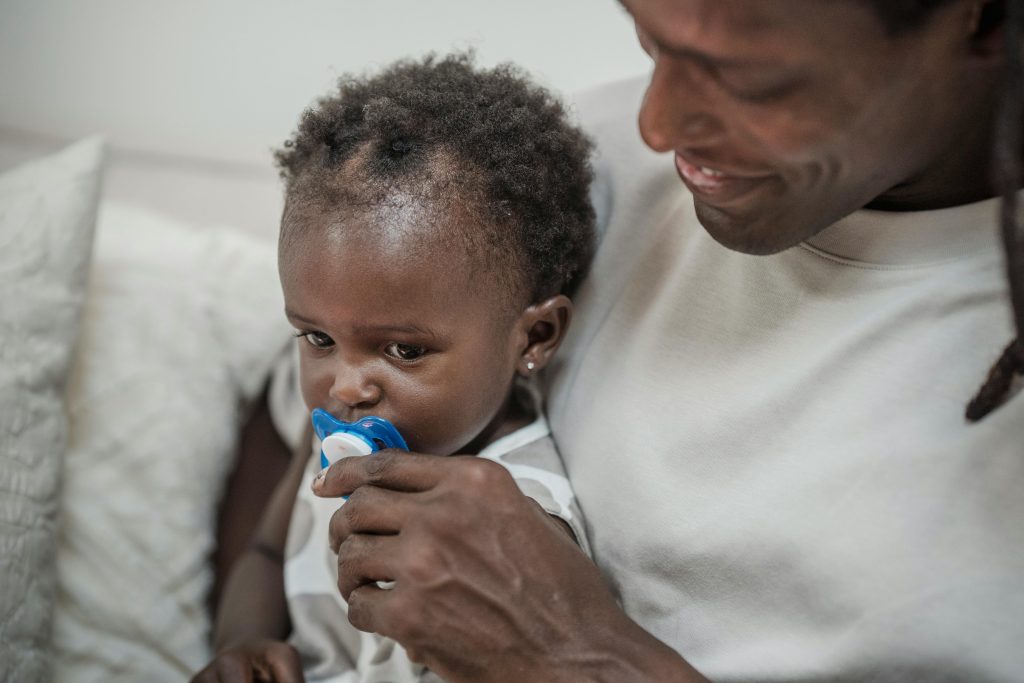
A pacifier is a helpful tool. It is not supposed to be a forever accessory.
Mayo Clinic notes that harmful dental effects can start by age 2 and recommends starting weaning before then. The American Academy of Pediatric Dentistry also warns that prolonged pacifier use is linked with dental changes such as posterior crossbite and other malocclusion patterns, with earlier stopping generally better for oral development.
That does not mean one extra week wrecks your child’s teeth. It means the longer and more frequent the habit becomes, the more reason you have to make a calm exit plan.
Think of it like training wheels. Useful for a season. Awkward if they are still there way too late.
Signs your child may be ready to stop
Sometimes parents wait for a giant neon sign. Usually, readiness looks quieter than that.
Your baby or toddler may be ready if:
- they only use the pacifier for sleep
- they can settle with rocking, feeding, cuddling, or white noise
- they lose interest during playtime
- they spit it out and do not ask for it back right away
- they handle short stretches without it
- they are getting closer to that 12- to 18-month range and you want an easier transition
If you are seeing even two or three of these signs, that is often enough to start gently.
Newborn care basics that matter before you wean
Pacifier decisions make more sense when the basics are steady.
Make sure feeding comes first
A pacifier should not replace hunger cues. HealthyChildren puts it simply: never use a pacifier to postpone feeding. Offer it when you know your baby is fed, dry, and otherwise okay.
Build a tiny, repeatable routine
Babies love patterns, even when they pretend not to. A short bedtime rhythm helps a lot:
- feed
- burp
- diaper
- dim lights
- cuddle
- bed
When the routine is strong, the pacifier stops doing all the emotional heavy lifting.
Create a calm sleep environment
A peaceful room helps babies settle more easily, which can make pacifier weaning smoother later. If you’re also decorating the nursery, these dreamy nursery canopy ideas can inspire the overall look—just keep all décor completely away from the crib and sleep area so safe-sleep rules stay front and center.
Pacifier safety rules every parent should know
Before you worry about when to stop pacifier use, make sure you are using it safely now.
Follow age and size guidance
Choose the right size for your baby’s age, and replace pacifiers that are cracked, sticky, torn, or worn down. A too-small, too-old, or damaged pacifier is not worth the risk.
Never tie it to the crib or around your baby
HealthyChildren specifically warns not to tie a pacifier to your child’s crib, neck, hand, or clothing in a dangerous way because of strangulation and injury risks.
Do not force it
If your baby does not want a pacifier, that is okay. Safe sleep guidance says offer it, not insist on it. And if it falls out after your baby falls asleep, you do not need to pop it back in every time.
Gentle ways to stop pacifier without a meltdown
This is where parents often overcomplicate things. You do not need a dramatic farewell ceremony unless that fits your child’s personality.
Start by limiting, not banning
First, keep the pacifier for naps and bedtime only. Cutting out daytime use often lowers emotional dependence fast.
Drop one moment at a time
Do not tackle car rides, naps, bedtime, and daycare all in one heroic weekend. Pick one situation. Win that one. Then move on.
Replace the comfort, not just the object
When you remove the pacifier, add something else:
- extra cuddles
- rocking
- a short song
- white noise
- gentle back rubs
- a favorite phrase like “You’re safe, I’m here”
Stay consistent
This part matters more than the method. If you remove it on Monday, give it back on Tuesday, and hide it on Wednesday, your child will learn one thing: protest harder.
Consistency beats intensity every time.
What to do instead of handing over the pacifier
When you are used to reaching for the pacifier, your hand does it before your brain does. So it helps to have replacements ready.
For newborns, try:
- feeding if they are showing hunger cues
- skin-to-skin contact
- swaddling if age-appropriate and used safely
- rocking or babywearing
- white noise
- a diaper check
- a little pause before assuming they need sucking to settle
For older babies and toddlers, try:
- water in a cup
- a comfort phrase
- a bedtime story
- a stuffed toy for cuddling outside the crib
- a “pacifier stays in bed” rule
That last one works surprisingly well. It gives the pacifier boundaries before you remove it completely.
Helpful Amazon finds for pacifier use and weaning
Frida Baby Silicone Paci Weaning System, BPA Free, Latex Free
A step-down system designed to reduce sucking satisfaction gradually instead of going cold turkey.
Features: 5 color-coded pacifiers, progressively shorter nipples, dentist-designed approach.
Best for: babies or toddlers who are deeply attached to the pacifier and need a gentler off-ramp.
Philips Avent Ultra Air Pacifiers – Orthodontic Design, for Babies 0-6 Months
A breathable newborn-friendly option with a sterilizing carry case.
Features: large air holes, soft silicone symmetrical nipple, BPA-free design, sterilizer/carry case included.
Best for: younger babies with sensitive skin who still need a simple everyday pacifier.
Chicco PhysioForma Luxe Orthodontic Pacifier for Babies 0-6 Months
A one-piece silicone pacifier marketed for breathing and oral support.
Features: 100% soft silicone, one-piece design, textured shield and handle, sterilizing case.
Best for: parents who want a lightweight newborn option with a simple, easy-to-clean build.
MAM Original Start Matte Baby Pacifiers, Binky for 0-3 Months
A popular small-size newborn pacifier designed with medical experts.
Features: 100% medical-grade silicone, symmetrical nipple, breathable curved shield, sterilizer case.
Best for: brand-new babies who need a smaller pacifier size and families who like compact newborn gear.
HEVEA Natural Rubber Pacifier Round Newborn 0+ Months
A one-piece natural rubber choice for parents who prefer fewer parts and a softer feel.
Features: one-piece hygienic design, BPA-free, natural rubber material.
Best for: families who prefer natural rubber over standard silicone pacifiers.
What the research says about pacifiers, sleep, and teeth
The evidence is actually more balanced than social media makes it sound.
A review on pacifier use and recurrent ear infections reported that pacifier use might contribute to a greater likelihood of recurrent acute otitis media. That helps explain why many pediatric sources suggest reducing pacifier use during the second half of the first year, especially if ear infections are becoming a pattern.
A JAMA Pediatrics systematic review on pacifiers and breastfeeding found that randomized trials did not show worse breastfeeding duration or exclusivity from pacifier use itself. In other words, once feeding is established, the pacifier may not be the breastfeeding villain people sometimes assume.
And for dental health, the AAPD pacifier policy on oral development notes that prolonged pacifier use is linked with bite changes and encourages parents and clinicians to think about earlier discontinuation rather than waiting too long.
When should you stop giving a pacifier at night?
Night use is usually the last thing to go. Many families start by removing daytime pacifier use first, then tackle naps, then bedtime. If your baby is older than 6 to 12 months, it is reasonable to begin that gradual process, especially if ear infections are a concern.
Can a pacifier affect breastfeeding?
It can be tricky before feeding is established, which is why AAP and CDC guidance suggests waiting until breastfeeding is going well. But higher-level evidence has not shown pacifier use itself to reduce breastfeeding duration in randomized trials.
Is it bad if a one-year-old still uses a pacifier?
Not automatically. A one-year-old using a pacifier mainly for sleep is not unusual. That said, this is a smart age to start weaning because the habit is often easier to break now than later, and extended use brings more concern about ear infections and dental effects.
What is the easiest way to stop pacifier use?
The easiest way is usually gradual, not dramatic: limit it to sleep, shorten the routine around it, and replace it with other soothing cues. You want your child to feel supported, not suddenly cut off from their favorite comfort object with zero warning.
What can I use instead of a pacifier for soothing?
For newborns, think basics first: feeding, burping, cuddling, rocking, swaddling if appropriate, and white noise. For older babies, routines, songs, back rubs, and comfort objects outside the crib can help. The best replacement is not always another product. Often, it is predictability.
Conclusion
If you have been wondering when to stop pacifier use, the best answer is this: start thinking about it in the second half of the first year, move more intentionally before age 2, and make the process gentle rather than dramatic.
You do not need to be perfect. You just need a plan.
Your baby is not spoiled because they love comfort. You are not doing it wrong because you used a pacifier to survive a hard season. Parenting is full of tiny bridges that help you get from one stage to the next. The pacifier can be one of them.
The trick is remembering that bridges are meant to help you cross over, not stay parked in the middle forever.