Top 10 Nursery Temperature and Humidity Monitors
We may earn a commission for purchases made using our links. Please see our disclosure to learn more.
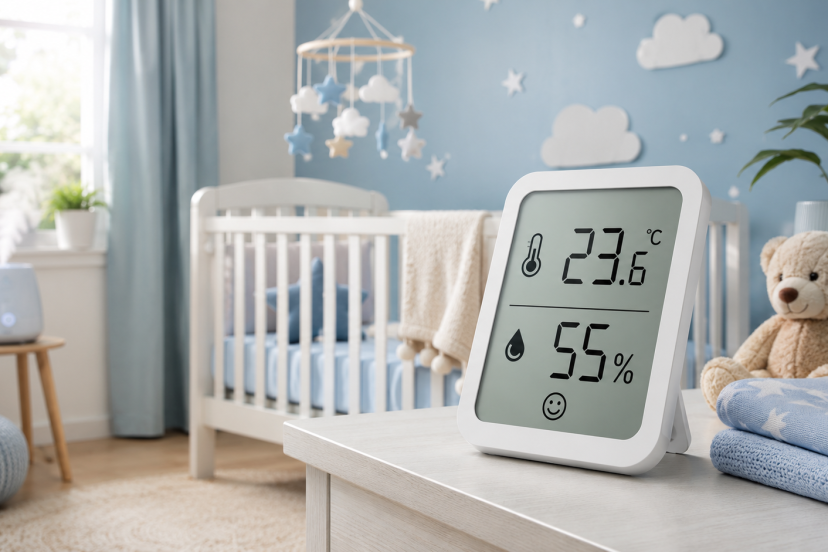
Nursery Temperature and Humidity Monitors help parents track room warmth and moisture in the air. They are useful with seasonal changes, air-conditioning, heating, humidifiers, dehumidifiers, drafts, or uneven temperatures. The right monitor should be readable, accurate, safely placed, and suited to how you receive information. Some provide an instant display; others add alerts, history, multi-room sensors, or Wi-Fi access. We compared Amazon US availability, specifications, displays, connectivity, data features, portability, setup, limitations, and value. A monitor supports decisions, but it cannot measure a baby’s body temperature or replace safe-sleep guidance.
Quick Comparison
| Product | Best for | Key feature | Main limitation | Price category | Overall recommendation |
| Govee H5075 | Most families | Bluetooth app and display | No native Wi-Fi | Budget | Best overall balance |
| TempPro TP49 | Low-cost basics | Compact comfort indicator | No history or alerts | Budget | Strong simple choice |
| SensorPush HT1 | Detailed tracking | Long-term app logging | Wi-Fi gateway costs extra | Premium | Best advanced sensor |
| SwitchBot Meter Plus | Beginners | Large display and app | Remote alerts need hub | Budget | Easy smart starter |
| Govee H5103 | Remote monitoring | Wi-Fi and e-ink screen | 2.4 GHz Wi-Fi only | Mid-range | Best away-from-home option |
| TempPro TP55 | Night reading | Backlit touchscreen | No connected features | Budget | Best large display |
| DOQAUS Z-001 | Travel | Small, fast-refresh body | Basic screen | Budget | Best portable pick |
| AcuRite 00613 | Daily patterns | High and low records | No app | Budget | Useful traditional monitor |
| Ambient Weather WS-10 | Multiple rooms | Three remote sensors | Busier setup | Mid-range | Best multi-zone system |
| TempPro TP357 | Private app use | Bluetooth alerts and history | No native Wi-Fi | Budget | Best no-account app option |
1. Govee H5075 Bluetooth Hygrometer Thermometer — Best for Most Nurseries
Overview: The H5075 combines an LCD with Bluetooth app tracking for parents who want quick checks and useful history without paying for a Wi-Fi system.
Key Features: Bluetooth connectivity; temperature and humidity display; configurable app alerts; exportable historical data; tabletop or hanging placement.
Pros: Clear local display, helpful trend graphs, straightforward setup, strong value.
Cons: Alerts depend on Bluetooth range; it cannot provide native away-from-home monitoring.
Best For: Families who want an affordable monitor with both screen-based and phone-based information.
Verdict: Its feature set, readable display, and app ecosystem make the H5075 the best overall choice for nursery monitoring.

2. TempPro TP49 Digital Hygrometer Indoor Thermometer — Best for a Tight Budget
Overview: The TP49 is a battery-powered monitor for parents who want current temperature and humidity without apps, accounts, or complicated setup.
Key Features: Large digits for its size; comfort-face indicator; approximately ten-second refresh; Fahrenheit/Celsius selection; tabletop or wall placement.
Pros: Inexpensive, compact, simple to move, easy to understand.
Cons: No backlight, alerts, remote access, or stored history.
Best For: A nursery needing a bedside or shelf display at the lowest practical cost.
Verdict: It earns its place by doing the essentials cleanly. Place it away from the crib, vents, windows, humidifier mist, and direct sunlight for more representative readings.

3. SensorPush HT1 Smart Temperature and Humidity Sensor — Best for Premium Data Tracking
Overview: SensorPush HT1 is a compact, screen-free Bluetooth logger built for users who care about detailed history, dependable app access, and expandable monitoring.
Key Features: One-minute sampling; onboard logging; unlimited in-app storage; heat index, dew point, and VPD calculations; optional G1 Wi-Fi Gateway compatibility.
Pros: Rich historical data, export tools, compact construction, replaceable battery.
Cons: No local display; true remote internet access requires a separately purchased gateway.
Best For: Data-minded parents who want to study overnight swings or compare nursery conditions across seasons.
Verdict: The premium price buys a deeper monitoring platform rather than decorative extras, making HT1 useful when trends matter more than a glanceable screen.

4. SwitchBot Meter Plus — Best for Beginners Building a Smart Nursery
Overview: Meter Plus pairs a large three-inch display with Bluetooth app functions and optional SwitchBot hub integration, offering a path into connected monitoring.
Key Features: Large LCD; temperature and humidity tracking; app history; magnetic, stand, or wall placement; smart alerts and automations when paired with a compatible hub.
Pros: Readable at a distance, flexible mounting, beginner-friendly app, expandable ecosystem.
Cons: Anywhere alerts and voice-assistant functions require additional hub hardware.
Best For: New smart-home users who want a useful standalone display today and automation options later.
Verdict: It is easier to live with than many app-only sensors and provides a sensible upgrade path without forcing buyers to purchase the hub immediately.

5. Govee H5103 Wi-Fi Thermometer Hygrometer — Best for Remote Monitoring
Overview: The H5103 adds direct 2.4 GHz Wi-Fi, Bluetooth, a highly legible electronic-ink display, app alerts, and exportable records for checking nursery conditions while away.
Key Features: Wi-Fi and Bluetooth; e-ink screen; preset threshold alerts; two-second refresh; app graphs and historical export.
Pros: Remote access without a separate gateway, excellent daytime readability, detailed records, fast updates.
Cons: It does not support 5 GHz Wi-Fi; app setup is more involved than a basic display.
Best For: Caregivers who need to check room conditions from work, another floor, or outside the home.
Verdict: Among connected Nursery Temperature and Humidity Monitors, it provides one of the clearest combinations of local visibility and genuine remote access.

6. TempPro TP55 Digital Indoor Hygrometer Thermometer — Best for a Backlit Display
Overview: The TP55 prioritizes visibility with a four-inch touchscreen and backlight, useful during nighttime checks when small, unlit digits become frustrating.
Key Features: Large display; touch-activated backlight; current and high/low readings; comfort indicator; tabletop, wall, or magnetic placement.
Pros: Easy to read, convenient in dim rooms, no app required, versatile positioning.
Cons: No remote alerts or data export; the backlight requires manual interaction.
Best For: Parents who want a larger local screen beside the nursery door or changing area.
Verdict: The TP55 is a strong traditional option when screen clarity matters more than connectivity, especially for adults who dislike checking another phone app overnight.

7. DOQAUS Z-001 Digital Hygrometer Indoor Thermometer — Best for Travel
Overview: The Z-001 is a lightweight mini monitor that can move between a home nursery, hotel room, grandparents’ house, or travel crib setup.
Key Features: Five-second refresh; compact LCD; Fahrenheit/Celsius switching; comfort indicator; hanging, standing, and magnetic placement options.
Pros: Very portable, affordable, quick to set up, easy to pack.
Cons: Small screen, no backlight, no alerts, and no saved data.
Best For: Families who want a spare monitor for trips or temporary sleep spaces.
Verdict: It is not feature-rich, but its portability and simple controls make it more useful for travel than larger smart models that depend on accounts, Wi-Fi, or hubs.

8. AcuRite 00613 Digital Hygrometer and Indoor Thermometer — Best for Daily High and Low Readings
Overview: AcuRite’s 00613 provides current conditions plus daily high and low temperature and humidity, helping you spot swings that an instant reading can miss.
Key Features: Current temperature and humidity; high/low records; comfort-level indicator; Fahrenheit/Celsius display; kickstand, magnet, and wall-mount options.
Pros: Useful daily range information, readable layout, flexible placement, simple battery operation.
Cons: No backlight, app, alarms, or remote access.
Best For: Parents troubleshooting daytime heating, overnight cooling, or humidity changes caused by HVAC cycles.
Verdict: It offers more context than the simplest mini monitors while retaining easy, app-free operation. Review the ideal baby room temperature guide before setting personal alert or comfort targets.

9. Ambient Weather WS-10 Wireless Thermo-Hygrometer — Best for Multiple Rooms
Overview: The WS-10 uses a central console and three included wireless sensors, letting families compare the nursery with a parent bedroom, hallway, or another child’s room.
Key Features: Three remote thermo-hygrometer sensors; eight-channel support; central LCD console; scrolling display mode; indoor and remote readings.
Pros: Multi-zone coverage, no phone required, expandable channels, useful room-to-room comparison.
Cons: More components and batteries than single-room monitors; the console is busier than a simple nursery display.
Best For: Larger homes where temperatures vary noticeably between rooms or floors.
Verdict: It is the strongest specialized option for identifying hot and cold zones rather than monitoring one fixed nursery location.

10. TempPro TP357 Bluetooth Hygrometer Thermometer — Best for No-Account App Tracking
Overview: The TP357 combines a compact display with Bluetooth monitoring for parents who want phone alerts and detailed historical graphs without creating an app account.
Key Features: Temperature and humidity display; manufacturer-claimed 260-foot unobstructed Bluetooth range; configurable app alerts; one-year historical graphs; comfort-face indicator.
Pros: Local readings, useful phone notifications, long data history, straightforward app access.
Cons: Bluetooth limits remote monitoring; walls and interference can reduce the claimed range.
Best For: Privacy-conscious families who want app features without Wi-Fi, a gateway, or mandatory registration.
Verdict: It offers a practical middle ground between basic displays and cloud-connected monitors, although buyers needing true away-from-home access should choose a Wi-Fi model.

How to Choose the Best Nursery Temperature and Humidity Monitors
Start with monitoring style. A local display is fastest overnight; Bluetooth adds nearby alerts and history; Wi-Fi supports remote checks. Confirm whether alerts require a hub, gateway, subscription, or account.
Consider display visibility. Large digits, contrast, and a backlight help in dim nurseries. E-ink screens are readable without constant illumination, while screen-free sensors suit users who prefer app data.
Look at history and alerts. High/low records reveal swings. Graphs show patterns across naps, HVAC cycles, and weather. Adjustable alerts help, but narrow limits can create constant notifications.
Check placement options. Choose a secure shelf, wall position, or adult-height surface away from the crib. Keep sensors away from direct sun, exterior windows, heating vents, fans, radiators, and humidifier mist, because these can distort readings.
Review power and connectivity. Note battery type, Bluetooth range, supported Wi-Fi band, and hub requirements. Frequent disconnections or awkward batteries reduce usefulness.
Treat readings as environmental guidance, not medical measurements. Compare unusual results with another reliable room sensor, allow time after moving a device, and follow manufacturer calibration instructions where available.
Frequently Asked Questions About Nursery Temperature and Humidity Monitors
Where should I place a nursery temperature and humidity monitor?
Place it where air represents the room rather than a microclimate: on a secure shelf or mounted surface away from the crib, direct sunlight, windows, doors, vents, heaters, fans, and humidifier output. Keep batteries, cords, magnets, probes, and small devices completely outside a child’s reach.
Do I need Wi-Fi monitoring?
Not necessarily. A display-only model works well when you check the nursery in person. Bluetooth is useful for nearby history and alerts. Wi-Fi is worth considering when you want updates from another floor, work, or travel, but verify network compatibility and whether a gateway is required.
How accurate should a nursery monitor be?
Choose a model with clearly published temperature and humidity accuracy specifications from the manufacturer. Consumer sensors can differ slightly, so focus on meaningful trends rather than tiny changes. If readings seem implausible, compare devices side by side under the same conditions before adjusting heating or humidification.
Can I place the monitor next to a humidifier?
Avoid placing it directly beside the humidifier or in the mist path. That position can show a wetter microclimate than the baby actually experiences across the room. Follow both manufacturers’ placement guidance, clean the humidifier routinely, and use the sensor to judge room-wide conditions instead.
Do these monitors replace a baby monitor or thermometer?
No. They measure ambient room conditions, not breathing, fever, skin temperature, or sleep safety. Continue using safe-sleep practices, attentive caregiving, and an appropriate body thermometer when illness is suspected. Seek medical advice for health concerns rather than relying on nursery environmental readings.
Final Verdict
The Govee H5075 is the best overall choice because it balances a readable display, Bluetooth alerts, history, and value. The TempPro TP49 is the best budget option for simple current readings. SensorPush HT1 is the best premium pick for detailed logging and an expandable monitoring platform. SwitchBot Meter Plus is best for beginners who want an easy display with future smart-home options. Ambient Weather WS-10 is the best specialized choice for comparing several rooms.
Before purchasing Nursery Temperature and Humidity Monitors, compare verified specifications, connectivity requirements, sensor placement, and included accessories. Confirm dimensions, supported phone or Wi-Fi systems, current warranty terms, and the latest product information on Amazon.com, since availability, bundles, sellers, and product details can change.