Baby Mattresses: The Cozy, Safe Pick That Helps You Sleep Too
We may earn a commission for purchases made using our links. Please see our disclosure to learn more.
If you’re shopping for Baby Mattresses, there’s a good chance you’re doing it half-asleep… while also trying to make a “right” decision for a tiny human who can’t exactly leave a Yelp review.
And honestly? Choosing a mattress can feel weirdly emotional. You’re not just buying foam (or coils). You’re buying peace of mind, fewer midnight “is this safe?” spirals, and hopefully a sleep setup that works in real life—spit-up, diaper leaks, and all.
This guide will help you pick Baby Mattresses that are firm, well-fitting, breathable, and realistic for your budget—without getting sucked into marketing buzzwords. You’ll also get 5 breathable Amazon picks and two research-backed insights so you can feel confident, not overwhelmed.
How to choose Baby Mattresses without overthinking
Let’s simplify this like we’re texting a friend:
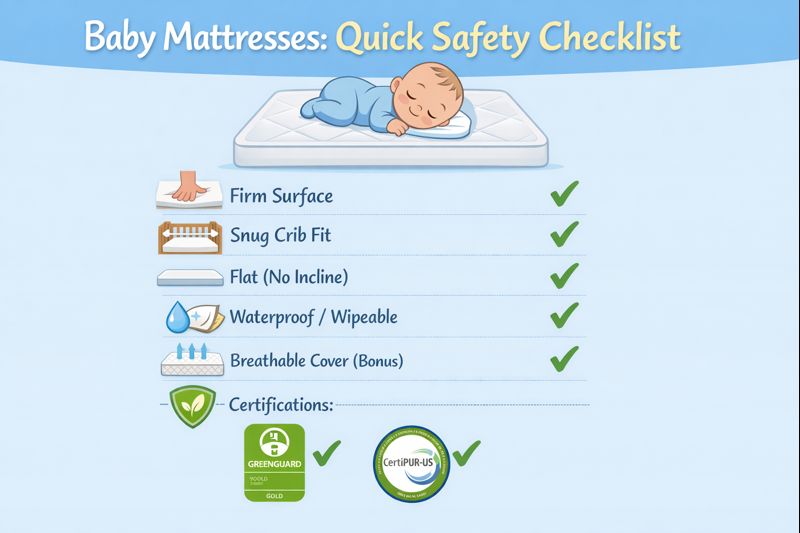
If a baby mattress is firm, fits the crib correctly, and stays clean easily, you’re already winning.
Everything else—fancy quilting, “cloud feel,” 12 layers of mystery materials—comes second. A baby mattress isn’t supposed to feel like your pillow-top hotel bed. Babies need a stable, supportive surface.
Quick gut-check questions:
- Does it feel firm when you press down?
- Does it fit the crib with no big gaps?
- Can you clean it without making it a whole weekend project?
If yes, we’re off to a strong start.
Firmness comes first (yes, even if it feels “too firm”)
Firmness is the #1 thing parents worry about because it feels counterintuitive. You lie down and think, “This is… hard.” And then your brain goes: Is my baby going to be comfy?
Here’s the thing: babies are built differently than we are. They don’t need a plush surface to relax. In fact, too-soft sleep surfaces are one of the big safety concerns experts call out.
What “firm” should look like:
- When you press your palm into the mattress, it should spring back quickly.
- Baby shouldn’t sink in the way they would on an adult mattress or couch.
If you’re used to adult comfort standards, a firm baby mattress can feel like a wooden board. That doesn’t mean it’s wrong—it means it’s doing its job.
The crib fit test: no gaps, no “wiggle room”
Even a great mattress becomes a problem if it doesn’t fit the crib properly.
A simple rule: If you can fit more than two fingers between the mattress and the crib frame, it’s too loose.
Those gaps can create spaces where a baby can get wedged. So when you’re looking at Baby Mattresses, always confirm:
- It matches your crib size (standard crib vs mini crib)
- It sits snug on all sides
- It doesn’t bow, fold, or leave corners floating
And if you’re using a hand-me-down crib or a non-standard brand? Double-check dimensions. “Standard” is not always as standard as we want it to be.
Breathable Baby Mattresses: what “breathable” really means
“Breathable” is one of those words that can mean a lot… or basically nothing… depending on how it’s used.
In real-life parent terms, breathability usually means:
- Better airflow through the cover or core
- Less trapped heat (useful for warm rooms or sweaty sleepers)
- Materials designed to reduce moisture build-up
But breathability does not replace safe sleep basics. Think of it like sunscreen: helpful, but it doesn’t mean you can skip shade.
If breathability matters to you (and for many families it does), look for:
- Mesh or 3D-knit covers
- Air channels / open-core designs
- Washable covers (because airflow + cleanliness go together)
Foam vs innerspring vs “hybrid”: what changes for baby?
Most Baby Mattresses fall into a few buckets:
Foam
- Often lighter (easier to lift during sheet changes)
- Usually more affordable
- Can be very firm—just check quality and certifications
Innerspring (coils)
- Often heavier
- Strong edge support
- Great durability
Hybrid / specialty breathable cores
- Built for airflow and easy cleaning
- Usually pricier
- Often loved by parents who want “breathable + washable” in one package
There isn’t one perfect type. The best choice is the one that fits your crib, your cleaning reality, and your budget—while staying firm and safe.
Non-toxic and low-VOC: what to look for (without fear spirals)
Let’s talk “chemicals” without turning it into a panic party.
Many parents prefer non-toxic crib mattresses or low-VOC options—and that’s a totally reasonable goal. The tricky part is that marketing can get dramatic fast.
A calmer approach:
- Look for credible certifications (we’ll get there next)
- Favor mattresses that clearly list materials
- Choose brands that explain how they meet flammability rules (without added flame retardants, if that matters to you)
And remember: “non-toxic” isn’t a single regulated label in marketing. Certifications do more heavy lifting than big claims.
Certifications parents can trust (and which ones are just vibes)
When you’re comparing Baby Mattresses, certifications can help you separate “real testing” from “cute buzzwords.”
Here are the ones you’ll see most often:
GREENGUARD Gold
Focuses on chemical emissions (low VOCs). Helpful if indoor air quality matters to you.
CertiPUR-US (for foam)
Checks foam for certain harmful substances and emissions. Not “organic,” but still a meaningful safety baseline.
GOTS / GOLS (organic textiles/latex)
More relevant if you’re specifically buying organic materials.
OEKO-TEX Standard 100
Often used for textiles and covers to show they’re tested for harmful substances.
You don’t need every certification to feel good about your pick. But having one or two strong ones is usually a good sign.
Waterproof vs breathable: Is it possible to have both?
Yes—and you probably want both, because life with a baby is basically a surprise-liquid festival.
A good setup often looks like:
- Mattress with a waterproof layer
- Or a washable waterproof cover
- A snug fitted sheet (nothing loose or fluffy)
The best waterproofing doesn’t feel like crinkly plastic. If you’ve ever changed a sheet at 3:00 a.m. while whisper-praying “please don’t wake up,” you’ll appreciate a mattress that wipes clean quickly.
Two-stage (infant/toddler) mattresses: worth it?
A dual-sided crib mattress gives you:
- Extra-firm infant side
- Slightly softer toddler side (still supportive)
Is it required? Nope. But it can be nice if you want one mattress to last through toddlerhood.
If your budget allows and you like “buy once, use longer,” two-stage can be a solid value. If not, a great single-stage firm mattress is completely fine—babies don’t need luxury features.
Temperature and moisture: keeping sleep cool
Some babies run warm. Some rooms run warm. Some parents live in climates where everything feels warm all the time. (Hello, tropical nights.)
If you’ve got a sweaty sleeper, breathable features can be helpful:
- Airflow covers
- Open-core designs
- Materials that don’t trap heat
Also: don’t underestimate the power of simple tweaks—light pajamas, a fan for room circulation (not blowing directly on baby), and keeping bedding minimal.
Cleaning, allergies, and “oops” nights
If you want one underrated feature in Baby Mattresses, it’s this:
Easy cleaning.
Because you can buy the safest, fanciest mattress on earth… but if it’s a nightmare to clean, you’ll hate it by week three.
Look for:
- Removable, washable covers
- Wipe-clean surfaces
- Water resistance that doesn’t peel or crack
For allergy-prone households, a well-sealed, easy-clean mattress helps reduce dust and moisture build-up. It’s not about being perfect—it’s about making your life easier.
When to replace or upgrade the mattress
You don’t need to replace a mattress constantly, but you do want to watch for:
- Sagging or dips
- Tears, peeling, or foam breakdown
- Lingering odors that don’t wash out
- Mold or water damage (especially after leaks)
Also, if you’re using a secondhand mattress and it’s older, worn, or unknown-history, that’s one area many parents choose to buy new—just for hygiene and fit reliability.
Top 5 breathable Baby Mattresses
Below are five breathable-friendly picks from Amazon that meet the general “high rating + 300+ reviews” guideline (as shown on their listings). Always double-check the latest rating and fit before you buy.
1) Newton Baby Crib Mattress and Toddler Mattress
Breathable is basically Newton’s whole personality—great if airflow and a washable cover are top priorities.
Features:
- Breathable core + washable cover
- Firm sleep surface
- Built to last into toddler years
Best for: Parents who want a breathable, easy-to-clean “main mattress” that can go the distance.
2) HALO DreamWeave Crib & Toddler Mattress
Designed with breathability in mind and a washable cover—nice for families focused on airflow and cleanup.
Features:
- Breathable core concept
- Dual-stage design (infant/toddler)
- Washable components
Best for: Families who want breathable + dual-stage support in one.
3) Serta Perfect Start Breathable Limited Two-Stage Crib Mattress
A popular two-stage option that leans into “breathable” while still staying practical.
Features:
- Two-stage firmness
- Breathable-focused design
- Baby-to-toddler lifespan
Best for: Parents who like a trusted brand and want a two-sided mattress without going ultra-premium.
4) Delta Children Twinkle Stars Crib and Toddler Mattress
Solid budget-friendly pick with a breathable, removable cover—great when you want easy cleaning without a huge price tag.
Features:
- Breathable removable cover
- Lightweight
- Fits standard cribs/toddler beds
Best for: Value shoppers who still want washable + breathable features.
5) Graco Premium Foam Crib & Toddler Mattress
Not always marketed as “breathable-first,” but it’s widely loved for being firm, practical, and easy to live with.
Features:
- Firm foam support
- Lightweight
- Straightforward, no-fuss design
Best for: Parents who want a reliable, popular mattress that just works.
Research-backed credibility: what studies say about sleep surfaces
When you strip away the marketing, experts keep coming back to the same basics: firm, flat, uncluttered sleep surfaces.
Study/Expert review #1: AAP safe sleep recommendations (2022)
American Academy of Pediatrics updated its guidance in 2022, continuing to emphasize a firm, flat, non-inclined sleep surface in a safety-approved sleep space. That’s the foundation you’re building on when you choose the right mattress.
Study #2: Measured sleep-environment risks in a case-control study (2010)
A German case-control scene investigation study found increased risk associated with sleep-environment factors like soft underlay, pillows, and heavy bedding—basically reinforcing why “firm and simple” keeps showing up in safe sleep guidance.
And if you want a quick reality check on why safe sleep guidance matters: Centers for Disease Control and Prevention reports about 3,700 sudden unexpected infant deaths (SUID) in the U.S. in 2022.
One more thing (because sleep is the whole point):
If you’re also wondering when routines like sleep training even make sense, this guide is genuinely helpful: when to start sleep training your baby (timing + readiness signs).
FAQs and final takeaway
Do Baby Mattresses need to be super thick to be safe?
Nope. Thickness doesn’t equal safety. A firm, well-fitting mattress is what matters most. Thick but squishy isn’t the goal.
What’s the best way to check if a baby mattress is firm enough?
Press your palm into it. It should feel supportive and bounce back quickly—no deep “handprint crater.”
Are breathable Baby Mattresses worth the money?
They can be—especially if your baby sleeps warm or you value washable covers and airflow. Just treat breathability as a bonus, not a replacement for safe sleep basics.
Can I use a mattress topper to make it softer?
It’s best to avoid add-ons like toppers for babies. They can change the sleep surface and create extra softness or movement.
What should I put on the baby mattress for safe sleep?
Keep it simple: a fitted sheet only. Skip pillows, quilts, positioners, and plush items in the sleep space.
Final takeaway:
Choosing Baby Mattresses doesn’t have to feel like a test you can fail. Go for firm. Make sure it fits. Choose materials and certifications that match your comfort level. Then set it up simply—and let yourself breathe.
Because you deserve sleep too. And you’re doing better than you think.