What Is The Ideal Baby Room Temperature?
We may earn a commission for purchases made using our links. Please see our disclosure to learn more.
You know that moment when you tiptoe into the nursery at 2:00 a.m., hold your breath, and think… “Is it too hot in here? Too cold? Is my baby okay?” Yep. Been there (emotionally). Getting Baby Room Temperature right can feel like trying to bake a cake without a recipe—except the cake is tiny, adorable, and loudly opinionated.
In this guide, you’ll learn the ideal range, how to tell if your baby is too hot or too cold (without spiraling), what to dress them in, and how to handle summer heat and winter chill safely—plus a few tools that make all of this way easier.
Affiliate note: If you buy through suggested products, I may earn a small commission at no extra cost to you.
Baby Room Temperature: the “sweet spot” range (and why it’s a range)
Most baby sleep resources land in a similar comfort zone:
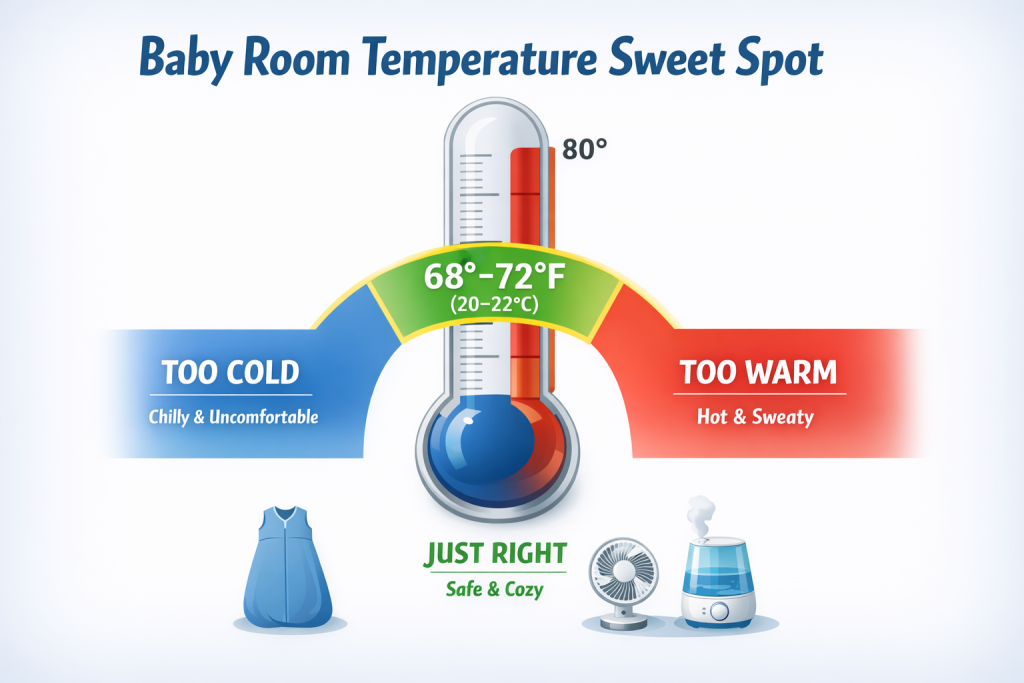
- About 68–72°F (20–22°C) is commonly recommended for infant sleep.
- Some well-known safer-sleep guidance (especially in the UK) recommends 16–20°C (about 61–68°F).
So what’s the “right” number?
Think of Baby Room Temperature like a hoodie decision. There’s not one magical temperature where everyone feels perfect—there’s a range where your baby can sleep comfortably as long as clothing/bedding matches the room.
If you want a simple target:
- Aim for around 68–72°F if that’s realistic in your home
- Focus even more on avoiding overheating than hitting a perfect number
Why temperature affects sleep safety and SIDS risk
Babies aren’t great at temperature regulation at first. They can warm up or cool down faster than adults—and they can’t exactly toss off a blanket or say, “Hey, can we turn the fan down?”
Overheating matters because safe-sleep experts consistently flag it as a risk factor in sleep-related infant deaths. The American Academy of Pediatrics (AAP) specifically recommends avoiding overheating and head covering during sleep.
A helpful mental model:
Your job isn’t to make the nursery “toasty.” Your job is to make it “steady.” Steady temperature + appropriate layers = calm sleep.
How warm is too warm? Signs of overheating to watch for
If you’re worried the room is too hot, don’t start by staring at the thermostat like it owes you money. Start with your baby.
Common signs your baby may be overheating include:
- Sweaty hair or damp neck
- Flushed face
- Hot chest/back
- Faster breathing than usual
- Heat rash
- Unusual restlessness
AAP-aligned guidance also suggests watching for sweating, flushed skin, or a hot chest as overheating clues.
Quick reality check: cold hands and feet do not automatically mean your baby is cold. Babies often have cooler extremities. (Their circulation is still figuring life out.)
How cool is too cool? Signs your baby needs a layer
Cold is usually easier to spot because your baby tends to tell you—loudly.
Signs your baby might be too cool:
- Cool chest or back
- Pale or mottled skin (especially if paired with fussiness)
- Waking more often and struggling to settle
- Slower, “low-energy” feeding (sometimes)
If you’re unsure, go by the “core,” not the toes. Your goal is a comfortably warm chest/back—not sweaty, not chilly.
The quick “touch test” where to check, not hands
Here’s the easiest trick that doesn’t require a parenting degree:
Check the back of the neck or the chest.
- Warm and dry = usually perfect
- Hot or sweaty = remove a layer or cool the room a bit
- Cool to the touch = add a layer
This lines up with safer-sleep guidance that recommends adjusting layers if your baby’s skin feels hot or sweaty.
A tiny but important tip
If your baby’s back is sweaty, it’s almost always a “too warm” signal—especially at night.
What your thermostat misses: drafts, hot spots, and crib placement
Thermostats are like that friend who says they’re “5 minutes away” but hasn’t left the house. They’re helpful, but they don’t tell the full story.
A nursery can have:
- A warm corner near a window with sun exposure
- A cold pocket near an exterior wall
- Drafts from a vent or door gap
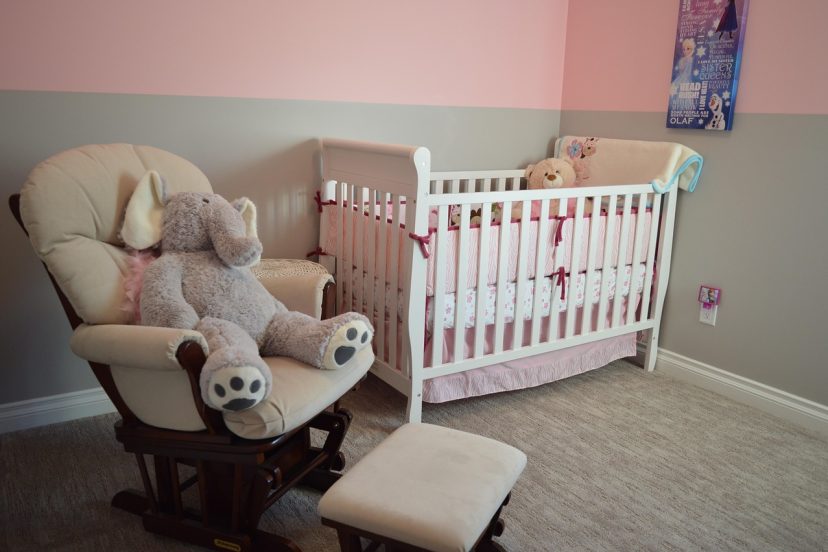
Better crib placement for stable temperature
- Keep the crib away from direct vent airflow
- Avoid placing it right next to a radiator/heater
- Don’t push it against a cold exterior wall if your home gets chilly
- Watch for direct sunlight during daytime naps
If the room “reads” fine but your baby sleeps like they’re in a wind tunnel… it’s usually airflow, not the number.
A steady-temp nursery setup: simple, budget-friendly
You don’t need a smart-home command center. You need consistency.
Try this simple setup:
- One thermometer/hygrometer placed at adult eye level (not on the floor)
- Curtains/blinds to reduce heat gain or night chill
- Fan for air circulation (not blowing directly on baby)
- A routine temperature check at bedtime and once before you sleep
Think of it like preheating an oven. You’re not obsessing—you’re setting the environment up before the “sleep baking” begins.
Dressing baby for sleep: layers, fabrics, and the “one more layer” rule
A classic rule of thumb from pediatric guidance: dress your baby in about one more layer than you’d wear in the same room.
That doesn’t mean “bundle like it’s an arctic expedition.” It means:
- If you’re comfy in a t-shirt, baby might do well in pajamas + a light sleep sack
- If you need a hoodie, baby may need warmer pajamas or a thicker sleep sack
Fabrics that help regulate temperature
- Cotton: breathable, easy, reliable
- Bamboo/rayon blends: often feel cooler and wick moisture
- Wool (merino): can regulate well, but choose baby-safe, soft options
Avoid overly fluffy, heavy layers that trap heat—especially if the room is already warm.
TOG ratings, swaddles, and sleep sacks—made ridiculously simple
TOG can sound like a tech gadget, but it’s basically a warmth rating.
Here’s the easiest way to think about it:
- Lower TOG = cooler/lighter
- Higher TOG = warmer/thicker
A simple TOG-style decision guide
- Warm room → lighter sleep sack
- Cooler room → warmer sleep sack
- If you keep adjusting blankets in your head at night… choose a wearable blanket/sleep sack instead.
And yes—safer sleep guidance often prefers well-fitting sleep bags over loose blankets.
When to stop swaddling
As soon as your baby starts showing signs they can roll (or they’re nearly there), it’s safest to stop swaddling and switch to a different sleep option.
Summer nights and heat waves: keeping baby cool safely
Heat is when parents get the most anxious about Baby Room Temperature—and honestly, that makes sense.
During hot nights:
- Use lightweight sleep clothing
- Keep air moving with a fan (circulating the room, not blasting the crib)
- Skip hats indoors (heat gets trapped fast)
- Consider blackout curtains to block late-day heat
Research also links heat exposure with increased odds of sudden unexpected infant death in some settings, especially during warm periods—so heat planning is worth taking seriously.
“But the AC makes the room cold…”
If AC drops the temp too much, don’t turn it off completely. Instead:
- Raise the thermostat a bit
- Adjust baby’s clothing by one light layer
- Use a sleep sack instead of adding loose items
Winter nights: warming the room without risky shortcuts
Cold weather makes people reach for quick fixes. Some are fine. Some are… not.
Safer winter strategies:
- Warm pajamas + appropriate sleep sack
- Seal drafts (door draft stopper can work wonders)
- Pre-warm the room before bedtime
Be extra cautious with space heaters. If you use one at all:
- Keep it far from the crib
- Use tip-over protection
- Avoid running it unattended overnight if you can’t do it safely
Your goal is not “tropical nursery.” Your goal is “comfortable core temperature.”
Humidity + airflow: the comfort combo that helps breathing
Temperature is the headline, but humidity is the side character that steals scenes.
Why it matters:
- Too dry can irritate noses and skin
- Too humid can encourage mold (not the roommate you want)
A solid home guideline is keeping indoor humidity below 60% and ideally around 30–50%, per EPA indoor air quality guidance.
Easy humidity wins
- If humidity is low: use a cool-mist humidifier (and clean it regularly)
- If humidity is high: improve ventilation, run exhaust fans, or use a dehumidifier
And remember: airflow doesn’t mean “wind.” It means the air isn’t stale and trapped.
Routines that keep Baby Room Temperature steady (even when nights aren’t)
Let’s talk real life: night feeds, diaper changes, surprise wake-ups.
A few routine tweaks can keep your nursery stable:
- Keep a “night layer” ready (extra sleep sack or warmer pajamas)
- Don’t fully open windows at 3 a.m. unless the room is genuinely hot
- Avoid turning the thermostat up and down all night (big swings can backfire)
A quick bedtime checklist
- Room in range
- Baby dressed appropriately
- Baby’s chest/back feels warm and dry
- Crib clear and safe
If you do those, you’re already doing a lot right.
Research-backed section: what experts and studies say about Baby Room Temperature
Let’s ground this in credible guidance—not internet folklore.
- AAP safe sleep recommendations (2022) emphasize avoiding overheating and head covering during infant sleep to reduce sleep-related risks. Read the official guidance here: AAP guidance on avoiding overheating during infant sleep (2022).
- A peer-reviewed review in Frontiers in Pediatrics (2022) discusses how heat stress/thermal load may contribute to SIDS risk pathways and why managing overheating is a practical prevention step. Here’s the review: heat stress and SIDS risk review (2022).
And if you like seeing older foundational work, a classic case-control paper also found overheating and prone sleeping independently associated with increased SIDS risk (1992).
The takeaway: You don’t need a “perfect” number—you need to avoid overheating, keep the room reasonably cool/steady, and match clothing to the environment.
Product Picks: 5 Amazon tools that make temperature easier
Here are five practical, low-regret tools that help you manage Baby Room Temperature without turning parenting into a science fair.
1) ThermoPro TP50 Digital Hygrometer/Indoor Thermometer (2-pack)
Short description: Simple, accurate room temp + humidity tracking—perfect for a nursery reality check.
Features: Easy-to-read display, humidity + temperature, two units for “nursery vs. living room” comparisons.
Best for: You want a nursery thermometer that tells the truth (without an app).
2) Babysense Full HD 5.5″ Split-Screen Baby Monitor (2 Cameras)
Short description: A video monitor that can help you keep an eye on baby and see nursery conditions at a glance.
Features: Split-screen, two cameras, clear night viewing, room monitoring tools (varies by setup).
Best for: You want peace of mind without checking the crib every 12 minutes.
3) Vicks Filter-Free Ultrasonic Humidifier
Short description: Helps when the air gets dry—especially during AC season or winter heating.
Features: Filter-free design, steady mist output, nursery-friendly use.
Best for: Babies who wake congested, dry skin seasons, or homes where humidity drops fast.
4) Dreo 42″ Tower Fan (Quiet, Oscillating)
Short description: Gentle airflow that keeps the room feeling cooler without blasting baby directly.
Features: Quiet operation, oscillation, multiple speeds, bedroom-friendly design.
Best for: Warm nights, stuffy rooms, and keeping air moving safely.
5) Google Nest Learning Thermostat (3rd Gen)
Short description: Helps stabilize temperature swings—especially in homes where the nursery runs hotter/colder than the rest.
Features: Smart scheduling, learning patterns, remote adjustments (depending on system).
Best for: Big homes, variable climates, or anyone tired of “why is this room 5 degrees different?”
Bonus “sleep comfort” note: Night feeds and burping can also affect how warm your baby gets (hello, snug cuddles at 3 a.m.). If you’re unsure about feeding routines, this guide on when to stop burping your infant can help you feel more confident during those nighttime wake-ups.
Baby Room Temperature FAQs (5 quick answers)
What is the ideal Baby Room Temperature for sleep?
Most guidance points to a comfortable range—often about 68–72°F (20–22°C)—while also emphasizing avoiding overheating as the priority.
Is 75°F too hot for a baby’s room?
It can be, especially if your baby is in warm pajamas or a thick sleep sack. Watch for overheating signs (sweaty neck, hot chest, flushed skin) and adjust clothing/airflow.
How can I tell if my baby is getting too cold during the night?
Check your baby’s chest or back of neck. If it feels cool, add a layer (like warmer pajamas or a higher-warmth sleep sack). Ignore cold hands/feet unless other signs show up.
Should a fan be on in the nursery?
A fan can help with airflow and comfort—just aim it to circulate the room, not blow directly on your baby. Keep cords safely managed and the fan out of reach.
What humidity range is ideal for a baby’s room?
A practical target is around 30–50% humidity, and try to keep it below 60% to reduce mold risk.
Conclusion
If you remember nothing else, remember this: Baby Room Temperature doesn’t need perfection—it needs consistency. Aim for a comfortable range, dress your baby for the room (not the season outside), and watch your baby’s cues more than the thermostat.
And hey—if you’re reading this with one eye open and a burp cloth on your shoulder, you’re not behind. You’re learning your baby. One small adjustment at a time, you’ll build a sleep setup that feels safe, calm, and actually doable.