7 Newborn Essentials Every Parent Should Have
We may earn a commission for purchases made using our links. Please see our disclosure to learn more.
You’ve got a tiny human on the way (or just arrived!), and your brain is juggling a million questions at once. What do you truly need? What’s nice-to-have vs. must-have? This guide to Newborn Essentials keeps it real: fewer tabs open, more calm. You’ll get a friendly checklist, expert-backed safety notes, and five editor-picked products with quick comparisons—so you can choose confidently, save money, and enjoy those foggy, magical first weeks.
Affiliate note: I may earn from qualifying purchases at no extra cost to you.
The “Enough” Mindset: What Newborn Essentials Really Mean
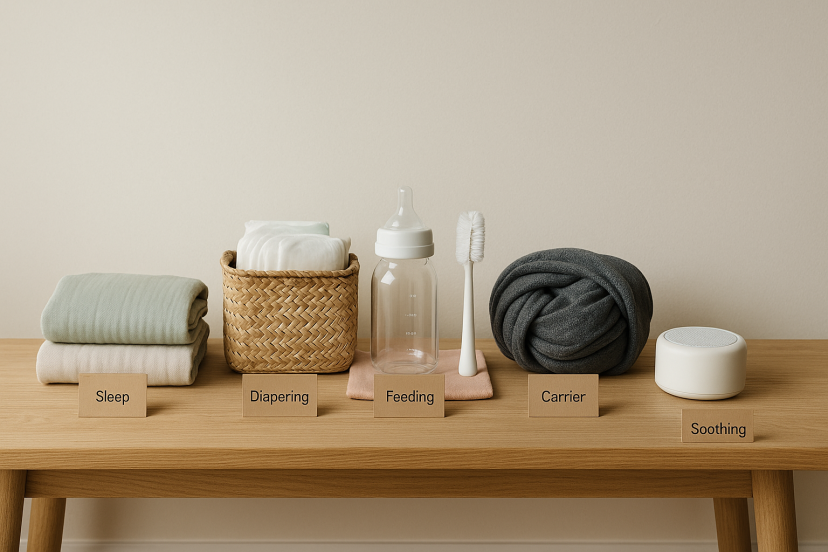
New parents often swing between minimalist and maximalist. The sweet spot? Enough to keep baby fed, dry, warm, safe, and soothed—without crowding your living room. Think function first; aesthetics can follow. If an item doesn’t solve a real problem, it’s probably not essential.
Safe Sleep Setup (Non-negotiable)
A safe sleep space is your #1 newborn essential. Use a flat, firm sleep surface (crib, bassinet, or play yard) with a fitted sheet—no pillows, blankets, bumpers, or toys. Room-sharing (not bed-sharing) lowers risk and makes those night feeds easier. The American Academy of Pediatrics (AAP) recommends room-sharing for at least the first 6 months because it can significantly reduce sleep-related risks.
Helpful read when you’re ready: our gentle guide on when to move baby to their own room—so transitions feel calm, not rushed.
Swaddle or sleep sack?
Swaddles can help some babies settle in the first weeks. Transition to a sleep sack once baby shows any sign of rolling. Avoid weighted sleepwear; AAP advises against it.
Diapering Without the Drama
You’ll need diapers (disposable or cloth), fragrance-free wipes, a barrier cream, and a reliable changing surface. Consider a caddy so everything’s always within reach. Night tip: pre-fold a few diapers and keep a small dim light nearby to prevent fully waking baby.

Feeding Essentials (Breast, Bottle, or Both—You’re Supported)
Every feeding path deserves good tools and zero guilt. If you’re breastfeeding, add a couple of supportive bras, nipple balm, breast pads, and a water bottle for you. Bottle-feeding? Start with a few bottles and slow-flow nipples. Sanitizing matters most in the early months: clean thoroughly and sanitize parts as recommended—boil for five minutes or use a steam system, per CDC guidance.
Note: If you prefer to limit plastic exposure, many parents choose glass bottles. (FYI: lawsuits filed in 2024 alleged some plastic bottles can release microplastics when heated; the cases are ongoing.)
Bath & Skincare Basics
You don’t need a full spa cart. A baby-safe wash, a couple of washcloths, a soft towel with hood, a baby brush, and unscented moisturizer usually cover it. Sponge baths are fine until the umbilical stump falls off; keep water warm—not hot—and support baby’s head and neck.
On-the-Go Gear: Car Seat First, Everything Else Later
If you only buy one “big” thing now, make it a rear-facing infant car seat that fits your vehicle and your budget. Keep baby rear-facing as long as possible within the height/weight limits of your seat—this is the safest way to ride.
Add a compact diaper clutch, extra onesie, and a muslin blanket to your diaper bag. That’s plenty for quick outings in the newborn phase.
Comfort & Soothing Toolkit
Babies are comfort connoisseurs. Rotating strategies helps:
- Contact: skin-to-skin snuggles (a.k.a. kangaroo care)
- Motion: gentle rocking, babywearing
- Sound: white noise or a soft hum
- Suck: feeding or a pacifier (some evidence associates pacifiers with lower SIDS risk when used at sleep).
Clothing & Laundry Reality Check
A small capsule wardrobe beats an overflowing drawer. Start with:
- 6–8 short/long-sleeve bodysuits
- 4–6 zip-up sleepers (zippers = sanity at 3 a.m.)
- 4 pairs of socks, 2 caps (for cooler climates)
- A couple of lightweight swaddles or sleep sacks
Wash with a mild, fragrance-free detergent. Stains happen—pretreat and carry on.

Health & First-Aid Musts
Keep a simple kit: digital thermometer, nasal aspirator, saline drops, baby nail file, and gas relief strategies your pediatrician recommends. Learn your baby’s normal: temperature range, feeding frequency, and diaper output—so you’ll spot changes early.
Babywearing = Two Free Hands
A soft, newborn-friendly carrier keeps baby close and frees your hands for life’s basics (coffee, doorbells, older siblings). It can also support bonding and may soothe fussiness. Pick a wrap or a structured, newborn-approved carrier that fits your body.
Smart Home Helpers (Nice-to-Have)
A dimmable night light, white noise machine, and a basic room thermometer keep nights calm. A simple app timer for feeds/diapers beats remembering anything at 2 a.m.
Postpartum Care for You (Yes, You’re Essential Too)
Your recovery kit: high-waist underwear, pads, peri bottle, pain relief as prescribed, a comfy robe, and mega hydration. Ask for help. Nourish yourself. Your healing and mental health are foundational “baby gear.”
Organizing Your Tiny Command Center
Claim a small surface by the couch or bed: diapers, wipes, burp cloths, swaddles, water bottle, snacks, phone charger, and a notepad. You’ll feel like a well-oiled team in days.
Budget vs. Splurge: Where to Put Your Money
Spend on: a safe car seat, a sleep solution that meets safety standards, and feeding essentials you’ll actually use.
Save on: newborn clothes (they outgrow in a blink), fancy infant shoes, and duplicate gadgets. Borrow or buy secondhand where safe (never buy used car seats unless you know the full history).
Newborn Essentials Checklist (Grab-and-Go)
- Safe sleep space + fitted sheets
- 6–8 bodysuits, 4–6 sleepers, socks/caps
- Diapers, wipes, diaper cream, changing pad
- Bottles + slow-flow nipples (if bottle-feeding), or breastfeeding basics
- Burp cloths, swaddles/sleep sacks
- Digital thermometer, saline + nasal aspirator, nail file
- Car seat (rear-facing)
- Soft carrier or wrap
- Night light/white noise (optional but helpful)
🔹 Amazon Newborn Essentials: Editor’s Picks (7 Products)
1) Graco SnugRide SnugFit 35 Infant Car Seat
What it is: A rear-facing infant seat with no-rethread harness options and variants that include an anti-rebound bar.
Key features: 4–35 lb, up to ~32″ (check your specific trim); angle indicators; click-in base.
Pros: Trusted safety features; straightforward install; good value.
Cons: Outgrown faster than convertibles; features vary by trim.
Best for: Anyone prioritizing proven car-seat safety without premium pricing.
Warranty: 1-year limited (U.S.).
Review snapshot: Parents praise the easy install and snug newborn fit; a few wish it were lighter to carry.
2) HALO SleepSack Swaddle (Cotton)
What it is: A 3-way adjustable swaddle (arms-in/arms-out/one-arm-out) that converts to a wearable blanket.
Key features: Secure fasteners; bottom zip for quick changes; widely used in hospitals.
Pros: Safer than loose blankets; flexible for transition phases.
Cons: Swaddling window is short—stop at first roll signs.
Best for: Babies who settle better with gentle containment.
Warranty: 1-year limited.
Review snapshot: Loved for “set-and-forget” design; occasional sizing notes for chunkier babies.
3) Hatch Rest (2nd Gen) Sound Machine & Night Light
What it is: A white-noise machine with a dimmable night light and app scheduling.
Key features: Multiple sound profiles; adjustable brightness; routines via app.
Pros: Gentle light for feeds; consistent sleep cues; grows with toddler routines.
Cons: Requires outlet; app-control isn’t everyone’s style.
Best for: Families building predictable bedtime rhythms.
Warranty: 1-year limited.
Review snapshot: Parents rave about custom routines and soft light; a few report occasional app sync hiccups.
4) Dr. Brown’s Natural Flow Options+ Glass Baby Bottle (Wide-Neck)
What it is: A glass anti-colic bottle with internal vent to reduce gas and spit-ups.
Key features: Vacuum-free feeding; slow-flow newborn nipples; dishwasher-safe.
Pros: Glass avoids plastic-heating worries; many babies latch well.
Cons: Heavier than plastic; vent parts add one extra cleaning step.
Best for: Parents wanting anti-colic design in a glass format.
Warranty: Varies by region/retailer—confirm at purchase.
Review snapshot: Fans report less gas/spit-up; some wish the glass were lighter.
5) FridaBaby NoseFrida Nasal Aspirator
What it is: The cult-favorite manual snot-saver that actually clears newborn congestion.
Key features: Hygienic filters; pairs well with saline; easy to clean.
Pros: Fast relief; easier than bulbs; durable.
Cons: Sounds weird—until you try it during a cold.
Best for: Every household (because stuffy nights happen).
Warranty: Lifetime warranty against manufacturing defects.
Review snapshot: Glowing feedback for effectiveness; a few parents prefer electric models.
6) Ergobaby Embrace Newborn Baby Carrier (Soft Knit) — New Addition
What it is: A soft, simple carrier made specifically for the newborn months—no complex wrapping required.
Key features: Newborn-friendly fit; facing-in and (later) limited facing-out carry; recognized as “hip-healthy”; ErgoPromise Lifetime Guarantee.
Pros: Cozy fabric; quick on/off; supportive newborn positioning.
Cons: Not a long-term hiking carrier; max use is within early months.
Best for: Caregivers who want hands-free soothing and a gentle learning curve.
Warranty: Lifetime (ErgoPromise) for manufacturing defects.
Review snapshot: Parents love the just-right newborn fit and zero-fuss setup.
7) Ubbi Steel Diaper Pail — New Addition
What it is: A powder-coated steel diaper pail that traps odors without special bags.
Key features: Steel body + rubber seals; child lock; works with standard trash bags; 3-year promised warranty.
Pros: Excellent odor control; no proprietary refills; lots of color options.
Cons: Heavier than plastic; still needs regular emptying/cleaning.
Best for: Apartments or any nursery where odor control really matters.
Warranty: 3-year manufacturer warranty (defects).
Review snapshot: Owners say it “just works” for smells; a few mention wanting a foot pedal.
Quick Comparison Table (Updated)

🧪 Research-Backed: What the Evidence Says
- Room-sharing reduces risk. The AAP’s policy on sleep-related deaths recommends room-sharing (separate sleep surface) for at least 6 months and notes it may reduce the risk of SIDS by about half, alongside other safe sleep practices (back to sleep, firm surface, no soft bedding).
- Skin-to-skin (Kangaroo Mother Care) saves lives—especially for small or preterm babies. A major randomized trial published in the New England Journal of Medicine found immediate kangaroo care reduced mortality among low-birth-weight infants, reinforcing skin-to-skin as powerful, low-cost care.
- Feeding hygiene: The CDC outlines clear steps for cleaning and sanitizing bottles and parts (including boiling for five minutes or using steam), which is especially important for young infants.
- Car seats: NHTSA advises keeping children rear-facing as long as possible within seat limits—the safest orientation for crash forces.
FAQs
How many newborn outfits do I really need?
Start modestly: 6–8 bodysuits and 4–6 sleepers are plenty. You can always add more once you learn your laundry rhythm and climate needs.
Do I have to sterilize bottles every single time?
Clean thoroughly after each use and sanitize regularly, especially in the first months. The CDC details safe options like boiling five minutes or using a steam sterilizer.
Are pacifiers safe for newborns?
Used correctly, pacifiers are generally safe and, when offered for sleep, have been associated with lower SIDS risk; introduce when breastfeeding is established if nursing. Always keep the sleep space clear and follow safe sleep guidelines.
What’s the difference between a swaddle and a sleep sack?
Swaddles wrap the arms and torso to mimic the womb; they can calm some newborns. Sleep sacks are wearable blankets with free arms—great after the swaddle phase or from day one if your baby prefers arms-out. Stop swaddling at the first signs of rolling.
How long should my baby stay rear-facing in the car?
As long as possible within your seat’s height/weight limits. Rear-facing is the safest orientation for infants and toddlers.
Conclusion: You’ve Got This (Truly)
You don’t need a warehouse of gear to be a great parent. A safe sleep space, a solid car seat, a sane diapering and feeding setup, and a few soothing tools—these Newborn Essentials cover 95% of daily life. Build your basics, borrow where it’s safe, add as you learn, and keep your focus on bonding. Your baby already thinks you’re perfect.
P.S. When you’re ready to transition, here’s a calm guide on when to move baby to their own room to keep nights peaceful.