Toddler Clock Buying Guide: Top Sleep Training Clocks
We may earn a commission for purchases made using our links. Please see our disclosure to learn more.
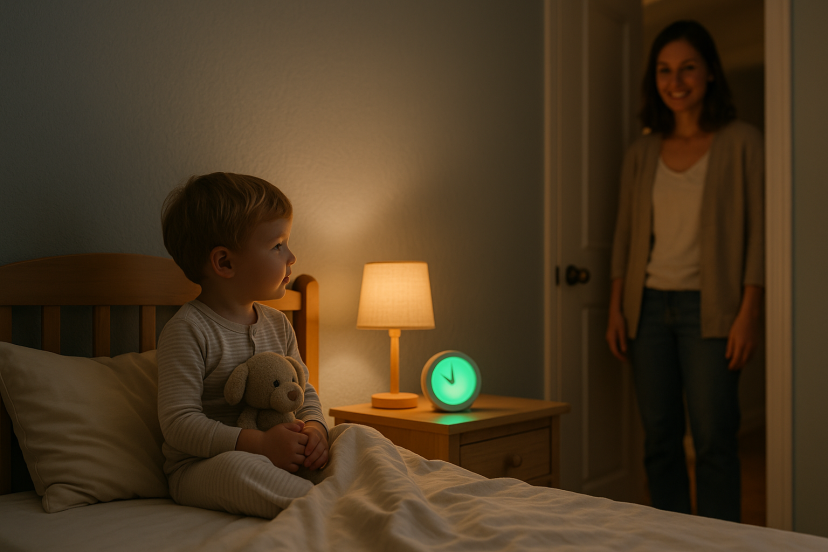
Your toddler wakes up at 5:12 AM like they’ve got a meeting with the sun… and you’re standing there, half-awake, trying to explain that “morning” hasn’t started yet.
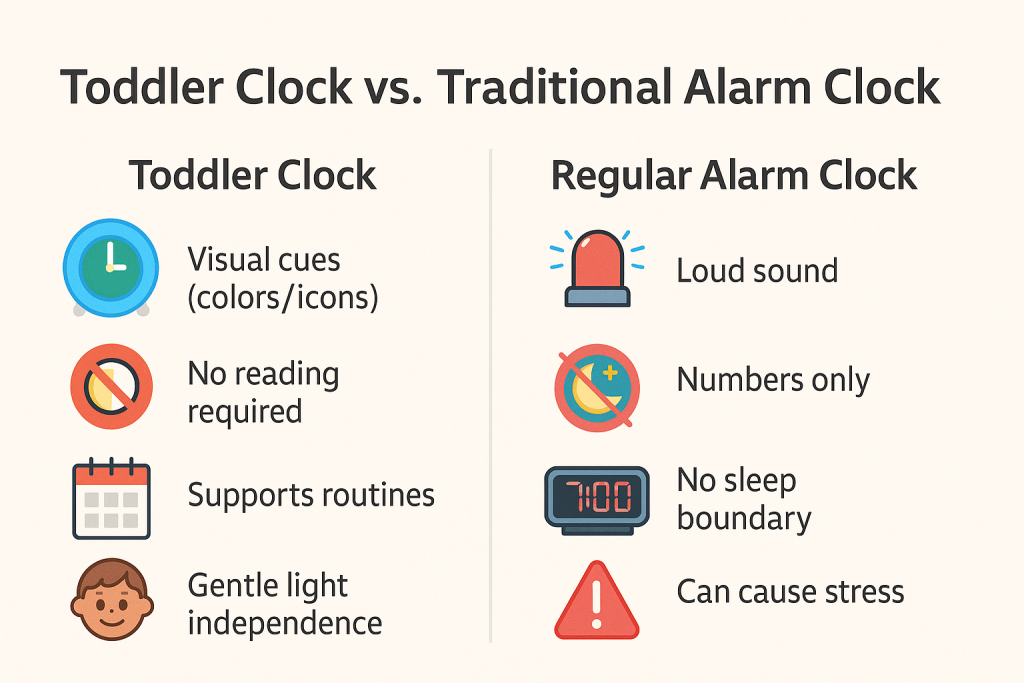
A toddler clock (also called an ok-to-wake clock or wake-to-rise clock) helps because it turns a fuzzy idea—“Wait until 6:30”—into something your child can see: a color, a sun/moon, or a simple “OK” cue.
What a Toddler Clock Actually Does (and what it doesn’t)
Think of a toddler clock as a translator between adult time and toddler understanding. It teaches one core boundary: “This is sleep time. This is wake time.”
It helps with:
- Early-morning pop-ups (the classic problem)
- Quiet-time practice (“You can rest or play quietly”)
- Routine consistency across caregivers
It won’t:
- Force a child to sleep longer than their body wants
- Fix an overtired/undertired schedule by itself
- Work well if the “rules” change every day (toddlers notice)
When a Toddler Is Ready for a Sleep Training Clock
Most kids are ready when they can follow a simple rule and understand cause-and-effect: “If the light is red, I stay in bed.” That often lands around 2.5–4 years, but some 2-year-olds do fine with lots of repetition and low expectations.
A quick parent gut-check:
- If your toddler loves routines and “jobs,” they’ll probably take to it fast.
- If your toddler wakes early because bedtime is too late or naps are chaotic, the clock helps boundaries—but you may need schedule tweaks too.
Key Features That Matter Most
If you only compare a few things, make it these:
Clear visual cue
Colors (red/yellow/green) or icons (stars/sun). Pick whichever your child will understand instantly.
Dimmable light
You want “comfort glow,” not “bedroom spotlight.”
Child lock or parent controls
Otherwise your toddler becomes the IT department at midnight.
Nap/quiet-time mode
This turns the clock into a daily rhythm tool, not just a morning referee.
Color Rules That Make Sense to Toddlers
Keep the system simple and boring (boring is good at bedtime):
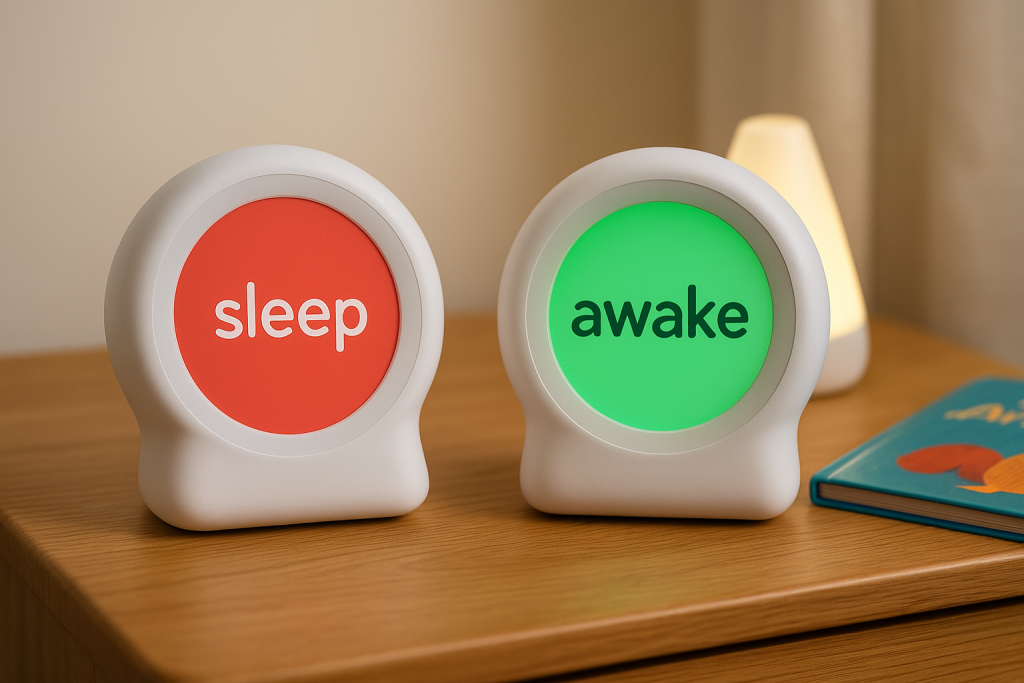
- Red = Sleep / stay in bed
- Yellow = Quiet time / play softly
- Green = OK to wake
It’s basically traffic lights—easy, familiar, and consistent. If your child gets overstimulated by bright colors, icon-based clocks (stars/sun) can feel calmer. Your goal isn’t perfect obedience. It’s a clear message your child can remember when you’re not in the room.
Wake-to-Rise Routines That Reduce Early-Morning Battles
Here’s the secret sauce: pair the clock with one predictable “morning landing.”
Try: “When the clock turns green, you can come get me—and we’ll do something cozy.”
Cozy can be tiny:
- 5-minute cuddle
- 1 short book
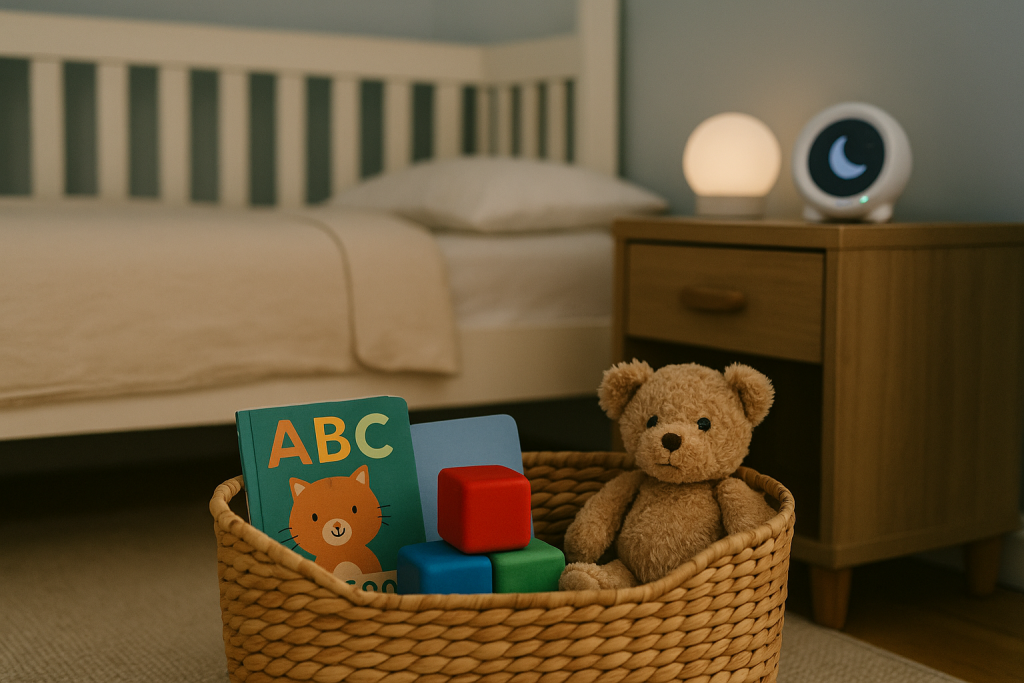
- A small “morning basket” of quiet toys
It’s not bribery. It’s reassurance. Toddlers wait better when they know what happens next.
Naptime and Quiet Time: The Underrated Win
Even if your toddler skips naps, the clock can teach: “You don’t have to sleep, but you do have to rest.”
Script you can reuse:
- “When the clock shows rest, your body stays in your room.”
- “When it changes, you can call me.”
Quiet time is gold in busy homes, apartments, and multi-caregiver households—because it creates a shared rule that doesn’t depend on someone’s mood.
Night Wakings and Fears: Using the Clock as Comfort
If your child wakes scared, the clock works best as a reassurance tool, not a lecture.
Try:
- “Your clock still says sleep. I’m here. Let’s tuck you back in.”
- Keep your voice calm and boring (nighttime is not debate club)
Also: dim light matters. A gentle night light can reduce fear without fully “waking the brain.” If the clock is too bright, it can backfire.
Bedtime Routine Support Without Screens
A toddler clock is handy because it gives you a screen-free cue you can point to instead of checking your phone.
A simple bedtime flow:
- Bath / pajamas
- Same two steps every night (book + cuddle, or song + back rub)
- Clock goes to “sleep” mode
- Goodnight, repeat tomorrow
If you want the clock to work, protect the routine like it’s your kid’s favorite snack: consistent and non-negotiable.
A 3-Day Setup Plan That Actually Sticks
Day 1: Introduce it (no pressure)
Let your child explore it. Name the colors/icons. Practice once: “Red means sleep.”
Day 2: Practice in daylight
Do 5 minutes of “quiet time” with the clock on rest mode. Praise the effort, not perfection.
Day 3: Use it for morning
Set “green” close to their usual wake time, then move it later slowly—5–10 minutes every few days. Small wins build buy-in.
Common Mistakes (and Easy Fixes)
- Setting wake time too late too fast → Start closer to their natural wake time.
- Changing the rule daily → Keep one rule. Repeat it calmly.
- Making it punishment → Make the clock a helper, not a cop.
- Clock too bright → Dim it, or turn off the number display.
- Big rewards for breaking the rule → Keep early mornings low-energy until “green.”
Shared Rooms, Apartments, and Travel: Making It Work Anywhere
In shared rooms, the clock prevents the “one kid wakes everyone” chain reaction—especially if you add a quiet activity basket that only comes out after the wake cue.
When traveling, the clock becomes a familiar anchor in an unfamiliar place. Prioritize:
- Simple visuals (sun/moon is great)
- Easy setup (no 20-step menus)
- A brightness setting that won’t light up the whole room
How to Choose the Right Toddler Clock for Your Kid
Ask yourself three questions:
- Does my child learn best from colors or icons?
- Do I want an all-in-one sound machine, or a simple clock?
- Do I need nap/quiet-time mode for daily structure?
If you want “set it and forget it,” choose a simpler model. If you want one device to run your whole bedtime vibe (light + sound + schedules), go all-in-one.
Amazon Picks: 5 Toddler Clock Options Worth Considering
Below are five product options. Ratings and review counts can change, so double-check the listing before buying.
Quick comparison table
| Model | Key Spec(s) | Best For |
| Hatch Rest (2nd Gen) | App-controlled light + sound | One device for sleep + wake routines |
| LittleHippo Mella Ready to Rise | Trainer + sounds + night light + nap timer | Kids who like friendly “character” cues |
| Tommee Tippee Groclock | Stars/sun sleep-wake visuals | Simple icon-based sleep training |
| OK to Wake! Alarm Clock & Night-Light | Clear “OK” wake cue + night light | Early risers who need permission-to-wake |
| My Tot Clock (Original) | Straightforward sleep/wake cues | Families who want fewer settings |
Hatch Rest (2nd Gen) Sound Machine, Night Light & Time-to-Rise
Why it’s popular: All-in-one light + sound + schedules.
Pros: Grows with your child; great for routines.
Cons: Pricier; app setup required.
Best for: Parents who want one device to manage bedtime and mornings.
LittleHippo Mella Ready to Rise Sleep Trainer Clock
Why it’s popular: Cute trainer with nap timer + sounds.
Pros: Kid-friendly; good for naps and mornings.
Cons: More settings; some kids want to press buttons.
Best for: Toddlers who respond to character-style cues.
Tommee Tippee Groclock Sleep Trainer Clock
Why it’s popular: Stars/sun makes “sleep vs wake” obvious.
Pros: Calm visuals; no reading needed.
Cons: Fewer extras than sound-machine clocks.
Best for: Kids who do best with simple icons.
OK to Wake! Alarm Clock & Night-Light
Why it’s popular: Classic “wait for the OK” boundary.
Pros: Straightforward; great for early risers.
Cons: Feature set varies by version.
Best for: Kids who need a clear permission-to-wake rule.
My Tot Clock (Original) Kids Sleep Trainer
Why it’s popular: Focuses on the core job—sleep/wake cues.
Pros: Simple; easy to stick with.
Cons: Less “all-in-one” than premium models.
Best for: Families who want fewer settings and less tech.
Bonus comfort tool to pair with your routine: If you’re also building a calmer bedtime setup, consider weighted baby sacks for calmer nights.
Research-Backed: Why Visual Cues and Consistent Routines Help
One big 2015 study on bedtime routines found something really reassuring for parents: when families used a consistent bedtime routine, kids tended to have earlier bedtimes, fall asleep faster, and experience fewer night wakings—and the effect was “dose-dependent,” meaning the more consistent the routine, the better the sleep outcomes. That’s why a toddler clock can be so effective: it’s a visual cue that makes your routine feel concrete and repeatable, even when your toddler’s feelings are… loud. Here’s the study:bedtime routine research that supports a toddler clock routine.
Pediatric sleep guidance echoes the same theme: routines help kids feel secure, and consistency across the day (wake time, meals, naps, bedtime steps) supports smoother nights. It also recommends protecting sleep by keeping screens out of bedrooms and turning them off at least an hour before bedtime—because bright, stimulating input can make settling harder. Here’s the guidance:expert pediatric sleep habits that pair well with a toddler clock.
Toddler Clock FAQs
Should I buy a toddler clock if my child still naps?
Yes. It can support naps and quiet time by giving your toddler a “rest window,” even if they don’t fall asleep.
How do I stop my toddler from getting up before the clock turns green?
Start with “green” close to their current wake time, then move it later in small steps (5–10 minutes every few days). Praise effort.
Is a toddler clock safe to use all night?
Generally yes, especially if it’s dim. Keep it stable on a surface and use the lowest comfortable brightness.
What if my toddler is scared of the dark—should I use the night light feature?
Yes. Choose a warm, gentle glow. Too bright can wake them up more.
Can sleep training clocks help with strong-willed toddlers?
They can. Strong-willed kids often do best with predictable boundaries. Keep the rule simple and your response calm and consistent.
Conclusion:
A toddler clock isn’t magic—but it’s a surprisingly effective “translator” that makes mornings less confusing for your child and less exhausting for you. Start with small wins, keep the rule consistent, and remember: you’re teaching a life skill—how to wait, how to rest, and how to start the day with confidence.