What Should My Baby Wear At Night?
We may earn a commission for purchases made using our links. Please see our disclosure to learn more.
If you’ve ever stood in front of a tiny onesie at 2 a.m. thinking, “What Should My Baby Wear At Night?”… welcome to the club. It’s one of those parenting questions that sounds simple, but feels oddly high-stakes when you’re staring at a peacefully sleeping baby and spiraling over whether they’re too warm, too cold, or secretly plotting to wiggle out of everything.
Here’s the good news: you don’t need a “perfect” outfit. You need a safe, comfy, repeatable routine that helps your baby sleep well—and helps you stop second-guessing every snap button.
Affiliate note: This article includes a small Amazon product section. If you buy through those picks, you may support the site at no extra cost to you.
The real goal: cozy, safe, and boring (yes, boring is good)
When it comes to baby sleep clothes, boring is a compliment.
Your best nighttime outfit:
- feels comfortable (not sweaty, not chilly)
- keeps things simple (fewer loose layers)
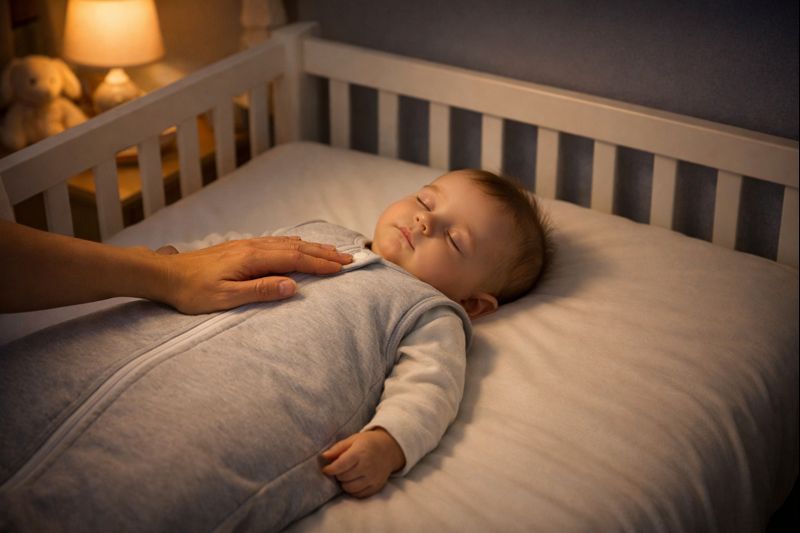
- supports safe sleep (firm, flat surface; no blankets in the crib)
Think of it like packing for a trip: you’re not trying to bring your entire closet. You’re trying to bring the right outfit for the weather—plus a backup for surprises.
And babies? They’re basically tiny surprise machines.
Start with the room, not the outfit
Before you pick pajamas, check the environment. A baby’s sleep outfit should match the room—not your anxiety level.
Many safe-sleep resources recommend keeping the room at a comfortable temperature and avoiding overheating, and the NHS commonly advises a range around 16–20°C (about 60–68°F) for baby sleep.
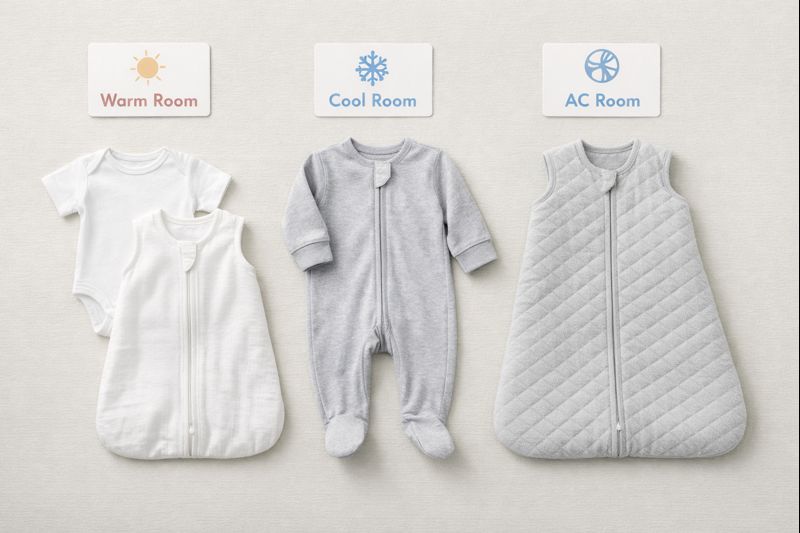
If you’re in a warmer climate (hello, humid nights and strong AC!), comfort might mean lighter layers—and better airflow.
Quick tip: If you walk into the room and immediately want to adjust the fan/blanket/AC… start there. Then dress baby to match.
The “one more layer than you” guideline (with a reality check)
You’ll hear this everywhere: dress your baby in one more layer than you would wear to be comfortable. The AAP shares similar guidance in its clothing tips for babies.
But here’s the real-life version:
- If you’re in light pajamas and comfortable, baby often does well in a sleeper plus a sleep sack.
- If you’re sweating, baby probably doesn’t need fleece pajamas and a thick sleep sack.
- If you’re shivering, baby may need a warmer sleeper or a warmer sleep sack (not twelve random layers).
Reality check: “Layer” isn’t always literal. A thick fleece footie can be “more” than two thin cotton layers.
Newborn nights feel different (because newborns are different)
The first 6–8 weeks are its own weird little season of life.
Newborns:
- wake more often
- poop at inconvenient times (a hobby, really)
- run sleepy and scrunchy, but not always great at temperature regulation
What usually works for newborn sleep clothes
- A soft, breathable sleeper (cotton is a classic)
- A swaddle or sleep sack depending on your baby’s stage
- Easy access for diaper changes (zippers > snaps when you’re half-asleep)
If you’re feeling nervous, remember: you can always adjust tomorrow night. Nobody gets “perfect baby pajamas” on the first try.
Swaddle vs sleep sack: what to use, and when to switch
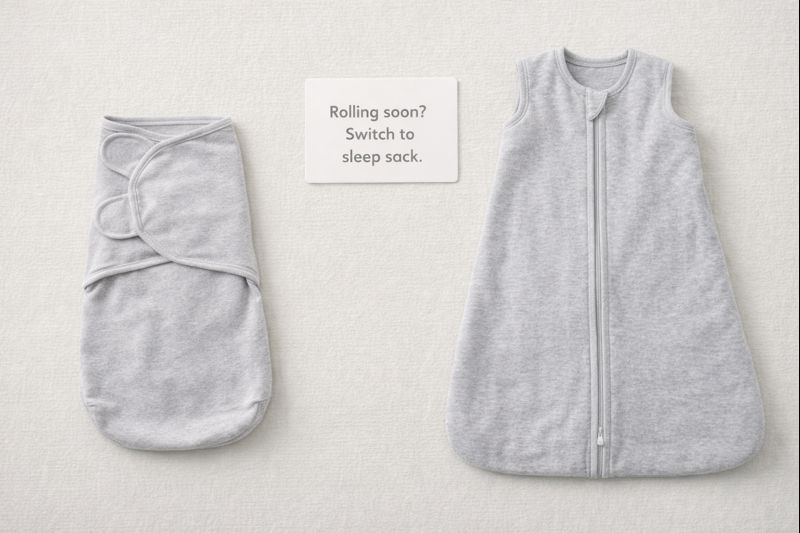
Swaddles can help in the early weeks because they reduce the startle reflex. But swaddling comes with safety rules—especially back sleeping and stopping when rolling starts becoming possible.
If you’re unsure which option fits your baby right now, this quick breakdown is helpful:sleep sack vs swaddle guide.
A simple “when to choose what” cheat sheet
- Swaddle (newborn stage): helpful if baby calms with snug arms-in support
- Transitional swaddle: helpful when baby starts resisting a tight wrap
- Sleep sack: great once you’re done swaddling (and for long-term safe warmth)
And yes—some babies hate swaddles with passion. That’s allowed. You’re not failing. You just got a tiny opinionated roommate.
TOG ratings and seasonal dressing (without overcomplicating it)
If you’ve seen “TOG” and thought, “Is this baby clothing or a secret password?”—you’re not alone.
TOG is just a warmth rating for sleep sacks and wearable blankets. Higher TOG = warmer.
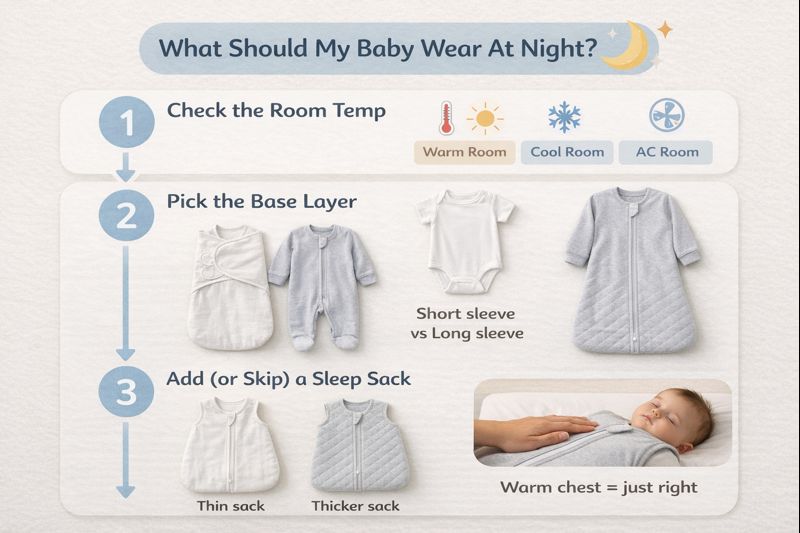
Instead of memorizing charts, do this:
- Check the room temp
- Choose a sleeper (thin or warm)
- Choose a sleep sack TOG that matches the room
- Do a quick comfort check (see Section 9)
Pro tip: Brands vary. Use the manufacturer’s temperature guide as a starting point, not gospel.
Pajama styles that make night changes less dramatic
You don’t want cute. You want functional at 3 a.m.
Footed sleepers
Best for: cooler rooms, quick changes, “I don’t want to find socks” energy.
Two-piece pajama sets
Best for: older babies/toddlers, warmer rooms, easier temperature tweaks.
Gowns / knotted gowns
Best for: newborn diaper changes (you just lift, change, done).
If nighttime changes feel like wrestling a tiny alligator, switch to double zippers and let future-you say thank you.
Fabric choices: breathable beats bulky
Fabric matters because babies can overheat more easily than adults.
Here’s a simple way to think about it:
- Cotton: breathable, dependable, easy to wash
- Bamboo/rayon blends: soft and temperature-flexible (great for sensitive skin)
- Wool (merino): naturally temperature regulating (often pricier, but effective)
- Fleece: warm, but can trap heat—use carefully in warm rooms or with heavy sleep sacks
If your baby gets sweaty, flushed, or wakes cranky for no obvious reason, switching to a more breathable fabric can help.
The comfort check: how to tell if baby is too hot or too cold
This is the part that builds your confidence fast.
Skip the hands and feet—they’re often cooler. Check:
- the back of the neck
- the chest
- the upper back
Signs baby might be too warm
- sweaty hair or damp neck
- flushed cheeks
- heat rash
- fast breathing (when not crying)
Signs baby might be too cold
- cool chest/back
- fussiness that improves after adding warmth
- waking often and settling only when held warm
If you’re unsure, remove one layer first (overheating is the bigger risk to avoid). The AAP emphasizes keeping sleep safe by reducing risks like overheating and loose bedding.
Dressing for AC, fans, heaters, and humid nights
Your baby’s “night outfit” depends a lot on where you live.
If you run strong AC
- use one warmer layer, like a cotton sleeper + sleep sack
- avoid thick fleece unless the room is genuinely cold
If you live in a hot/humid climate
- go for lightweight cotton (short sleeves or a thin sleeper)
- consider a low-TOG sleep sack or just a sleeper if it’s very warm
About fans
A well-cited case-control study in Archives of Pediatrics & Adolescent Medicine (2008) found that fan use during sleep was associated with a lower SIDS risk in the studied population, especially in warmer or “adverse” sleep environments. (Still: a fan is not a magic shield. Safe sleep basics come first.)
Tiny add-ons: hats, socks, mittens—do you need them?
This is where parents get trapped in the “but what if” loop.
Hats at night
Generally, skip hats for indoor sleep. Babies can’t easily remove them, and hats can contribute to overheating. (If a hospital used a hat right after birth, that’s a short-term, monitored situation—not a long-term sleep rule.)
Socks
If you’re using a footed sleeper, you usually don’t need socks. If baby wears a gown or footless outfit in a cool room, socks can help—but they also come off constantly.
Mittens
Use them only if your baby scratches a lot and you’ve trimmed nails. Otherwise, bare hands help babies self-soothe.
Special situations: preemies, eczema, reflux, and sick nights
Some nights need a slightly different plan.
Premature babies
Preemies can have a harder time regulating temperature. Your NICU or pediatrician may give specific guidance—follow that first.
Eczema or sensitive skin
- prioritize soft, breathable fabrics
- avoid rough seams and scratchy tags
- consider mittens only if scratching is intense
Reflux
You don’t need special “reflux pajamas,” but you might prefer:
- easier diaper access (because spit-up + blowout is… a combo)
- simple layers so you can change fast
When baby is sick
If your baby has a fever, dress lighter and follow medical guidance. Don’t bundle to “sweat it out.”
Safe sleep basics that affect what baby wears
This is the foundation underneath every outfit decision.
Key guidance from major public health sources includes:
- baby sleeps on their back
- on a firm, flat surface
- with no loose blankets, pillows, or soft toys
- ideally in the same room as caregivers (but on a separate surface) for at least the first 6 months
HealthyChildren (AAP) notes that room-sharing (not bed-sharing) can reduce SIDS risk by as much as 50%.
This is why sleep sacks are popular: they replace loose blankets while keeping baby warm.
Product Picks: 5 nighttime helpers (practical + parent-approved)
1) Love to Dream Swaddle UP (Original)
Why it’s useful: Arms-up design helps babies self-soothe while still feeling snug.
Features: Zip-up ease, hip-friendly fit, breathable fabric options.
Best for: Newborns who fight traditional wraps or like hands near their face.
2) HALO SleepSack Micro-Fleece Swaddle
Why it’s useful: A warmer swaddle option that’s still simple to use.
Features: Adjustable wrap, secure closures, zipper access.
Best for: Cooler rooms, babies who sleep best with a snug wrap.
3) Simple Joys by Carter’s Flannel Receiving Blankets (Pack of 7)
Why it’s useful: The “grab-and-go” option for swaddling, burping, and backup plans.
Features: Soft flannel, generous size, multipurpose use.
Best for: Newborn stage, parents who want extras for laundry days.
4) Comfy Cubs Baby Sleep Sack (Wearable Blanket)
Why it’s useful: A simple wearable blanket once you’re done swaddling.
Features: Sleeveless design, zipper for easy changes, lighter warmth options.
Best for: Babies who’ve transitioned to arms-free sleep.
5) Safety 1st 3-in-1 Nursery Thermometer (Analog)
Why it’s useful: Helps you dress baby based on the room—without guessing.
Features: Nursery temp check, simple display, no setup stress.
Best for: Any home where room temperature swings (AC, heat, drafts).
Research-backed notes (credibility, without the panic)
Here are two evidence-based points that can genuinely calm the “what should they wear?” spiral:
- The AAP emphasizes keeping the sleep environment safe (firm surface, no loose bedding) and notes that room-sharing is protective while bed-sharing increases risk. If you want the official wording straight from pediatric experts, read AAP safe sleep guidance on keeping babies safe at night.
- Ventilation matters. A population-based case-control study (2008) found fan use during infant sleep was associated with a lower SIDS risk, especially in warmer or higher-risk sleep setups. Here’s the 2008 fan-use and SIDS study abstract if you want the details.
FAQs (quick, practical answers)
What should my baby wear at night without a swaddle?
A zip sleeper + sleep sack is the most common “easy mode” combo. Choose the sleep sack warmth based on room temperature, then do a neck/chest comfort check.
How many layers should a newborn wear to sleep?
A good starting point is one more layer than you feel comfortable in—then adjust based on your baby’s neck/chest temperature and your room’s warmth.
Can my baby sleep in just a diaper?
In very hot rooms, some babies can—but only if they stay comfortable and you’re following safe sleep practices. A thin cotton layer is often safer and more comfortable than “almost nothing.”
Should my baby wear a hat to sleep?
Usually, no. Indoors, a hat can trap heat. If you’re worried about warmth, add a safer layer like a sleep sack instead.
What if my baby’s hands feel cold at night?
Cold hands are common. Check the chest/neck instead. If the chest feels warm and baby sleeps well, you’re likely fine.
Conclusion (deep breath—you’re doing better than you think):
You don’t need a perfect system. You need a simple one: match the outfit to the room, stick to safe sleep basics, and use the comfort check to fine-tune. After a few nights, you’ll start recognizing your baby’s “just right” setup—and that confidence is everything.
If you want, tell me your baby’s age and whether your room runs warm, cool, or heavy on AC, and I’ll suggest 2–3 “go-to” outfit combos you can rotate all week.