Best Toddler Sleeping Bag for Comfort and Safety
We may earn a commission for purchases made using our links. Please see our disclosure to learn more.
Buying a toddler sleeping bag sounds simple until you are staring at 40 cute options at midnight. You want something cozy, safe, easy to wash, and practical enough for daycare, travel, camping, or grandma’s house.
A toddler sleeping bag can be a sweet sleep helper when your child is too big for baby swaddles but still loves that “my own cozy space” feeling. In this guide, you’ll learn what to look for, what to avoid, and which Amazon options fit different needs.
Why a Toddler Sleeping Bag Can Be Worth Buying
A good toddler sleeping bag gives your child a familiar sleep spot when life feels a bit wobbly.
Think of it like a portable comfort zone. Daycare nap? Same cozy setup. Weekend visit? Same familiar fabric. First sleepover with cousins? Less “where am I?” and more “oh, this is mine.”
For parents, the wins are simple:
- Easier nap routines
- Less loose bedding to pack
- A cleaner sleep surface away from shared blankets
- Better organization for daycare or preschool
- More independence for toddlers
The right sleeping bag can make rest time feel less like a negotiation with a tiny lawyer.
What Is a Toddler Sleeping Bag?
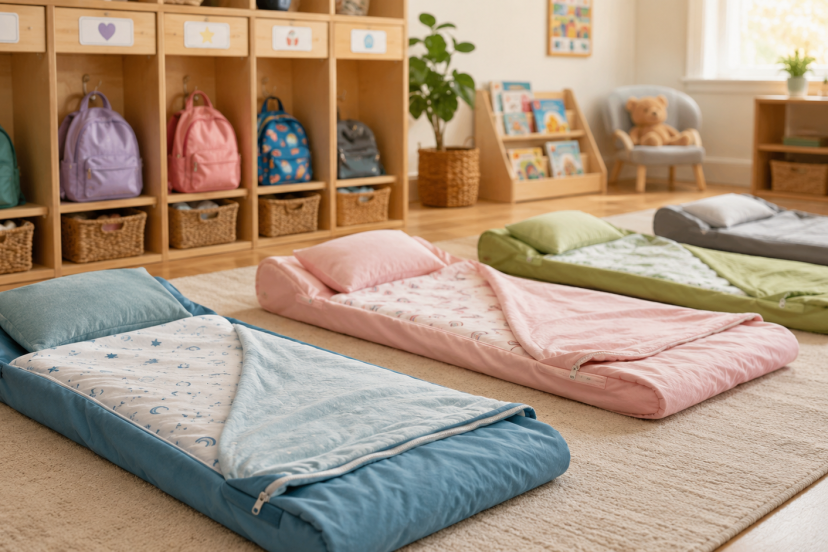
A toddler sleeping bag is a child-sized sleep setup made for toddlers and young kids. Some look like mini camping bags. Others are nap mats with an attached blanket and pillow.
Common styles
You will usually see three types:
- Nap mat sleeping bags with a padded base, blanket, and pillow
- Kids camping sleeping bags for indoor and outdoor use
- Wearable toddler sleep sacks for crib or toddler bed use
Most parents want something portable, washable, and nap-friendly.
When Should You Use One?
A toddler sleeping bag works best when your child is old enough to use soft bedding safely and moves freely.
It can be helpful for:
- Daycare or preschool naps
- Travel and hotel stays
- Sleepovers
- Camping trips
- Visits with grandparents
- Transitioning to more independent rest
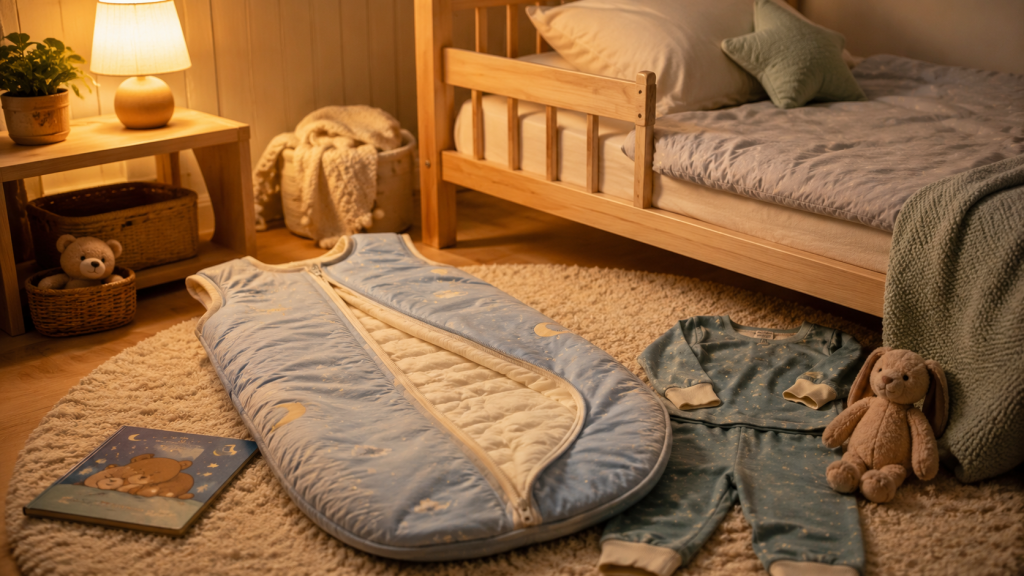
If you are shopping for a baby under 12 months, pause here. For infant travel sleep, you need a firm, flat, approved sleep space instead. You can compare safer options in this guide to baby travel beds.
Safety Comes First
Comfort matters, but safety gets the front seat. Always match the product to your child’s age, mobility, and sleep setting.
Avoid loose bedding for infants
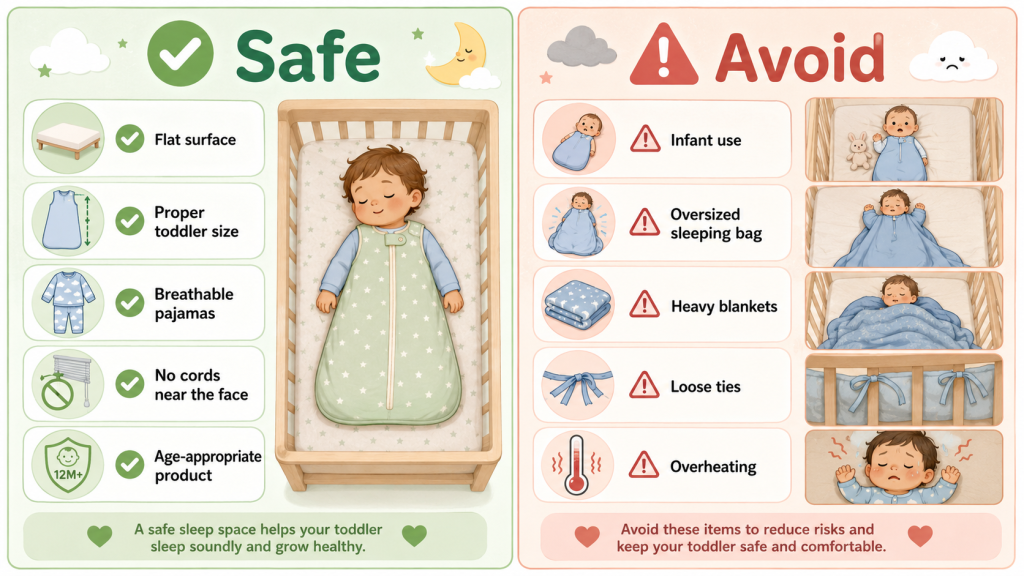
The American Academy of Pediatrics advises a firm, flat, non-inclined sleep surface for babies, with no soft objects or loose bedding. That is why toddler sleeping bags are not for young infants.
Use the right sleep space
For toddlers, make sure the bag lies flat, does not bunch around the face, and gives your child room to move. Avoid long cords, loose ties, heavy padding, or detachable pieces that could become hazards.
How to Choose the Right Size
Size is where many parents accidentally trip. Too small feels restrictive. Too large can feel floppy and awkward.
A good fit lets your toddler stretch, roll, and bend their knees without getting swallowed like a burrito blanket.
Check these details
Look for length, width, age range, maximum child height, mat thickness, cot compatibility, and how small it rolls up. If your child is tall for their age, size up carefully. For daycare, ask whether the center requires a specific cot size.
Best Materials for Comfort
Toddlers notice texture. Oh, do they notice. One scratchy seam and suddenly bedtime has a villain.
Soft cotton, microfiber, fleece, minky fabric, and polyester blends are common. Cotton feels breathable. Fleece and minky feel plush and warm. Polyester often dries quickly and handles repeated washing.
Sensitive skin tip
If your child runs warm or has sensitive skin, choose breathable fabrics and avoid heavy padding. A washable toddler nap mat is often easier to keep fresh than a bulky sleeping bag.
Warmth, TOG, and Room Temperature
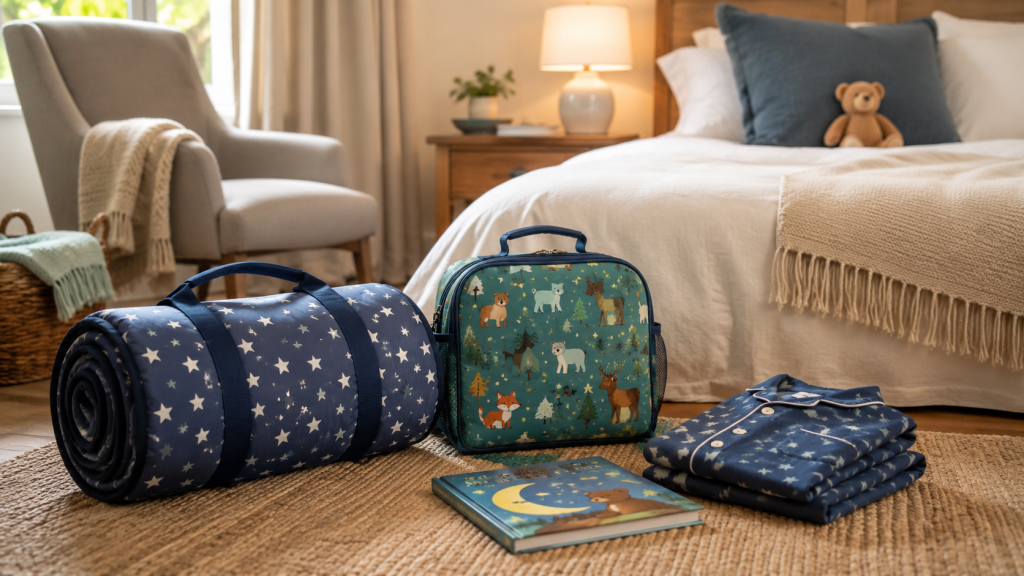
Some toddler sleep sacks use TOG ratings, which describe warmth. Many nap mats do not list TOG, so judge by fabric, thickness, and room temperature.
For warm rooms, lightweight cotton or thin microfiber works better. For cooler rooms, fleece or minky lining may feel cozier.
A simple rule: dress your child in layers you can adjust. If their chest or back feels sweaty, they may be too warm.
Toddler Sleeping Bag vs. Nap Mat vs. Sleep Sack
These products overlap, but they are not identical.
Toddler sleeping bag
Best for sleepovers, travel, indoor camping, and older toddlers who can manage a zippered blanket-style setup.
Toddler nap mat
Best for daycare and preschool because it usually includes a padded mat, attached blanket, and pillow.
Toddler sleep sack
Best for children still using a crib or toddler bed who need wearable warmth instead of a loose blanket.
Your choice depends on where your toddler sleeps most often.
Features Worth Paying For
You do not need every fancy detail. But a few features can make daily life smoother.
Look for:
- Machine-washable fabric
- Attached or removable pillow
- Built-in blanket
- Roll-up straps
- Carry handle
- Name tag pocket
- Soft inner lining
- Durable zipper or hook-and-loop closure
- Lightweight design
- Cot-friendly size
Skip anything too complicated. Toddler gear should not require an engineering degree before coffee.
5 Amazon Toddler Sleeping Bag Picks
Here are five Amazon products that match common parent needs. Always check current availability, sizing, reviews, and care instructions before buying.
ACRABROS Toddler Nap Mat with Pillow and Blanket
This daycare-friendly nap mat has a padded base, removable pillow, and soft blanket.
Features: extra-large rolled design, polyester and minky-style materials, removable pillow, name card area, daycare-friendly build.
Best for: Parents who want one easy roll-up nap setup for school.
Lasoftan Toddler Nap Mat with Pillow and Blanket
The Lasoftan toddler nap mat is a practical slumber bag for daycare, preschool, or travel.
Features: rolled napping mat style, built-in pillow and blanket, kid-friendly size, portable design, soft sleep surface.
Best for: Toddlers who need a cozy nap space outside the home.
beeweed Toddler Nap Mat, Rollup Design Kid Sleeping Mat
This toddler nap mat includes a removable pillow and minky blanket, making it a flexible preschool pick.
Features: roll-up design, removable pillow, minky blanket, lightweight carry style, multipurpose use.
Best for: Parents who want an easy-to-pack option for several settings.
Moonsea Toddler Nap Mat with Pillow and Fleece Minky Blanket
Moonsea’s nap mat is designed to fit a standard cot for daycare settings.
Features: 21″ x 50″ cot-friendly size, pillow, fleece minky blanket, lightweight build, travel-friendly design.
Best for: Preschoolers who nap on daycare cots.
JOIEDOMI Toddler Nap Mat with Removable Pillow and Minky Blanket
This larger option is designed for kids ages 3–6 and gives growing toddlers more room.
Features: 55″ x 30″ size, removable pillow, minky blanket, roll-up design, soft mat for daycare and sleepovers.
Best for: Taller toddlers or preschoolers who need extra space.
How to Use One for Daycare, Travel, and Sleepovers
Before sending one to daycare, label it clearly, wash it weekly, and check the school’s nap policy.
For travel, practice at home first. Let your toddler use the sleeping bag during story time or a weekend nap. Familiarity helps. A new hotel room feels less strange when their usual cozy mat comes along.
For sleepovers, pack pajamas that match the room temperature. Pack a small comfort item if your child uses one safely.
Research-Backed Buying Notes Parents Should Know
A toddler sleeping bag is mostly about comfort, but sleep gear still deserves a safety-first mindset. Toddlers need enough rest to grow, learn, regulate emotions, and avoid turning into tiny gremlins by 4 p.m. According to the CDC’s guidance on how much sleep toddlers need for healthy growth, children ages 1–2 should get 11–14 hours of sleep in a 24-hour period, including naps.
That recommendation lines up with the American Academy of Sleep Medicine’s research-backed consensus on the 11-to-14-hour toddler sleep window. So, when you choose a toddler sleeping bag, you are not just buying cute nap gear. You are helping protect a daily rhythm that supports mood, memory, behavior, and development.
Common Mistakes to Avoid
The biggest mistake is buying only for cuteness. Yes, the dinosaur print is adorable. But washability, size, and safety matter more.
Avoid:
- Choosing a bag that is too small
- Buying a bulky option for warm rooms
- Using toddler bedding for babies
- Ignoring daycare size rules
- Forgetting to wash before first use
- Picking non-washable materials
- Overdressing your child inside a warm bag
Check zippers and seams often. Toddlers test gear like tiny product inspectors with snacks.
FAQs About Toddler Sleeping Bags
What age is best for a toddler sleeping bag?
Most toddler sleeping bags are best for children over 12 months, often around ages 2–5 depending on the design. Always follow the manufacturer’s age and size guidelines.
Can a toddler sleeping bag be used every night?
Yes, if it fits safely, suits the room temperature, and your child can move comfortably. For regular bed use, some families prefer a toddler sleep sack or wearable blanket.
Is a toddler nap mat better than a sleeping bag?
For daycare, yes, a nap mat is often better because it includes padding and is easier to roll, label, and store. For camping or sleepovers, a kids sleeping bag may work better.
How do I wash a toddler sleeping bag?
Follow the care label. Most nap mats can be machine washed on a gentle cycle and dried on low. Remove pillows first if the product allows it.
What should my toddler wear inside a sleeping bag?
Use breathable pajamas that match the room temperature. Avoid overdressing. If the bag has fleece or thick padding, lighter pajamas may be enough.
Conclusion: Choose Cozy, Practical, and Safe
The best toddler sleeping bag is the one that fits your child, your routine, and your real life. For some families, that means a daycare nap mat. For others, it is a roomy kids sleeping bag for travel or sleepovers.
Focus on safe design, soft fabric, easy washing, and the right size. Then let your toddler enjoy having a little sleep space that feels like theirs.
Parenting has enough moving parts. A good sleeping bag will not solve every nap battle, but it can make rest time feel calmer, warmer, and a little more predictable. And honestly, we will take every peaceful win we can get.