5 Baby Travel Beds for Safe Sleeping Away From Home
We may earn a commission for purchases made using our links. Please see our disclosure to learn more.
Traveling with a baby sounds sweet until bedtime shows up with a tiny suitcase full of drama. You are in a hotel room or grandma’s guest room, and suddenly the normal crib is gone. Someone whispers, “Maybe the baby can just nap on the bed?” Deep breath.
Baby Travel Beds can make nights away from home calmer, but only when you use them with baby sleep safety in mind. This guide covers safe sleep rules, what to pack, what to avoid, and five Amazon options.
What “Safe Sleep” Means When You’re Away From Home
Safe sleep does not take a vacation just because your family does. The goal is simple: give your baby a firm, flat, separate sleep space with no loose blankets, pillows, bumpers, or plush toys.
Consider it similar to a vehicle seat. You would not skip the buckle because the drive is short. In the same way, naps at a hotel, cousin’s house, or Airbnb still need the same careful setup.
What Baby Travel Beds Are—and What They Are Not
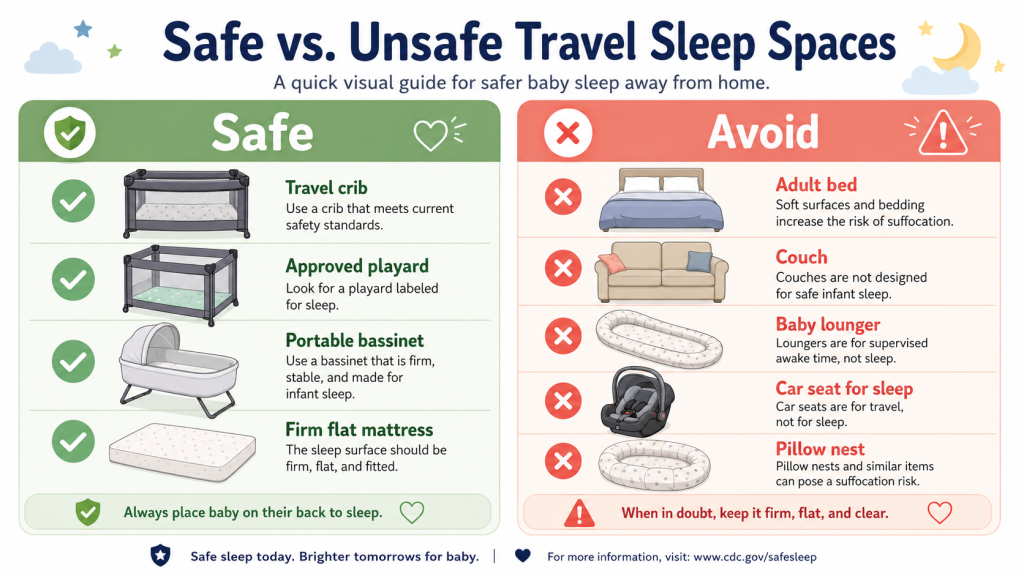
Baby Travel Beds are portable sleep spaces designed for trips, visits, and small-space naps. Some look like mini cribs. Some are lightweight playards. Some include a bassinet insert for younger babies.
They are not sofa cushions, adult beds, loungers, nursing pillows, fluffy nests, car seats, swings, or bouncers. Those products may be useful for awake time, but they should not replace a safe sleep surface.
A good portable baby bed should feel boring in the best way: sturdy frame, firm mattress, fitted sheet, breathable sides, and no extra fluff.
Safe Sleep Rules Parents Should Not Bend
The safest travel sleep setup follows the same rules you use at home:
- Place baby on their back for every sleep.
- Use a firm, flat, non-inclined mattress.
- Keep the sleep space empty.
- Use only the mattress and sheet made for that product.
- Follow the height, weight, and developmental limits.
If grandparents, sitters, or relatives help with bedtime, show them the setup. A quick “Here’s how we do sleep” can prevent well-meaning extras like pillows or folded blankets.
How to Choose Baby Travel Beds Without Overthinking It
You do not need the fanciest option. You need the one you will use correctly every time.
Look for a firm sleep surface, mesh sides, a stable base, compact fold, clear limits, fitted sheet availability, and easy cleaning. Babies love testing fabric at the worst possible time.
When should you stop using one?
Stop when your baby can climb out, exceeds the manufacturer’s limit, or no longer fits comfortably. Safety beats “just one more trip.”
Baby Travel Beds vs. Travel Cribs vs. Playards
The names can feel like baby gear alphabet soup.
A travel crib is usually lightweight. A playard, often called a pack and play, can work for sleep if it has an approved flat mattress and is used as directed. An infant travel bassinet may work for newborns, but only until baby reaches its limits or starts rolling or pushing up.
The big idea: do not shop by name alone. Check whether the product is intended for infant sleep and whether it meets current safety standards.
Where Baby Travel Beds Work Best
Baby Travel Beds are helpful for hotels, vacation rentals, grandparents’ homes, road trips, camping in safe weather, and daytime visits with family.
One parent may need a lightweight travel crib for flights. Another may need a sturdy playard for weekly visits to Nana’s house. Both are valid. Parenting is not a one-size-fits-all pajama set.
What to Pack for a Safer Sleep Setup
Pack like bedtime is its own little trip within the trip.
Bring the travel bed, original mattress, fitted sheets for that model, a wearable blanket or sleep sack, pacifiers if used, a small white noise machine, baby monitor, and a safe blackout solution kept away from the sleep space.
Skip loose quilts, pillows, stuffed animals, and extra mattress pads. If the room feels cool, dress baby in layers or use a sleep sack. This newborn wearable blanket guide can help you think through safer blanket-free options.
How to Set Up a Travel Sleep Space in 5 Minutes
When you arrive, set up the sleep area before everyone gets overtired. Future-you will thank you.
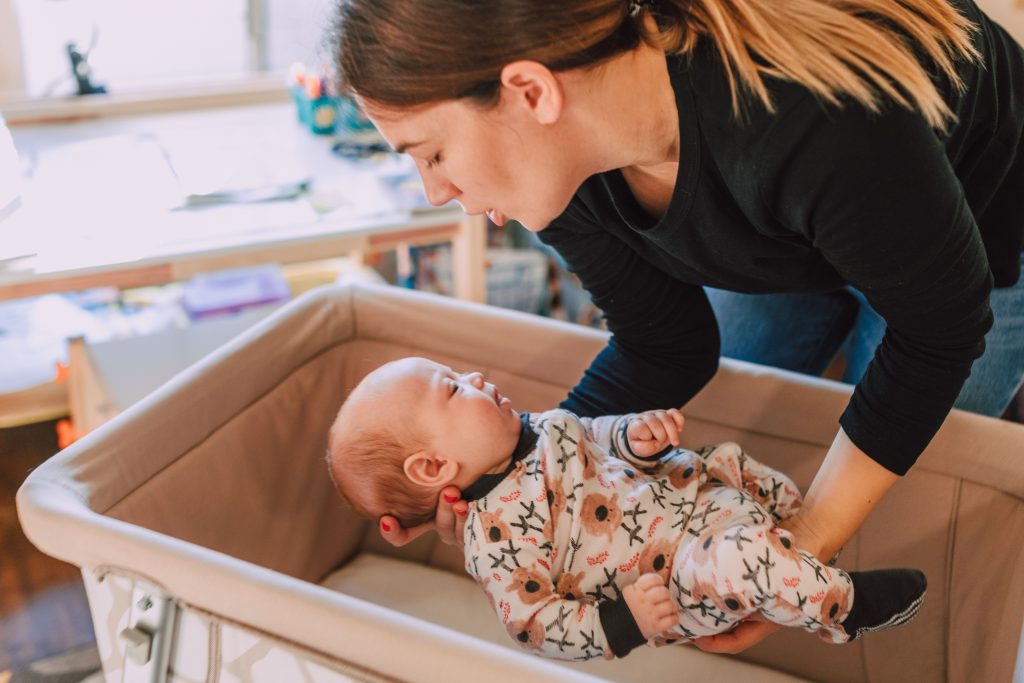
Choose a spot away from cords, curtains, heaters, air-conditioning blasts, lamps, and heavy furniture. Lock the frame into place. Confirm the mattress sits flat. Add the fitted sheet. Then scan the area like a mildly paranoid safety detective.
Ask yourself: Can baby reach anything? Is the surface flat? Is the sleep space empty? Is the room comfortable? If so, you’re doing well.
Dressing Baby for Sleep Without Loose Blankets
Travel rooms are unpredictable. One hotel room feels like a freezer. Another feels like soup. That makes dressing baby tricky.
Start with a simple base layer, then add a wearable blanket if needed. Avoid weighted sleep sacks, weighted swaddles, and indoor sleep hats unless your pediatrician gives specific guidance.
For a quick check, feel the baby’s back of the neck or chest. It’s pleasant to be warm. Sweaty or hot indicates the removal of a layer.
Common Travel Sleep Mistakes to Avoid
The most common mistake is improvising when everyone is tired. We have all been there. The baby is crying, the luggage exploded, and the adult bed looks very convenient.
Avoid adult beds, folded towels under the mattress, pillows to “help reflux,” car seat sleep after the ride, loungers for naps, and cords or curtains near the travel bed.
Safe sleep does not require perfection. It is about having a plan before exhaustion starts making weird suggestions.
Research-Backed Safety Notes Parents Should Know
The AAP safe sleep recommendations for infants emphasize back sleeping, a firm non-inclined surface, room sharing without bed sharing, and keeping soft objects out of the sleep space.
The CDC safe sleep guidance for caregivers gives similar advice: place babies on their backs, use a firm flat sleep surface, keep soft bedding out, and keep baby’s sleep area in your room when possible.
The CPSC infant sleep product safety standard is also worth knowing. Products marketed for infant sleep should meet federal safety rules, so be cautious with loungers, inclined sleepers, and soft “nest” products.
5 Baby Travel Beds to Consider on Amazon
Below are five Baby Travel Beds and portable sleep options to compare. Always read the current manufacturer instructions, age limits, and safety warnings before use.
1. Graco Pack ’n Play On The Go Playard
The Graco Pack ’n Play On The Go Playard is a practical pick for parents who want a reliable travel sleep space without going too fancy. It works well for family visits, hotel stays, and keeping a spare sleep setup at grandma’s house.
Features: removable full-size infant bassinet, folding feet and wheels for a more compact fold, mesh sides, push-button fold, and a carry bag for travel or storage.
Use it for: parents who want an affordable, trusted portable playard for naps, overnight visits, and occasional travel.
2. Guava Family Lotus Travel Crib with Lightweight Backpack
The Lotus stands out for its backpack-style carry bag and zippered side door, which many parents love for soothing baby without leaning awkwardly over the top.
Features: backpack carry style, full-height mesh sides, zippered side opening, lightweight frame.
Use it for: flights, road trips, and easier access for transfers or comforting.
3. Chicco Alfa Lite Lightweight Travel Playard
This travel playard has a snap-open design and a lighter build than many traditional playards.
Features: compact fold, mesh sides, carry bag, lightweight frame.
Use it for: naps, overnight visits, and small spaces.
4. Newton Baby Compact Travel Crib & Play Yard
Newton focuses on washable materials and a travel-friendly design. The compact version is built for parents who want easier cleaning and portability.
Features: washable mattress components, foldable design, side zip door, travel-ready carry style.
Use it for: parents who prioritize cleanup, airflow, and frequent travel.
5. Pamo Babe Compact Pack and Play Portable Crib
This is a budget-friendly portable crib and playard option for families who want a basic travel sleep space without premium pricing.
Features: foldable frame, mattress pad, carry bag, mesh sides.
Use it for: family visits, occasional travel, and parents who need an affordable spare sleep space.
How to Clean and Maintain a Portable Baby Bed
Travel gear gets exposed to snacks, spit-up, hotel floors, car trunks, and mysterious crumbs that nobody admits creating.
After each trip, wipe the frame, wash approved fabric parts, and air-dry everything fully before storage. Check the mattress, seams, zipper, locks, and legs. If something feels loose, bent, cracked, or uneven, do not use it.
Save a digital copy of the instruction manual or save the original. Sleep-deprived assembly should not require ancient puzzle-solving skills.
FAQ About Baby Travel Beds
Are Baby Travel Beds safe for newborns?
They can be safe if the product is designed for newborn sleep, has a firm flat surface, and is used exactly as directed. Check the age and weight limits before every trip.
Is it possible for my infant to spend the night in a travel-size crib?
Yes, many travel cribs and playards are designed for overnight sleep. Use the original mattress, a fitted sheet made for the model, and keep the sleep space empty.
Are baby loungers okay for travel naps?
No. Loungers, nests, pillows, and soft cushions are not safe sleep spaces for babies. Use a crib, bassinet, portable crib, or playard approved for sleep instead.
Do hotels provide safe cribs for babies?
Some hotels offer cribs or playards, but quality varies. Ask before booking, then inspect the crib for broken parts, loose hardware, poor fit, or extra padding.
What is the best Baby Travel Bed for flying?
A lightweight travel crib with a compact fold or backpack carry style is usually easiest for flights. The best choice depends on your baby’s size, your luggage setup, and how often you travel.
Conclusion: Safer Sleep Can Travel With You
Baby Travel Beds can make life away from home feel more manageable, especially when bedtime already feels like a tiny negotiation with a very cute boss. Keep sleep simple: back, firm, flat, separate, and empty. Choose a portable crib, playard, or travel bassinet that fits your baby’s stage and your travel style. Pack the right sheet, use a wearable blanket instead of loose bedding, and set up the sleep space before everyone gets overtired. You do not need a perfect trip to be a thoughtful parent. You just need a safer plan, a little patience, and maybe coffee in the morning.