5 Tips For Handling A Twin Baby Sleep Schedule

We may earn a commission for purchases made using our links. Please see our disclosure to learn more.
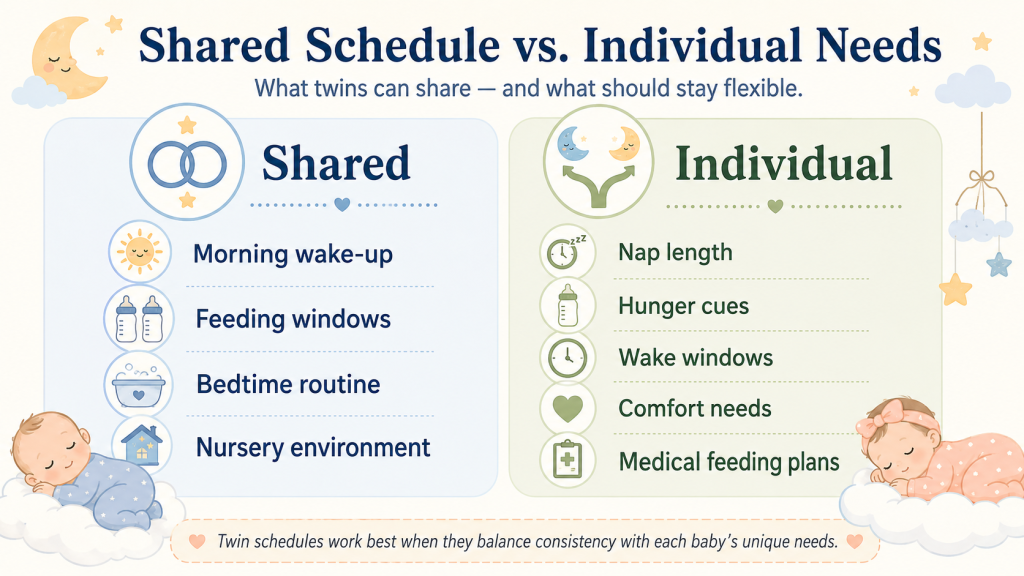
When two babies take turns waking, feeding, and refusing naps, the day can feel like one long relay race. A practical Twin Baby Sleep Schedule will not make both children behave identically, and it should never override hunger, growth, illness, or temperament. Instead, it creates shared points—feeding windows, nap opportunities, and a predictable bedtime—so everyone gets more chances to rest.
This guide explains five realistic ways to build that rhythm, adapt it for age or prematurity, and follow current safe-sleep guidance. You will also find a flexible sample schedule, research-backed advice, selected products, and answers to common questions. The goal is not perfection. It is a workable plan for two individual babies and their caregivers.
What a Twin Baby Sleep Schedule Should Actually Do
A useful Twin Baby Sleep Schedule coordinates the day while leaving room for individual needs. Helpful anchors include morning wake-up, feeding windows, the first nap, and bedtime.
For newborns, “schedule” often means a feed-awake-sleep sequence, not fixed times. It works when it reduces back-to-back care without delaying feeds or ignoring tired cues.
Tip 1: Start With Shared Anchors, Not a Minute-by-Minute Clock
Choose two or three events that can happen at roughly the same time daily. A consistent morning start, first feed, and bedtime are easier than a tightly divided day.
Begin with 30-minute windows. If one twin tires sooner, put that baby down instead of stretching the wake period for symmetry. Keep the anchors for several days. A flexible Twin Baby Sleep Schedule becomes clearer when you adjust one piece at a time.

Tip 2: Feed Both Babies in the Same Window
When both babies eat within one window, they may become sleepy near the same time, and caregivers avoid moving endlessly between feeds.
Some families tandem-feed; others feed one baby immediately after the other. Prepare supplies and keep a log. Synchronization must never override individual care. Premature babies or those with feeding or growth concerns may need different timing. Your Twin Baby Sleep Schedule should support nutrition, not compete with it.
Tip 3: Use One Repeatable Wind-Down Routine
Twins need a short sequence that one caregiver can manage alone: feeding, burping, fresh diapers, sleepwear, dim lights, a quiet song, then separate safe sleep spaces.
Use the same order nightly and a shorter version before naps. This guide to creating a bedtime routine for babies offers additional ideas. If baths energize one baby, move them earlier. Repeatability matters more than extra steps.
Tip 4: Protect Individual Sleep Needs Within the Shared Plan
Twins share a birthday, not necessarily a sleep requirement. One may settle quickly; the other may tire earlier.
Allow a 15- to 30-minute cushion around naps. Start the sleepier baby’s routine while the other has quiet play. Track patterns across several days. If one twin repeatedly becomes overtired while waiting, move that nap earlier. A successful Twin Baby Sleep Schedule creates overlap without forcing sameness.
Tip 5: Divide Night Duties Before Everyone Is Exhausted
Make nighttime decisions before bed. With two caregivers, one might feed while the other changes and resettles. Alternatively, divide the night into shifts.
A solo caregiver can stage supplies within adult reach—but never inside a crib. Use dim light and log feeds. Decide what happens when only one twin wakes, following medical guidance. A written plan keeps the Twin Baby Sleep Schedule consistent.
A Sample Twin Baby Sleep Schedule by Age
Use these patterns as starting points. Follow hunger cues and adjusted age for babies born early.
| Age | Main goal | Day pattern | Night focus |
| Birth–12 weeks | Shared feed windows | Frequent feeds and naps | Safety and caregiver shifts |
| 3–5 months | Morning and bedtime anchors | Three to five nap opportunities | Repeatable routine |
| 6–8 months | Predictable nap windows | Often two or three naps | Review feeds with a clinician |
| 9–12 months | Preserve shared naps | Usually two naps | Steady bedtime |
For infants 4 to 12 months, the American Academy of Sleep Medicine recommends 12 to 16 hours per day, including naps. Treat the range as context, not a scorecard.
How to Adjust for Prematurity and Different Growth Patterns
Adjusted age subtracts the weeks a baby was born before 40 weeks from chronological age. A six-month-old born eight weeks early may organize sleep more like a four-month-old.
Use adjusted age for nap changes or sleep-training discussions. Follow the neonatal discharge plan and growth clinician. If the twins have different feeding needs, keep two care plans while sharing anchors such as bedtime. The best Twin Baby Sleep Schedule creates only appropriate overlap.
Safe Sleep Rules for Twins
Give each baby a separate, firm, flat, non-inclined sleep surface. Place each twin on the back, and keep pillows, loose blankets, bumpers, toys, positioners, nursing pillows, and other soft items out.
Room sharing without bed sharing is advised by the American Academy of Pediatrics, ideally for a minimum of six months. Twins may share a room, but not a mattress. Feeding pillows require awake supervision. Monitors and sound machines support routines, but do not prevent sudden infant death syndrome.
What Research Says About Twin Sleep and Routines
Evidence is strongest for safety and total sleep, not one perfect timetable. The American Academy of Pediatrics’ 2022 policy supports back sleeping, firm flat surfaces, room sharing without bed sharing, and an empty sleep area. CDC guidance reports about 3,700 U.S. infant sleep-related deaths in 2022.
The American Academy of Sleep Medicine recommendation advises 12 to 16 daily hours for infants 4 to 12 months, including naps. It gives no target under four months because variation is wide.
Twin-specific evidence remains limited. Strategies Used by Parents of Twins to Obtain Sleep found that parents commonly synchronized schedules, emphasized daytime feeding, and used bedtime cues. This qualitative study describes strategies; it does not prove that one method causes better sleep.
Recommended Products for a Twin Baby Sleep Schedule
Products cannot create a Twin Baby Sleep Schedule, but they can remove repeated hassles.
| Product | Best for | Key feature |
| Hatch Baby Sound Machine | Routine cues | Custom sound and light |
| Babysense Monitor | Two sleep spaces | Split-screen viewing |
| My Brest Friend Pillow | Tandem feeding | Broad feeding surface |
| Dr. Brown’s Pitcher | Budget formula prep | Batch mixing |
| Baby Brezza Formula Pro | Faster bottle prep | Automated dispensing |
| Tommee Tippee Blind | Bright rooms or travel | Portable light control |
Hatch Baby Sound Machine & Night Light Routine Builder (Putty)
Best for: App-controlled bedtime cues in a shared nursery
This device combines soothing sounds, a night light, time-to-rise cues, and customizable app-controlled routines. It suits families wanting consistent signals before naps or bedtime. Repeatability is its main strength. Place the unit and cord beyond crib reach, and keep the volume conservative rather than masking every nursery sound.
Babysense 5″ HD Non-WiFi Split-Screen Baby Monitor with Two Cameras
Best for: Parents monitoring two separate sleep spaces
The five-inch monitor shows two camera feeds and includes pan, tilt, zoom, two-way audio, and a non-WiFi connection. It suits twins in separate cribs or rooms because both views appear on one parent unit. Video supports supervision, but it cannot confirm safe breathing or prevent a sleep-related emergency.
My Brest Friend Twin Nursing Pillow, Enhanced Comfort
Best for: Breastfeeding or chestfeeding two babies together
Its wraparound design provides a broad, firm feeding surface, back support, and an adjustable strap. It can make tandem positioning more manageable and keep both babies within reach. Use it only while an adult is awake and actively supervising; it is not a lounger, positioner, or infant sleep surface.
Dr. Brown’s Formula Mixing Pitcher, Black, 1-Pack
Best for: Budget-friendly batch formula preparation
A mixing blade and locking lid help prepare several bottles in one batch while limiting clumps and excess air. It suits families preparing a shared feeding window. Caregivers must still measure water and powder exactly, refrigerate prepared formula correctly, and follow the cleaning directions and formula label.
Baby Brezza Formula Pro Advanced Formula Dispenser + Bottle Maker Machine
Best for: Formula-feeding families prioritizing speed
This countertop machine dispenses mixed formula in selectable amounts and offers several temperature settings plus a water-only option. It can reduce steps when two babies need bottles close together. Select the correct formula setting, clean components as directed, and verify preparation against the machine instructions and formula label.
Tommee Tippee Sleeptight Portable Blackout Blind, Medium
Best for: Travel, rentals, or bright nurseries
This adjustable blind attaches to smooth glass with suction cups, reduces incoming light, and packs for travel. It helps preserve familiar nap cues when room brightness changes. Measure the window first, attach it to clean glass, and keep the blind and loose parts well away from sleep spaces.

Troubleshooting Common Twin Schedule Problems
When one twin wakes after a short nap, check hunger, comfort, room conditions, and the previous awake period. Try resettling before waking the other.
If crying wakes the sibling, respond calmly. After illness, travel, or a growth spurt, reset at the next reliable feed or bedtime. Adjust the Twin Baby Sleep Schedule gradually rather than forcing every missed nap onto the clock.
When to Ask Your Pediatrician for Help
Contact your pediatrician when sleep trouble accompanies poor feeding, fewer wet diapers, slow weight gain, repeated vomiting, unusual lethargy, choking during feeds, or difficulty waking a baby. Seek urgent help for breathing pauses, blue or gray coloring, or severe breathing difficulty.
Loud snoring, gasping, or labored breathing also needs review. Ask before reducing night feeds, especially for premature babies or those with growth concerns. A three-day sleep and feeding log can help identify patterns.
Frequently Asked Questions About a Twin Baby Sleep Schedule
Is it possible for newborn twins to have the same sleep schedule?
Newborn twins can share feeding windows and bedtime cues, but a strict clock schedule is rarely realistic. Sleep remains irregular, and hunger or medical needs come first. Aim for a repeating feed-awake-sleep rhythm and a few anchors. Use adjusted age for premature babies and follow the pediatric or neonatal team’s instructions.
Should I wake the other twin when one awakens to feed?
Many families feed both babies in one window to preserve shared rest. However, the choice depends on age, weight gain, prematurity, and why the first baby woke. Ask your pediatrician whether both should be awakened, especially overnight. Never delay hunger or change a medically directed feeding plan merely to maintain synchronization.
Can twins share a crib?
Current U.S. guidance calls for each twin to have a separate firm, flat sleep surface. Their cribs or bassinets can sit near each other, but the babies should not share one mattress. Place each baby on the back and keep blankets, pillows, positioners, toys, and other soft objects out.
What if one twin needs more sleep?
Let the sleepier twin rest while preserving the next shared anchor when practical. Put that baby down earlier or allow a longer nap, then watch mood and feeding. A Twin Baby Sleep Schedule should maximize overlap without making either child overtired or repeatedly waking a baby who needs recovery sleep.
Which products actually help with a Twin Baby Sleep Schedule?
Choose products that solve a repeated task. A split-screen monitor helps with separate sleep spaces, a sound machine supplies routine cues, and feeding tools may reduce preparation. The Hatch device suits routine-building, while the Babysense monitor supports dual viewing. No product replaces responsive feeding, safe sleep, or medical guidance.
Final Recommendation: Build Rhythm, Not Rigidity
The most sustainable Twin Baby Sleep Schedule uses shared anchors, nearby feeding windows, a brief wind-down routine, protected individual needs, and a clear overnight plan. Start with the issue costing your household the most rest. If bedtime feels chaotic, simplify the routine. If feeding fills the day, improve preparation and create a safe shared window.
The Hatch sound machine or Babysense monitor can make routines easier to repeat, but tools should support—not control—decisions. Keep each baby on a separate safe sleep surface, use adjusted age when appropriate, and involve your pediatrician whenever feeding, growth, breathing, or development affects the plan.
Synchronize what helps the family, individualize what each baby needs, and revise the schedule gently as both children grow.