How To Transition From a Swaddle to a Sleep Sack Smoothly
We may earn a commission for purchases made using our links. Please see our disclosure to learn more.
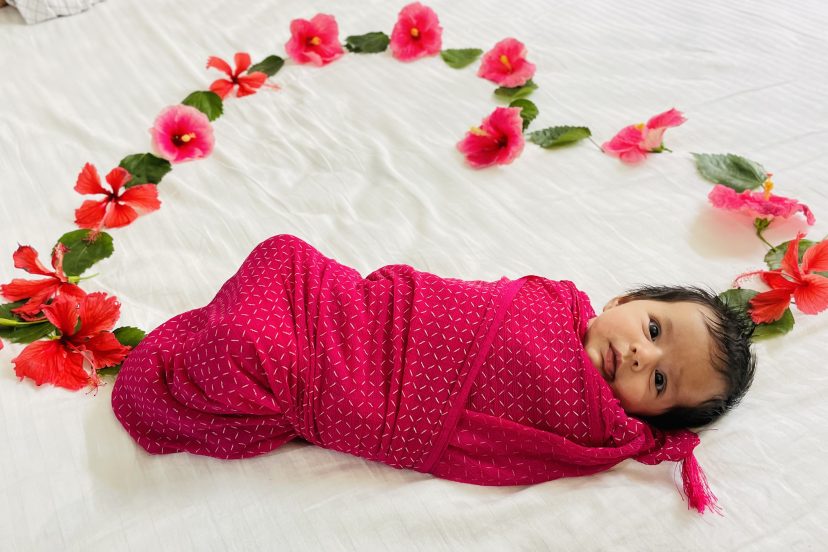
You finally get your newborn settled. The room is dim, the sound machine is humming, and your baby looks like a tiny burrito of peace. Then one day, they start wiggling harder, rolling to the side, or fighting the swaddle like it personally offended them.
That is usually your sign: it may be time to Transition From a Swaddle to a Sleep Sack.
This change can feel scary because swaddling often becomes part of your baby’s sleep routine. But the goal is simple: help your baby sleep safely, warmly, and comfortably while giving their arms the freedom they need as they grow.
Affiliate note: This article includes product suggestions you can feature with your affiliate links.
What the Swaddle-to-Sleep-Sack Change Really Means
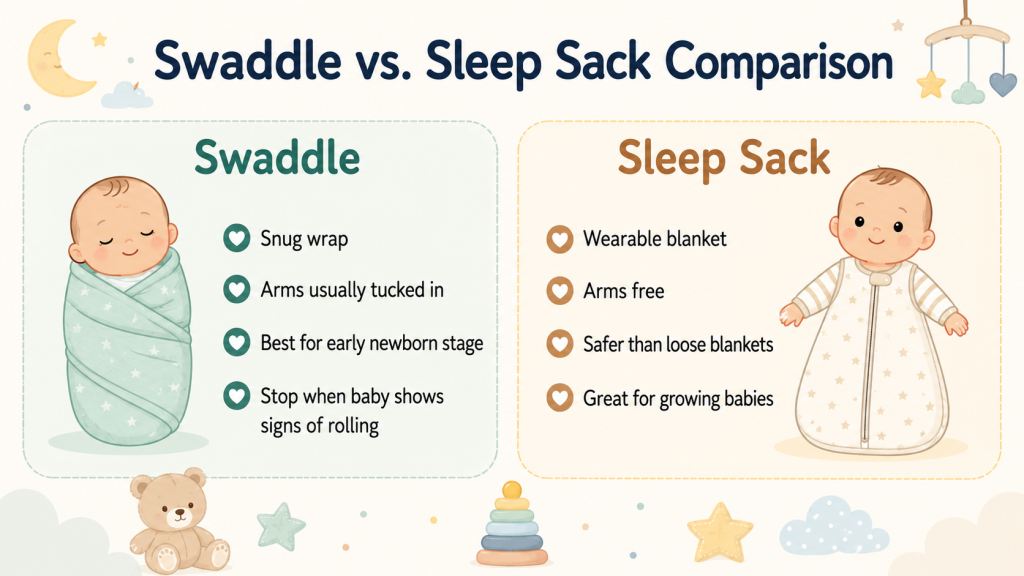
A swaddle wraps your baby snugly, often with arms tucked in. A sleep sack, also called a wearable blanket, keeps your baby warm without loose blankets in the crib.
Think of it like moving from a tight hug to cozy pajamas. Your baby still gets comfort, but they also gain movement.
That matters because once babies begin trying to roll, they need their arms free to push, adjust, and protect their face.
When Is It Time to Switch from a Swaddle to a Sleep Sack?
When your baby tries to roll over, you should cease swaddling them, according to the American Academy of Pediatrics. Although it can occur earlier, rolling often occurs between three and four months.
Some parents start around 8 weeks as a gentle precaution, especially if their baby is strong, squirmy, or already turning onto their side.
Do not wait for a full roll. Early signs count.
Signs Your Baby Is Ready
Your baby may be ready if they:
- Break out of the swaddle often
- Roll to the side
- Push up during tummy time
- Fight having their arms pinned
- Seem frustrated instead of comforted
- Wake because they are trying to move
A little restlessness is normal. But if the swaddle feels more like a wrestling match than a soothing tool, your baby may be voting for freedom.
Why Sleep Sacks Are Helpful for Newborn Baby Care
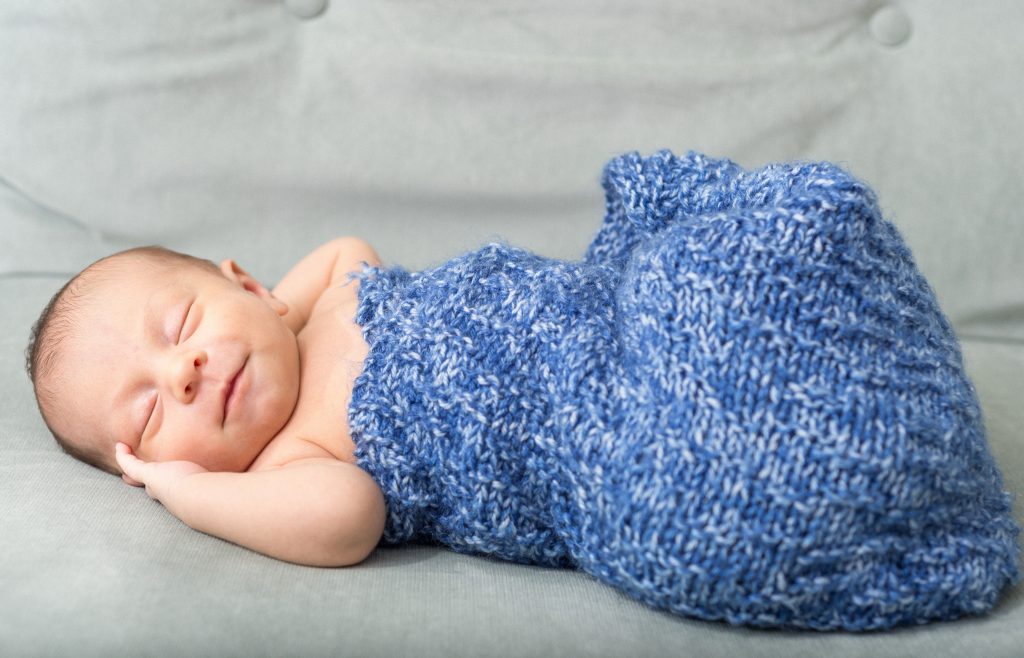
Sleep sacks are popular because they solve two problems at once.
They keep your baby warm, and they remove the need for loose blankets. The CDC says wearable blankets, or sleep sacks, are a safe alternative when parents worry about keeping babies warm during sleep. Additionally, weighted blankets, weighted sleep sacks, weighted sleepers, and weighted swaddles should not be used with infants, according to the CDC.
That makes a simple, non-weighted sleep sack a practical choice for many families.
Start With a Safe Sleep Foundation
Before you change the outfit, check the sleep space.
Your baby should sleep:
- On their back
- On a firm, flat mattress
- In a crib, bassinet, or play yard
- With only a fitted sheet
- Without pillows, blankets, bumpers, or stuffed toys
AAP guidance also says wearable blankets can be used as long as they fit properly and do not cover the baby’s head.
A sleep sack helps, but it does not replace safe sleep basics.
Choose the Right Sleep Sack
The best sleep sack is not always the fanciest one. It is the one that fits your baby’s size, season, and stage.
Look for:
- Proper weight and height sizing
- Arm openings that are not too loose
- A neckline that cannot ride over the face
- Breathable fabric
- A TOG rating that matches your room temperature
- A zipper that makes diaper changes easier
Avoid anything weighted unless your pediatrician gives specific guidance, and even then, current safety guidance strongly advises against weighted infant sleep products.
Pick a Transition Method
There are two main ways to make the change.
Gradual Method
Start with one arm out for a few nights. Then move to both arms out. After that, switch to a standard sleep sack.
This works well for babies with a strong startle reflex.
Cold Turkey Method
Stop the swaddle and move straight to a sleep sack.
This may sound bold, but some babies do better when the change is clear. No mixed signals. No “one arm in, one arm out, tiny confused starfish” situation.
Try This Simple 5-Night Plan
Here is a gentle plan you can use:
Night 1: One arm out
Night 2: Same setup, keep bedtime routine steady
Night 3: Both arms out
Night 4: Use a sleep sack for bedtime
Night 5: Use the sleep sack for naps and night sleep
If your baby struggles, pause for a night or two. Progress doesn’t have to appear flawless.

What Should a Baby Wear Underneath a Sleep Sack?
The temperature of the room and the sleep sack’s TOG rating determine this.
A common setup is:
- Warm room: short-sleeve bodysuit + light sleep sack
- Mild room: footed pajamas + 1.0 TOG sleep sack
- Cool room: cotton pajamas + warmer sleep sack
AAP advice says babies usually need only one more layer than an adult would wear in the same room. Keep an eye out for flushed skin, a hot chest, or perspiration.
Handling the Startle Reflex
The startle reflex is one reason babies love swaddles. Their arms fly up, they wake up, and everyone in the house sighs dramatically.
To help:
- Keep bedtime calm
- Use white noise
- Offer a pacifier if your baby accepts one
- Place your hand gently on their chest for a moment
- Keep the room dark and boring at night
Boring is good. At 2 a.m., boring is basically luxury.
Naps vs. Night Sleep
Some babies handle the sleep sack better at night because sleep pressure is higher. Others do better practicing during the first nap of the day.
Try starting with whichever sleep feels easier for your baby.
If naps fall apart for a few days, do not panic. During a transition, brief naps are typical. Your baby is learning a new skill, and learning is noisy, wiggly, and sometimes very dramatic.
Use Comfort Cues That Still Feel Familiar
When you remove the swaddle, keep other parts of the bedtime routine the same.
That may include:
- Bath
- Fresh diaper
- Feeding
- Lullaby
- Dim lights
- Pacifier
- Same bedtime phrase
If your baby uses a pacifier, choose one that is age-appropriate and easy to clean. You can also check this guide to the best pacifiers for newborns for soothing options that fit tiny mouths.
Common Mistakes to Avoid
Avoid these easy traps:
- Waiting until your baby is already rolling confidently
- Using loose blankets as a replacement
- Choosing a sleep sack that is too big
- Overdressing your baby
- Switching the whole routine at once
- Expecting perfect sleep on night one
One change at a time is kinder for everyone, including you.
Product Section: 5 Amazon Sleep Sack Options
Here are five Amazon-friendly product examples you can feature in the article.
HALO 100% Cotton Sleepsack Swaddle
This is a popular transition option because it works as a 3-way adjustable wearable blanket. It lets parents swaddle arms in, arms out, or one arm out.
Features: Cotton fabric, adjustable wings, zipper access, 1.5 TOG.
Best for: Parents who want a gradual transition from swaddle to sleep sack.
Love to Dream Swaddle Up Transition Bag Original 1.0 TOG
This design uses zip-off wings to help babies move from arms-up swaddling to arms-free sleep.
Features: Zip-off wings, arms-up design, stretchy cotton blend, 1.0 TOG.
Best for: Babies who like sleeping with their hands near their face.
SleepingBaby Zipadee-Zip Transition Swaddle
The Zipadee-Zip gives babies more movement while still creating a cozy, enclosed feeling. It uses a roomy starfish-style shape and zipper design.
Features: Roomy shape, zipper convenience, wearable blanket style.
Best for: Babies who startle easily but need more arm freedom.
Burt’s Bees Baby Beekeeper Infant Wearable Blanket
This organic cotton wearable blanket is designed to replace loose blankets in the crib.
Features: 100% organic cotton, zipper closure, lightweight and medium-weight options.
Best for: Parents who prefer simple organic cotton sleepwear.
Hudson Baby Unisex Baby Cotton Long-Sleeve Wearable Sleeping Bag
This is a budget-friendly cotton option with long sleeves for cooler rooms.
Features: 100% cotton, long sleeves, soft everyday design.
Best for: Families who want an affordable sleep sack for regular use.
Research-Backed Safety Notes
The American Academy of Pediatrics recommends stopping the swaddle as soon as your baby shows signs of trying to roll. That little side twist or shoulder wiggle matters because babies need their arms free once rolling begins. Link this as the rolling sign parents should not ignore.
The CDC says wearable blankets, or sleep sacks, are a safer choice than loose blankets when you want to keep baby warm. Additionally, it cautions parents against using weighted blankets, swaddles, and sleep sacks. Link this as why sleep sacks beat loose blankets.
How Long Does the Transition Take?
For many babies, the transition takes 3 to 7 nights. Some need two weeks.
That does not mean you failed. Babies are not tiny robots with firmware updates. They have moods, growth spurts, gas, preferences, and the occasional mysterious 4 a.m. opinion.
Stay consistent, but stay gentle.
What If Your Baby Cries More?
Some crying can happen because the new setup feels different.
Try soothing without going straight back to the old swaddle:
- Shush gently
- Pat the mattress beside them
- Offer a pacifier
- Pick up, calm, then place back down
- Keep lights low
If crying feels intense, unusual, or paired with feeding problems, fever, or breathing concerns, call your pediatrician.
Can You Use a Sleep Sack for Every Sleep?
Yes, you can use a properly fitted sleep sack for naps and nighttime sleep.
In fact, using it consistently can help your baby understand, “Oh, this means sleep.” Babies love patterns. Adults do too, honestly. That is why coffee mugs have emotional support status.
FAQs
When Should I Stop Swaddling My Newborn?
Stop swaddling your infant when they start to roll over. This can happen before 3 months, so watch your baby’s development rather than relying only on age.
Is a Sleep Sack Safe for a Newborn?
A non-weighted, properly fitted sleep sack can be safe when used in a safe sleep space. Make sure the neck opening cannot cover your baby’s face, and avoid loose blankets.
Should I Transition One Arm at a Time?
You can. One arm out is helpful for babies with a strong startle reflex. If your baby gets more frustrated with one arm out, try moving directly to both arms out.
How Do I Choose a TOG Sleep Sack?
Use the TOG based on room temperature. A 0.5 TOG works for warmer rooms, 1.0 TOG suits mild rooms, and 2.5 TOG is better for cooler rooms. Always check your baby for overheating.
What If My Baby Sleeps Worse After the Switch?
Give it a few nights. Keep the bedtime routine steady, use safe soothing tools, and avoid switching back and forth too much. If sleep suddenly becomes very disrupted, check for hunger, illness, teething, or a schedule issue.
Conclusion
Learning how to Transition From a Swaddle to a Sleep Sack can feel emotional. The swaddle may have helped your newborn settle during those blurry early weeks, so letting it go can feel like saying goodbye to a tiny chapter.
But this change is also a sign of growth.
Your baby is getting stronger. Their body is learning new movement. And you are helping them sleep in a way that supports both comfort and safety.
Start with safe sleep basics. Choose a well-fitting, non-weighted sleep sack. Move gradually if your baby needs time, or go cold turkey if they seem ready. Most of all, give yourself grace. You are not just managing baby sleep. One night at a time, you are getting to know your baby.
Soft CTA: If you are building your newborn sleep routine, choose one small change tonight and keep it consistent for a few days. Little steps count.
Meta Description: Learn how to Transition From a Swaddle to a Sleep Sack safely with simple tips, product picks, and soothing newborn sleep advice.