Best Pacifiers for Newborns: Parent-Approved Picks
We may earn a commission for purchases made using our links. Please see our disclosure to learn more.
A newborn can turn a calm evening into a tiny opera in about eight seconds. One minute, you are folding laundry. The next, your baby is waving those little fists like they have filed a formal complaint.
That is where the best pacifiers for newborns can feel like a small miracle. Not a magic button, of course. Babies did not read the manual. But the right newborn pacifier can help soothe fussiness, support sleep routines, and give tired parents a few peaceful minutes to breathe.
In this guide, you will learn what makes a pacifier safe, which Amazon picks are worth considering, how to choose the right size and shape, and what research says about pacifier use.
Why Pacifiers Can Help Newborns Feel Calm
Newborns love sucking. It is not just about food. Sucking is one of the first ways babies self-soothe.
Think of a pacifier like a tiny comfort tool. It can help during diaper changes, car rides, witching hour, or those mysterious “I am upset but nobody knows why” moments.
A soothing pacifier may help when your baby is:
- Fed but still fussy
- Fighting sleep
- Overstimulated
- Waiting for a feeding
- Settling after a diaper change
Of course, a pacifier should never replace feeding, cuddles, or comfort. It is more like a backup singer in the newborn care band.
What Makes a Pacifier Safe for Newborns?
A safe pacifier for a newborn should be simple, soft, and age-appropriate.
Look for:
- 0–3 month or 0–6 month sizing
- BPA-free materials
- Ventilation holes
- One-piece construction when possible
- A shield that does not block the nose
- Easy-to-clean silicone or rubber
The American Academy of Pediatric Dentistry notes that pacifiers should be used safely and that prolonged use later in childhood may affect oral development, so choosing the right type and using it wisely matters.
Best Pacifiers for Newborns: Quick Buying Checklist
Before you click “add to cart,” ask yourself a few simple questions.
Does the pacifier match your baby’s age? Is it easy to sterilize? Is the shield shaped to allow breathing room? Does your baby seem comfortable with the nipple shape?
A good newborn pacifier should not feel oversized or stiff. If it looks comically huge on your baby’s face, like a dinner plate with a handle, it is probably not the best fit.
Philips Avent Soothie Baby Pacifiers
The Philips Avent Soothie Baby Pacifiers are one of the most popular choices for newborns. They are designed for babies 0–3 months, made from 100% silicone, and use a one-piece design. Amazon lists the model SCF190/41 as BPA-free and extra durable.
Features
- 100% silicone
- One-piece design
- BPA-free
- Newborn size: 0–3 months
- Easy to clean
Best for
This is a great choice if you want a simple, hospital-style silicone pacifier. It is especially helpful for parents who prefer a no-frills design that is easy to wash and inspect.
Dr. Brown’s HappyPaci Silicone Pacifier
The Dr. Brown’s HappyPaci 100% Silicone Baby Pacifier is designed for babies 0–6 months. Its nipple shape is made to feel familiar to babies who use Dr. Brown’s bottles, which can make the transition easier for some little ones.
Features
- 100% silicone
- Lightweight feel
- One-piece construction
- Contoured butterfly-shaped shield
- Designed for 0–6 months
Best for
This pick is helpful for bottle-fed babies, especially if your baby already likes Dr. Brown’s bottle nipples. It is also a good option if you want a pacifier that curves away from the cheeks, nose, and chin.
MAM Original Baby Pacifiers
The MAM Original Baby Pacifiers 0–6 Months are often chosen by parents who want a soft silicone nipple and a lightweight shield. Amazon’s pacifier category includes MAM Original Baby Pacifiers for newborn babies, with BPA-free SkinSoft silicone and glow-in-the-dark options.
Features
- Designed for newborns
- BPA-free
- Soft silicone nipple
- Lightweight shield
- Some versions glow in the dark
Best for
This is a strong choice for babies who reject firmer pacifiers. The glow-in-the-dark option is also handy for parents doing the half-asleep crib search at 3 a.m. We have all been there, crawling around like a raccoon with responsibilities.
NUK Comfy Orthodontic Pacifiers
The NUK Comfy Orthodontic Pacifiers are shaped and sized for newborns. Amazon describes them as 100% medical-grade silicone with a breast-like nipple shape and a heart-shaped shield that fits under the baby’s nose for easier breathing.
Features
- Orthodontic pacifier shape
- 100% medical-grade silicone
- Sized for newborns
- Heart-shaped shield
- Top-rack dishwasher safe
Best for
This is ideal for parents who want an orthodontic pacifier for newborn comfort and oral development support. It may also suit babies who prefer a more shaped nipple instead of a round one.
Nanobebe Baby Pacifiers 0–3 Month
The Nanobebe Baby Pacifiers 0–3 Month are made from 100% silicone and curve around the baby’s face. Amazon lists them as orthodontic pacifiers designed for breastfeeding babies, with a soft, face-contoured fit.
Features
- 100% silicone
- Orthodontic design
- Curved face-contour shape
- Designed for 0–3 months
- BPA-free
Best for
This is a good option if you want a pacifier for a breastfed baby and prefer a soft, flexible design. The curved shape can feel gentle against tiny cheeks.
Pacifier Shapes Explained
Pacifier shapes can feel confusing at first. Round, flat, orthodontic, symmetrical—suddenly you are studying nipple geometry at midnight.
Here is the simple version:
- Round nipples may feel familiar to some newborns.
- Orthodontic nipples have a flatter shape and are designed to support oral positioning.
- Symmetrical nipples can go in either way.
- Breast-like nipples try to mimic a more natural feeding feel.
Your baby may have clear preferences. Tiny, but very opinionated.
Silicone vs Natural Rubber Pacifiers
A silicone pacifier is usually firmer, clear, durable, and easy to clean. It is also very common in newborn pacifiers.
Natural rubber pacifiers feel softer and more flexible. Some parents prefer them because they feel more natural. However, rubber can wear down faster and may not work for babies with latex sensitivities.
If you want easy maintenance, silicone is often the simpler pick.
When Should You Introduce a Pacifier?
If your baby is bottle-fed, you may introduce a pacifier early if your pediatrician agrees.
If you are breastfeeding, many experts recommend waiting until breastfeeding feels established. The American Academy of Family Physicians notes that AAP guidance has recommended delaying pacifier use until breastfeeding is well established, often around one month.
That said, every baby is different. If feeding is going well and your baby needs soothing support, talk with your pediatrician or lactation consultant.
Pacifier Safety Mistakes to Avoid
Pacifiers are helpful, but they need a few house rules.
Avoid:
- Tying a pacifier around your baby’s neck
- Using damaged or cracked pacifiers
- Dipping pacifiers in honey or sugar
- Buying the wrong age size
- Letting older siblings share pacifiers
- Using stuffed pacifier holders during sleep
Mayo Clinic advises choosing a one-piece dishwasher-safe pacifier, avoiding strings or straps around the baby’s neck, and replacing pacifiers often.
How to Clean and Sterilize Newborn Pacifiers
Newborns are adorable, but their immune systems are still learning the ropes. So yes, pacifier cleaning matters.
Before first use, sterilize the pacifier according to the product instructions. After that, wash it often with warm, soapy water. Some pacifiers are dishwasher safe, but always check the packaging.
Practical cleaning tips
- Keep extras in the diaper bag
- Store clean pacifiers in a case
- Replace pacifiers that feel sticky, cracked, or worn
- Do not “clean” a pacifier in your own mouth
That last one is common, but not ideal. Parent life is already chaotic enough without swapping germs like friendship bracelets.
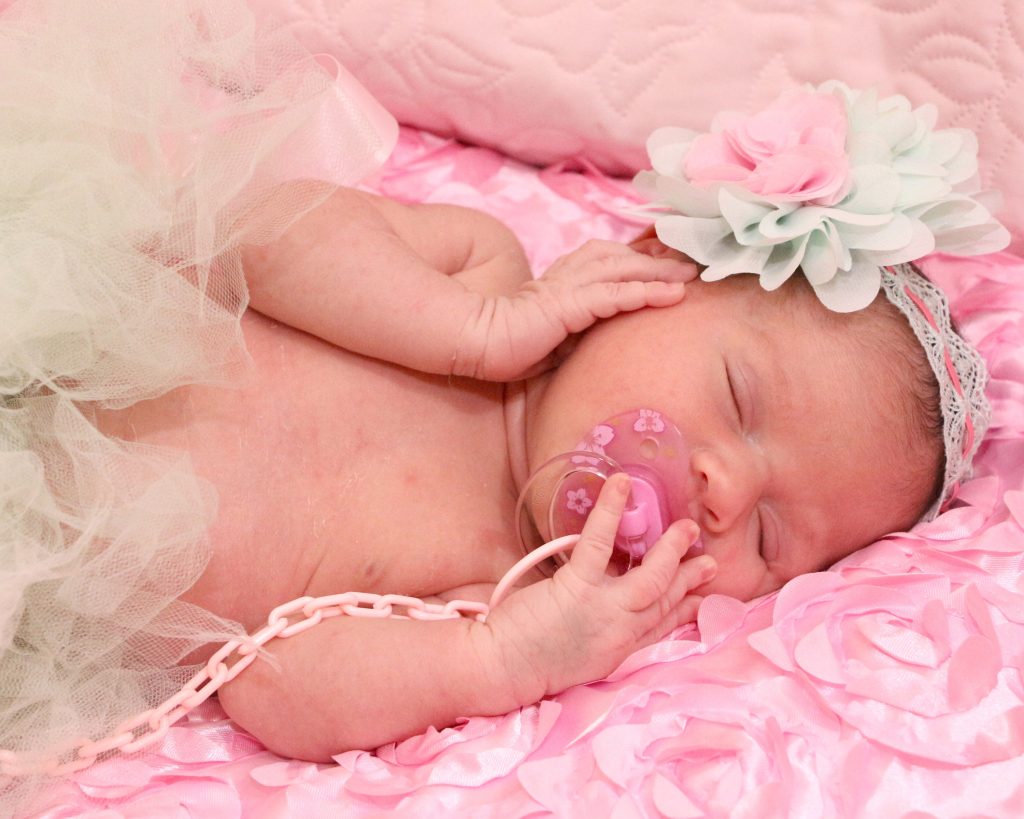
Can Pacifiers Help With Baby Sleep?
A baby sleep pacifier can help some newborns settle more easily. It gives them something familiar and soothing as they drift off.
The American Academy of Pediatrics has linked pacifier use at sleep time with reduced SIDS risk, while still emphasizing safe sleep basics like placing babies on their backs and keeping the sleep space clear.
A pacifier is not a replacement for safe sleep. Your baby still needs a firm, flat sleep surface with no loose blankets, pillows, or stuffed toys.
For cozy daytime outfits and easy changes, you can also explore these soft and practical baby rompers for newborn comfort.
Research-Backed Pacifier Tips Parents Should Know
Pacifiers are not just “cute baby accessories.” Used safely, they can play a real role in newborn comfort, sleep routines, and parent sanity. The American Academy of Pediatrics explains that offering a pacifier at nap time and bedtime may help reduce the risk of SIDS, even if the pacifier falls out after your baby falls asleep. Think of it as one tiny bedtime habit with a big safety upside.
Parents often worry about pacifiers and breastfeeding, especially that famous “nipple confusion” phrase that gets passed around like family gossip. However, a Cochrane review found that pacifier use in healthy full-term breastfeeding infants did not significantly affect exclusive or partial breastfeeding rates up to four months. That does not mean every baby is the same, but it does offer some comfort for parents making a thoughtful choice. You can read more in the breastfeeding-and-pacifier reality check from Cochrane.
How Many Pacifiers Do You Need?
Start with two or three. That gives you one for the crib, one for the diaper bag, and one that will mysteriously disappear into the couch dimension.
Once you know which style your baby likes, buy a few more. Babies can reject a pacifier for reasons known only to babies and maybe ancient philosophers.
How to Tell If Your Baby Likes a Pacifier
Your baby may accept a pacifier right away, or they may spit it out like you have personally offended them.
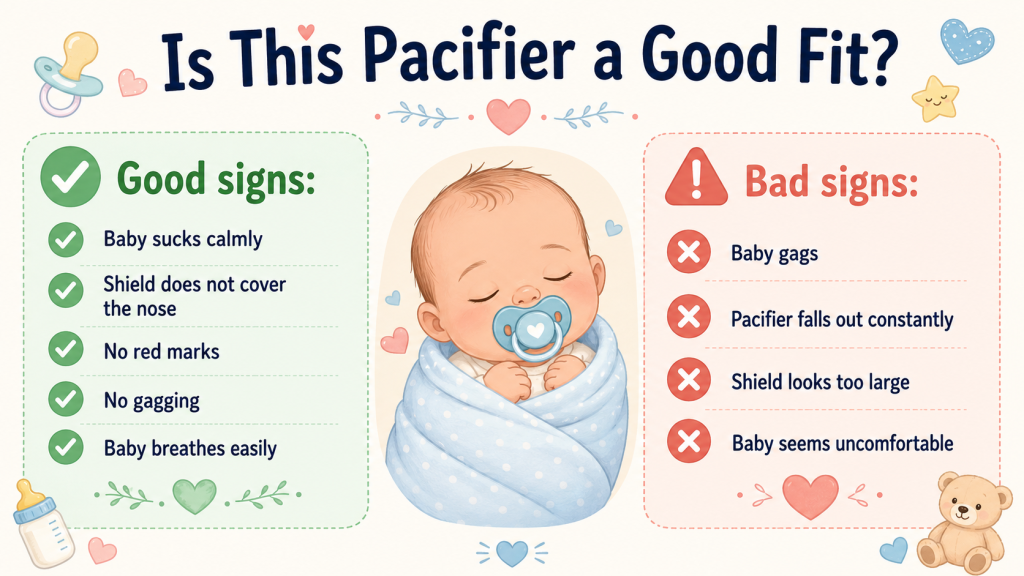
Signs of a good fit include:
- Calm sucking
- Relaxed body
- No gagging
- No red marks around the mouth
- Easy breathing around the shield
If your baby keeps gagging, coughing, or refusing it, try a smaller or differently shaped pacifier.
Pacifier Weaning: Think Long-Term
You do not need to worry about weaning during the newborn stage. Right now, survival counts. Sleep counts. Peace counts.
Still, it helps to know that long-term pacifier use can affect teeth and oral development. Many parents start limiting pacifier use later in infancy, often keeping it for naps and bedtime before gradually phasing it out.
Your future self can handle that chapter. Newborn you gets grace.
Best Pacifier Choice by Parent Need
Here is the quick version:
- Best simple newborn pick: Philips Avent Soothie
- Best for bottle-fed babies: Dr. Brown’s HappyPaci
- Best soft-feel option: MAM Original
- Best orthodontic option: NUK Comfy
- Best for breastfed babies: Nanobebe Baby Pacifiers
The best pacifier is not always the fanciest one. It is the one your baby accepts, you can clean easily, and you feel safe using.
FAQs About the Best Pacifiers for Newborns
What are the best pacifiers for newborns?
The best pacifiers for newborns are age-appropriate, BPA-free, easy to clean, and comfortable for your baby. MAM Original, Nanobebe, Dr. Brown’s HappyPaci, Philips Avent Soothie, and NUK Comfy are popular choices.
Is it safe for newborn babies to use pacifiers?
Yes, when used properly, pacifiers are often safe. Choose the right size, avoid strings or clips during sleep, inspect for damage, and follow safe sleep practices.
Can breastfed newborns use pacifiers?
Yes, many breastfed newborns can use pacifiers. However, some experts suggest waiting until breastfeeding is well established, especially if latch or supply is still a concern.
How often should newborn pacifiers be replaced?
Replace pacifiers when they show cracks, stickiness, discoloration, or shape changes. Even without damage, many parents replace them every few weeks for hygiene and safety.
Is it okay for a baby to use a pacifier while they sleep?
A newborn may sleep with a pacifier if it is the correct size and used safely. Do not attach it to cords, clips, stuffed animals, or blankets during sleep.
Conclusion
Choosing the best pacifiers for newborns is really about finding a safe, soothing fit for your baby’s tiny mouth and big feelings. Start with newborn sizing, look for BPA-free materials, choose easy-clean designs, and pay attention to how your baby responds. Some babies love the first pacifier you offer. Others audition five like tiny judges on a talent show. Either way, you are learning your baby one little moment at a time. Trust yourself, stay flexible, and choose the pacifier that brings a bit more calm to your newborn care routine.