Newborn Wearable Blanket Deals: What to Buy

We may earn a commission for purchases made using our links. Please see our disclosure to learn more.
The first few weeks with a newborn can feel like running a tiny, adorable night shift with no training manual. You want your baby warm, comfortable, and safely tucked in, but loose blankets are not recommended for infant sleep. That is where a newborn wearable blanket can make bedtime feel a little less like guesswork.
Think of it as a cozy sleep layer your baby wears instead of kicking off, wriggling under, or pulling near their face. In this guide, you will learn what to look for, which features matter, what to avoid, and which Amazon options are worth considering.
Why a Newborn Wearable Blanket Belongs on Your Registry
A newborn wearable blanket helps keep your baby warm without adding loose bedding to the crib. For exhausted parents, that is a beautiful little win.
Instead of wondering, “Is my baby cold?” every 20 minutes, you can choose a sleep sack based on room temperature, fabric, and fit. It will not magically make your newborn sleep through the night—wouldn’t that be lovely?—but it can make your sleep setup simpler and safer.
What Is a Newborn Wearable Blanket?
A newborn wearable blanket is a sleeveless or swaddle-style sleep garment designed to replace a loose blanket. Most zip up around your baby’s body while leaving enough room for natural hip and leg movement.
You may also see it called:
- Baby sleep sack
- Infant wearable blanket
- Wearable baby blanket
- Newborn sleep sack
- Swaddle transition sack
The main goal is simple: warmth without loose fabric floating around the crib.
Newborn Wearable Blanket vs Swaddle vs Sleep Sack
These terms can get confusing fast, especially when every brand uses slightly different wording.
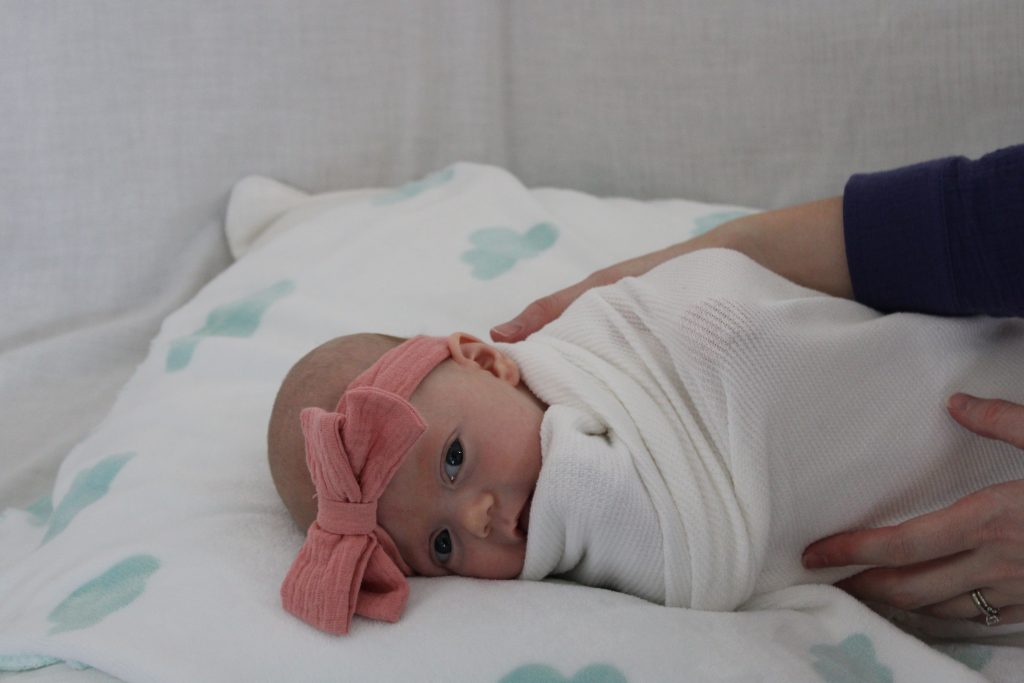
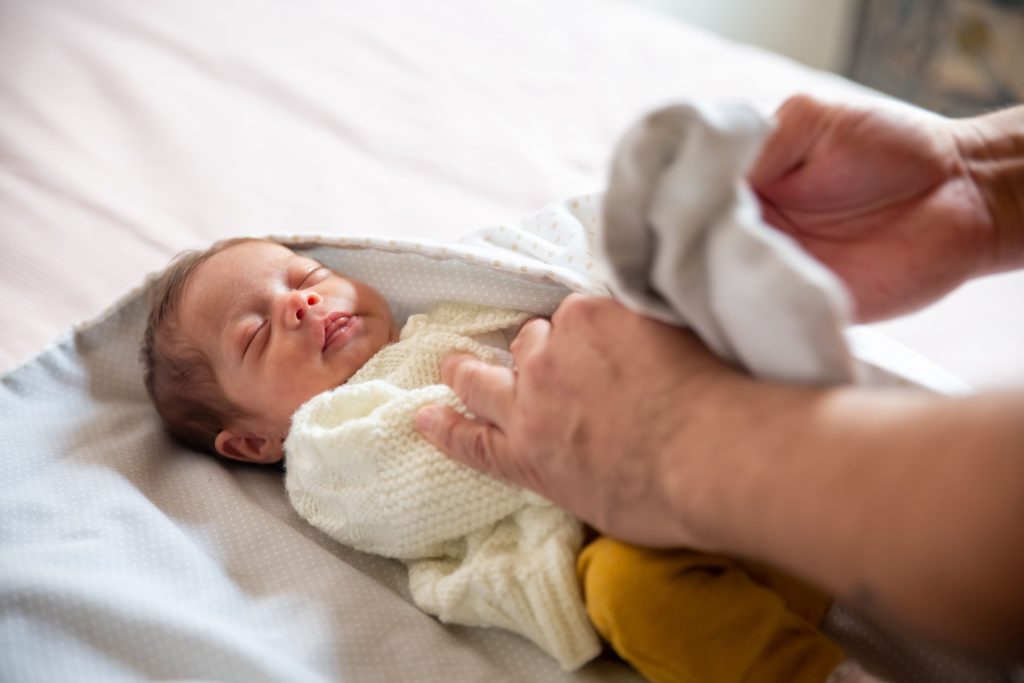
A swaddle wraps or secures your baby’s arms to help calm the startle reflex. A sleep sack is usually arms-out and works more like a wearable blanket. Some newborn wearable blankets combine both ideas with adjustable wings or arms-up designs.
If your baby still loves the snug “womb-like” feeling, a swaddle-style option may help. If your baby fights the wrap like a tiny escape artist, an arms-out sleep sack may be the better match.
Safety Comes First When Shopping
The American Academy of Pediatrics recommends keeping babies on their backs for sleep and avoiding loose blankets, pillows, and soft objects in the sleep space. The CDC also lists wearable blankets, also known as sleep sacks, as a safer alternative to loose blankets.
Choose a newborn wearable blanket that:
- Fits your baby’s current weight and height
- Does not ride up over the mouth or nose
- Allows hip movement
- Is not weighted
- Matches your nursery temperature
Also, skip weighted sleep sacks and weighted swaddles. Current CDC and CPSC guidance warns against weighted infant sleep products.
How to Choose the Right Size
Size matters more than cuteness. Yes, the tiny bear print is hard to resist, but fit should win every time.
A newborn wearable blanket should be snug at the neck and arm openings without squeezing. If the neck hole is too wide, fabric can shift upward. If the sack is too small, your baby may not have enough room to move comfortably.
Before buying, check:
- Weight range
- Height range
- Neck opening
- Armhole fit
- Brand size chart
When in doubt, size by weight and height, not age alone. Babies missed that memo about growing at the same speed.
Knowing How TOG Ratings Work
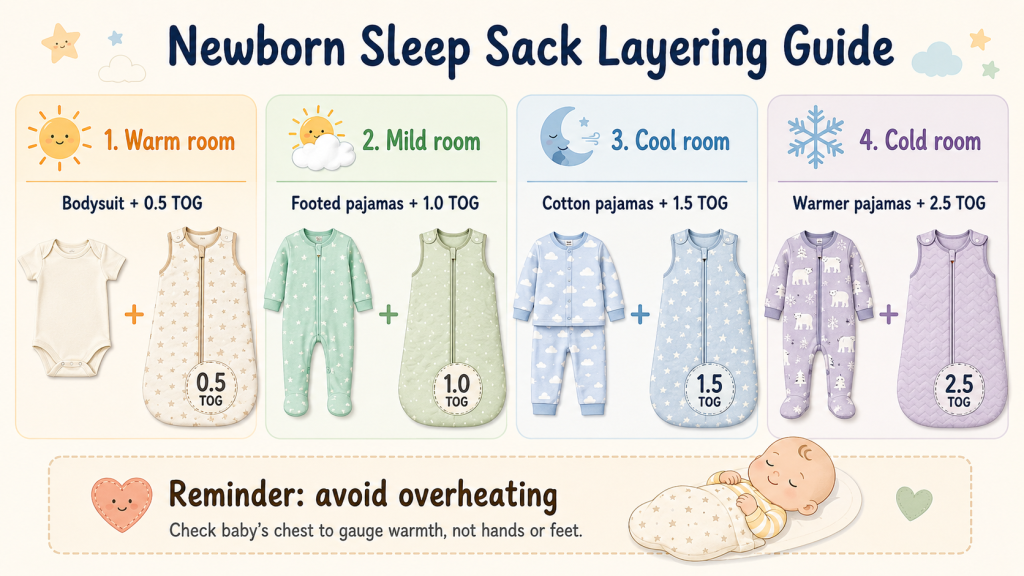
A sleep sack’s TOG indicates its level of warmth. A lower TOG works for warmer rooms, while a higher TOG works for cooler rooms.
A simple guide:
- 0.5 TOG: warm rooms or summer
- 1.0 TOG: mild temperatures
- 1.5 TOG: cooler evenings
- 2.5 TOG: cold rooms
- 3.0 TOG: very cool climates
Your baby should feel warm on the chest, not sweaty or hot. If your baby’s chest seems hot, remove one layer.
Best Fabrics for Newborn Skin
Newborn skin can be sensitive, so soft, breathable fabrics are usually best.
Cotton is a dependable everyday choice. Organic cotton may appeal to parents who prefer fewer synthetic materials. Microfleece can feel cozy for colder rooms, but it may be too warm in hot climates or homes without strong air conditioning.
Good fabric options include:
- 100% cotton
- Organic cotton
- Lightweight muslin
- Bamboo viscose blends
- Microfleece for cold weather
If your home runs warm, breathable cotton usually beats extra-thick fleece.
Features Worth Paying For
Not every fancy feature matters. Some are helpful; others are just product-page confetti.
Look for features that make 3 a.m. easier:
- Two-way zipper for diaper changes
- Zipper guard near the chin
- Roomy hip area
- Clear TOG rating
- Machine-washable fabric
- Shoulder snaps for easier dressing
- Simple design with no loose attachments
A good zipper is underrated. At 2:47 a.m., you will not want buttons, complicated wraps, or anything that feels like assembling furniture.
Best Overall Deal: HALO 100% Cotton Sleepsack Swaddle
The HALO 100% Cotton Sleepsack Swaddle, 3-Way Adjustable Wearable Blanket, TOG 1.5, Newborn, 0-3 Months is a strong pick for parents who want a swaddle-style wearable blanket.
Short Description
This cotton option works well for newborns who like being swaddled but need a safer alternative to loose blankets.
Features
- 100% cotton
- 3-way adjustable swaddle design
- 1.5 TOG warmth
- Newborn size option
- Designed to replace loose crib blankets
Best For
Choose this if your baby enjoys a snug swaddle feel and you want flexibility for arms-in, hands-to-face, or arms-out positioning.
Best Organic Cotton Deal: Burt’s Bees Baby Beekeeper
The Burt’s Bees Baby Beekeeper Infant Wearable Blanket, 100% Organic Cotton Unisex, Light Weight 0.5 TOG or Medium Weight 1.5 TOG is a favorite for parents who want a soft cotton sleep sack.
Short Description
This infant wearable blanket is simple, breathable, and practical for everyday sleep.
Features
- 100% organic cotton
- Available in lighter and medium TOG options
- Sleeveless design
- Easy zipper closure
- Unisex patterns
Best For
This is a good pick for families who want breathable fabric, simple styling, and a non-fussy bedtime layer.
Best Lightweight Multi-Pack: Yoofoss Baby Sleep Sack
The Yoofoss Baby Sleep Sack 0–6 Months, 100% Cotton, 0.5 TOG, 3-Pack is a practical pick for parents who want breathable everyday sleep sacks without buying just one at a time.
Short Description
This lightweight newborn wearable blanket set is made for warmer rooms, summer nights, or babies who tend to run warm during sleep.
Features
- 100% cotton fabric
- 0.5 TOG lightweight design
- 2-way zipper for easier diaper changes
- Sleeveless cut for better airflow
- 3-pack for easy laundry rotation
Best For
Choose this if you want a budget-friendly multi-pack for daily use, especially in warmer nurseries or mild climates.
Best Budget Multi-Pack: Simple Joys by Carter’s
The Simple Joys by Carter’s Baby 3-Pack Microfleece Wearable Blanket is a practical option for parents who want extras on hand.
Short Description
This multi-pack gives you backup sleepwear for laundry days, spit-up nights, and those mysterious newborn leaks nobody warned you about.
Features
- Multi-pack value
- Soft microfleece
- Wearable blanket design
- Simple everyday styling
- Easy to rotate between washes
Best For
This is best for cooler rooms and parents who want several wearable blankets without buying each one separately.
Best Long-Sleeve Option: Hudson Baby Cotton Wearable Sleeping Bag
The Hudson Baby Unisex Baby Cotton Long-Sleeve Wearable Sleeping Bag, Sack, Blanket works well when you want arm coverage without using a loose blanket.
Short Description
This cotton long-sleeve sleep sack offers extra coverage for cooler nights.
Features
- 100% cotton options
- Long sleeves
- Wearable sleeping bag design
- Soft everyday fabric
- Budget-friendly style
Best For
Choose this if your baby’s arms tend to feel cool or your nursery runs slightly chilly.
Research-Backed Reasons to Use Sleep Sacks
A newborn wearable blanket is not just a cute registry item. It lines up with safe-sleep guidance that encourages parents to keep loose blankets, pillows, quilts, and soft bedding out of the crib.
The American Academy of Pediatrics explains that infant sleep clothing like a wearable blanket is preferable to loose blankets because it helps keep babies warm while reducing the chance of head covering or entrapment. That matters because newborns cannot simply pull fabric away from their faces the way an older child can.
The CDC gives similar advice in its safe sleep guidance for keeping babies warm without loose bedding. Instead of adding a blanket to the crib, parents can dress babies in sleep clothing, including a sleep sack or wearable blanket.
When to Transition From Swaddle to Sleep Sack
Many parents start with a swaddle-style newborn wearable blanket and later move to an arms-out sleep sack. This usually happens when a baby shows signs of rolling or no longer needs that snug swaddled feeling.
Smooth transitions benefits the child and the parent. You can start with one arm out, then both arms out, depending on the product design and your baby’s readiness. For a deeper step-by-step guide, read this helpful resource on transitioning from a swaddle to a sleep sack.
Common Mistakes to Avoid
Even good products can become unsafe when used the wrong way.
Avoid these mistakes:
- Buying a size your baby can “grow into”
- Using a weighted sleep sack
- Adding a loose blanket over the sleep sack
- Choosing a TOG that is too warm
- Ignoring room temperature
- Continuing to swaddle once rolling starts
- Using damaged zippers or stretched-out neck openings
The safest option is usually the simplest one: baby on their back, firm flat sleep surface, no loose bedding, and a properly fitted sleep layer.
Quick Buying Checklist
Before you buy, ask yourself:
- Does this fit my baby’s current weight and height?
- Is it non-weighted?
- Is the fabric right for our climate?
- Does the TOG match our room temperature?
- Can I change diapers easily?
- Does it leave the head and face uncovered?
- Can I wash it often without babying the fabric?
If a product checks those boxes, you are already shopping smarter than half the internet.
FAQs About Newborn Wearable Blankets
Is a newborn wearable blanket safe for sleep?
Yes, a properly fitted, non-weighted newborn wearable blanket can be a safer alternative to loose blankets. Your baby’s face and head should never be covered and they should sleep on their back.
What TOG is best for a newborn wearable blanket?
For many homes, 0.5 to 1.5 TOG works well. For warmer spaces, use 0.5 TOG; for colder rooms, use 1.5 TOG. Always check your baby’s chest to make sure they are warm, not sweaty.
Can my newborn wear a sleep sack from birth?
Many sleep sacks and wearable blankets are designed for newborn use, but always check the product’s minimum weight and height. The openings for the arms and neck should fit comfortably.
Do I still need pajamas under a newborn wearable blanket?
Usually, yes. A wearable blanket is a layer, not a full outfit. In warm rooms, a bodysuit may be enough. In cooler rooms, footed pajamas may work better.
When should I stop using a swaddle-style wearable blanket?
Stop swaddling your infant when they start to roll. At that point, switch to an arms-out sleep sack that allows free arm movement.
Final Thoughts on Newborn Wearable Blanket Deals
A newborn wearable blanket is one of those baby items that earns its spot because it solves a real problem: keeping your baby warm without loose bedding. The best choice depends on your climate, your baby’s size, your laundry rhythm, and whether your little one prefers snug swaddling or more freedom to wiggle.
Start with fit and safety, then compare fabric, TOG, zipper style, and value. The most expensive item on the shelf is not what you need. You need the one that helps your baby sleep comfortably while giving you a little more peace of mind. And honestly, in the newborn stage, peace of mind is practically a luxury item.