Safe Nursery Layout Ideas for Better Sleep and Comfort
We may earn a commission for purchases made using our links. Please see our disclosure to learn more.
A nursery can look lovely in photos yet feel awkward during a 2 a.m. feeding. The crib might be too close to a curtain, the changing supplies may be across the room, or a bright window might interrupt afternoon naps. Thoughtful Nursery Layout Ideas solve those everyday problems without crowding the space with unnecessary furniture.
Start with safety, then consider how you move through the room, manage light and temperature, and store essentials. The most useful arrangement gives your baby a separate, uncluttered place to sleep and makes nighttime care manageable for you. Below, you’ll find practical layouts for small and larger rooms, the hazards worth checking, and a few products that can support a comfortable setup. No nursery design can guarantee longer sleep, but a sensible one can remove avoidable distractions and risks.
Build Your Nursery Layout Around a Safe Sleep Space
Let the crib or bassinet determine the furniture arrangement. Choose a sleep product that meets current safety standards, assemble it exactly as instructed, and use its intended firm, flat mattress with a snug fitted sheet.
Keep the baby’s sleep space free of pillows, bumpers, blankets, loungers, and stuffed toys, and always place your baby on their back to sleep. Allow clear adult access around the crib.
Choose the Safest Wall for Crib Placement
An interior wall away from windows is often suitable. Avoid positions beneath shelves, framed artwork, curtain fabric, hanging plants, or anything that could fall or be pulled into the crib. Keep monitor cords and electrical cables completely inaccessible.
Don’t put the crib near heaters or in strong, direct sunlight. Inspect what a growing baby might reach at crib-rail height. For a closer look at these choices, see our guide to crib placement in the nursery. Recheck after decorating.
Plan for Room-Sharing During the First Six Months
The American Academy of Pediatrics recommends keeping your baby’s separate sleep space in your bedroom for at least the first six months. Use a bassinet beside your bed or a crib in your bedroom.
Measure the adult bedroom before buying large furniture. Ensure you can get out of bed and reach the baby without tripping. The nursery can still hold clothing and changing supplies. Room-sharing is different from bed-sharing, which is not recommended for infant sleep.
Create Distinct Sleep, Feeding, and Changing Zones
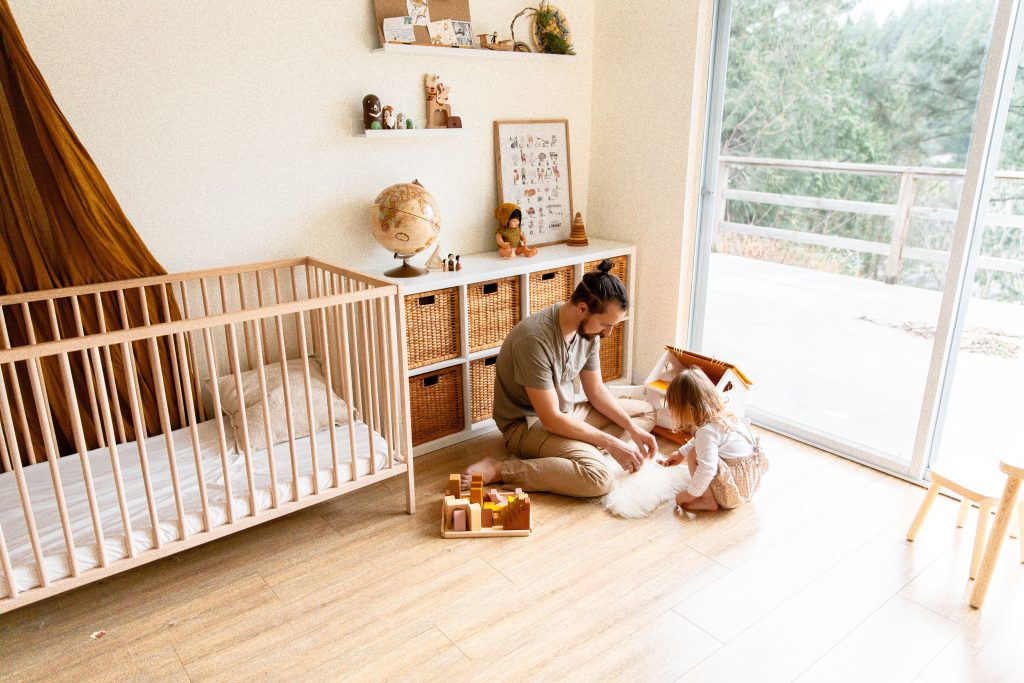
Three simple zones can make a nursery easier to use: a clear sleeping area, a comfortable place for feeding, and a changing surface with supplies within adult reach. They need not occupy separate corners.
Place a supportive chair where you can stand up without bumping the crib. Keep diapers, wipes, and clean clothing near the changing area, but out of the baby’s reach. Never leave a baby alone on a raised changing surface. Keep nighttime essentials together to avoid extra trips.
Use Space-Saving Nursery Layout Ideas for Small Rooms
In a narrow bedroom, prioritize a compliant crib or bassinet and safe walking clearance over matching furniture sets. A compact dresser may also serve as a changing station with a suitable setup and supervision.
Choose closed storage over stacks of exposed supplies. Wall shelves can hold adult-access items, but never mount them over the sleep area. Measure door swings, drawers, and pathways before ordering anything. Move a chair elsewhere if it blocks access.
Control Daylight Without Creating Window Hazards
Room-darkening curtains can reduce glaring afternoon sunlight, but a pitch-black nursery is not required for healthy infant sleep. Test the light during naps before buying coverings.
For window treatments, cordless options are preferable in homes with children. Secure curtain rods properly and keep long panels far from the crib and climbable furniture. Never rely on tying up a blind cord; accessible cords can create a strangulation hazard. Let in daylight during awake hours.
Make Temperature and Airflow Comfortable
Aim for a room that feels comfortable to a lightly dressed adult, rather than chasing a universal thermostat number. Check their chest for overheating; avoid indoor sleep hats.
Position the crib away from concentrated heat, exposed drafts, and direct airflow that seems uncomfortable. Ventilate the room appropriately and investigate persistent dampness or mold. A temperature-and-humidity gauge can reveal patterns, but it cannot tell you whether a baby is comfortable. Keep the room smoke-free; avoid loose blankets.
Keep Nighttime Lighting and Noise Low-Key
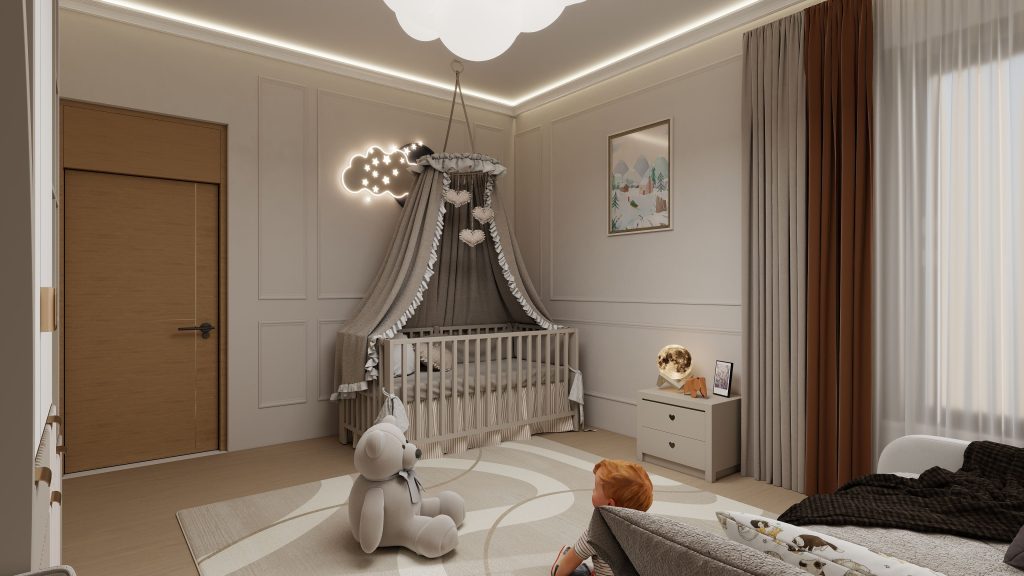
A dim lamp near the feeding chair helps with overnight care. Choose stable lighting that cannot be pulled down, and route every cable away from the crib. Bright decorative lights are unnecessary at bedtime.
If noise interrupts sleep, try quieter routines first. A sound machine is optional, not a sleep requirement. If used, place it far from the baby’s head, keep the volume low, and limit playback. Avoid putting electronic devices on crib rails or inside the sleeping area.
Anchor Dressers and Organize Storage Thoughtfully
Dressers, bookcases, and other tall furniture need appropriate anti-tip anchoring, even before your baby can crawl. Follow both the furniture and hardware manufacturers’ instructions, using suitable fasteners for the wall. Even heavy dressers can tip.
Keep frequently used items in accessible adult-level drawers so you aren’t reaching overhead while holding your baby. Secure medicines and small objects out of reach. Avoid storing heavy boxes above the changing area, and check anchors whenever furniture is moved or reassembled.
Decorate Without Crowding the Crib
Skip crib canopies, bumpers, pillows, and reachable mobiles. Use wall color, a washable floor rug, and artwork placed safely away from the crib to create personality. Keep decorative strings and wall hangings beyond a child’s grasp.
Treat cords as part of the decor plan, too: consider outlets and device locations before arranging furniture. Don’t hang a camera by its cable or thread wires through crib slats. Give decorations a safe location.
Update the Arrangement as Your Baby Becomes Mobile
Reassess the layout as your baby rolls, sits, or climbs. Lower the crib mattress according to its instructions as your child develops, and stop using a bassinet when any stated growth or movement limit is reached.
Remove items that become reachable, including objects on nearby furniture. Check changing supplies, drawer latches, curtain lengths, and anchoring hardware. Reserve floor space for supervised awake play. Repeat your safety check regularly.
Recommended Products for Practical Nursery Layout Ideas
These five products address different needs. Check the current instructions, room measurements, and exact item variation before choosing; none replaces safe sleep practices.
Delta Children Essex 4-in-1 Convertible Baby Crib, Ebony with Natural Legs
Best for: A dedicated nursery with room for a full-size crib.
The Essex has a three-position mattress support and converts to several later bed configurations, making it a flexible focal point. Its angled wooden legs give it a clean appearance without adding decorative crib accessories. It requires a separately purchased, compatible mattress, and conversion may require additional hardware.
NICETOWN Blackout Curtains Drapery Panels, Royal Purple, 52 x 84 Inches, Set of 2
Best for: Windows that admit distracting daytime brightness.
These two grommet-top panels offer a simple way to darken a sunny nursery. Their 52-by-84-inch dimensions help you plan coverage before installing a rod. Actual room darkness depends on window size and gaps around the fabric. Mount them securely and keep both panels and any hardware inaccessible from the crib.
TempPro TP50 Digital Indoor Thermometer and Hygrometer
Best for: Monitoring changing room conditions without an app.
The TP50 shows temperature and relative humidity on a compact display, making it useful for spotting an overly damp room or unexpected temperature changes. It measures conditions rather than correcting them, and its comfort indicator is not an infant-specific safety recommendation. Place it where an adult can read it, beyond the baby’s reach.
VTech DM111 Digital Audio Baby Monitor
Best for: Parents who prefer simple audio monitoring.
The DM111 uses DECT 6.0 digital transmission and includes a five-level sound indicator, so you can check for noise without a video screen. Its straightforward design may suit a modest nursery setup. Real-world range varies, and it cannot replace supervision or prevent sleep-related emergencies. Keep the baby unit and cord well away from the crib.
HALO SleepSack 100% Cotton Wearable Blanket, 0.5 TOG, Pink Toile, Small
Best for: Replacing loose bedding in a baby’s sleep setup.
This sleeveless cotton wearable blanket provides lightweight coverage without adding a blanket to the crib. Its inverted zipper also allows diaper access. The 0.5 TOG rating indicates a lighter warmth level, not a guarantee of comfort in every room. Choose the correct size and adjust the clothing underneath to avoid overheating.
What Safe-Sleep Research Means for Nursery Design
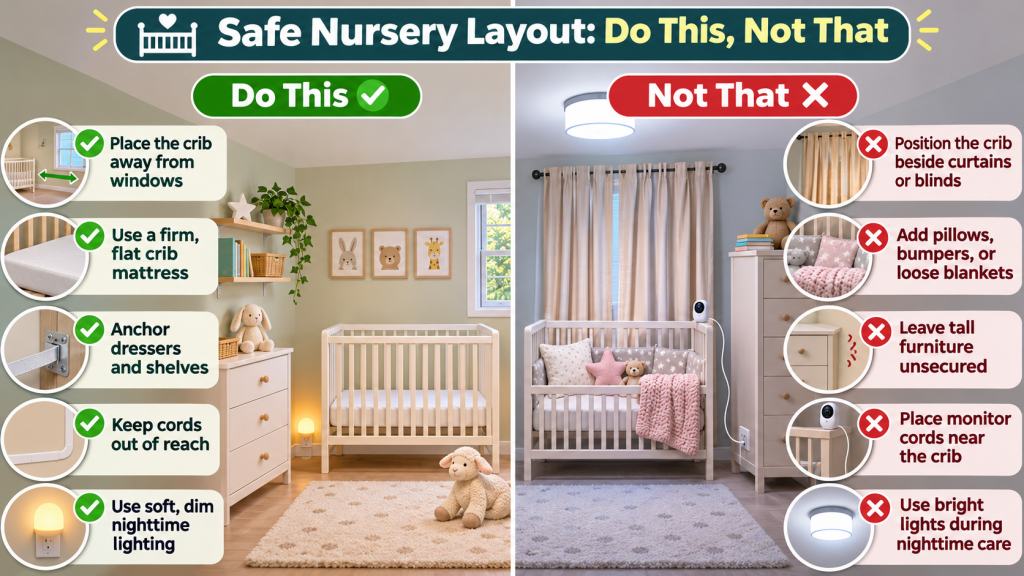
The American Academy of Pediatrics’ safe-sleep guidance recommends back sleeping, a firm, flat, non-inclined surface, an empty infant sleep area, and room-sharing without bed-sharing for at least six months. The CDC’s guidance reinforces these steps to reduce sleep-related risks; they cannot eliminate every case of sudden infant death.
Room design also involves hazards beyond the mattress. The Consumer Product Safety Commission advises cordless window coverings and anchoring furniture. For moisture control, the Environmental Protection Agency recommends indoor humidity around 30–50%. These are risk-management recommendations, not proof that a particular nursery arrangement or gadget makes babies sleep longer.
Frequently Asked Questions About Nursery Layout Ideas
Where should the crib go in a nursery with one window?
Choose a wall away from the window whenever possible, especially if curtains, blinds, or cords are present. Check for falling objects, heating equipment, and reachable cables before settling on a spot. If the room is tight, rearrange less essential furniture rather than squeezing the crib beside a hazard. Clear access for caregivers also matters.
Is it okay to put a nursery chair right next to the crib?
Yes, if it does not create reach, fall, or tipping hazards. Position the chair so an adult can sit, stand, and feed comfortably without leaning equipment over the crib. Keep side tables, hot drinks, charging cables, and lamps away from the sleeping area. Move the chair as your baby becomes more mobile.
How much space do I need around a baby crib?
There is no single clearance measurement that makes every room safe. Follow the crib’s installation instructions, make sure doors and drawers operate freely, and leave enough room for safe adult access. More importantly, ensure the crib is beyond reach of window coverings, furniture, shelves, and cords. Measure actual furniture dimensions before buying.
Can I use a changing dresser in a small nursery?
Yes, if the dresser and changing setup are suitable for that purpose and used according to their instructions. Secure the dresser against tipping, keep supplies close for the adult, and maintain a hand on the baby. Always supervise a baby when they are on an elevated surface. A floor-level changing arrangement is another space-saving option.
Will blackout curtains and white noise help my baby sleep longer?
They may reduce specific disturbances, but neither guarantees longer sleep. First notice whether light or noise actually seems to interrupt naps. Try a safer, simpler adjustment before adding equipment. Keep all window coverings and device cords away from the crib, and use sound machines cautiously. Normal infant waking often continues despite an excellent layout.
Conclusion: Choose a Layout That Stays Safe and Simple
The best Nursery Layout Ideas begin with a separate, firm, uncluttered sleep surface and a crib position clear of windows, cords, and falling objects. From there, organize feeding and changing supplies around the way you actually use the room. Soft light, sensible storage, comfortable clothing, and secure furniture matter more than matching accessories.
If you’re furnishing from scratch, the Delta Children Essex crib offers an adaptable starting point, while the TempPro TP50 can help you observe room conditions. Neither is essential for every family; a properly used bassinet and a simple, tidy setup may be enough. Recheck the arrangement as your baby grows, and prioritize proven safe-sleep practices over gadgets or promises of uninterrupted nights.