Swaddle for Newborn: How to Choose and Use One Safely

We may earn a commission for purchases made using our links. Please see our disclosure to learn more.
Does your newborn wake when lowered into the bassinet or dislike having their arms tucked away? A swaddle for newborn babies can be a useful calming tool, but the fit, fabric, and timing matter more than a clever closure. Some settle when wrapped; others prefer their hands near their face.
The biggest consideration is safety. A wrap that becomes loose, restricts breathing or hip movement, or stays in use once rolling begins can create risks. This guide explains what swaddling can realistically do, how to wrap your baby, when to stop, and which styles are worth considering. You’ll also find products suited to different needs.
What a Swaddle for Newborn Babies Actually Does
Swaddling holds a newborn’s arms closer to the body, which may reduce sudden movements associated with the Moro, or startle, reflex. Some find this calming; others want movement.
A swaddle cannot solve hunger, illness, or discomfort. It also does not reduce the risk of sudden infant death syndrome (SIDS). Babies can sleep without one and still need feeds. If your newborn cries after being wrapped, check their needs rather than tightening the fabric or assuming more swaddling will help.
When Can You Start Swaddling a Newborn?
For a healthy full-term baby, swaddling may be used from birth if you can follow safe wrapping and sleep practices. Ask a hospital clinician to demonstrate it, especially for smaller babies.
Try wrapping before crying intensifies. Feed, burp, and change your baby as needed first. If your newborn settles without it, skip it. For premature infants, babies with hip concerns, or infants following specialized medical care, ask your clinician for individualized advice before starting.
When Is It Time to Stop Swaddling?
End swaddling as soon as your baby starts trying to roll, rather than waiting for a full roll to happen. This can happen by two months, sometimes earlier.
Once rolling attempts begin, stop using any swaddle that restricts the arms, chest, or body, including tight wearable wraps. Switch to properly fitted, nonweighted sleep clothing that allows free movement. Development matters more than the label’s age limit.
Swaddle Blankets vs. Zipper and Wrap Styles
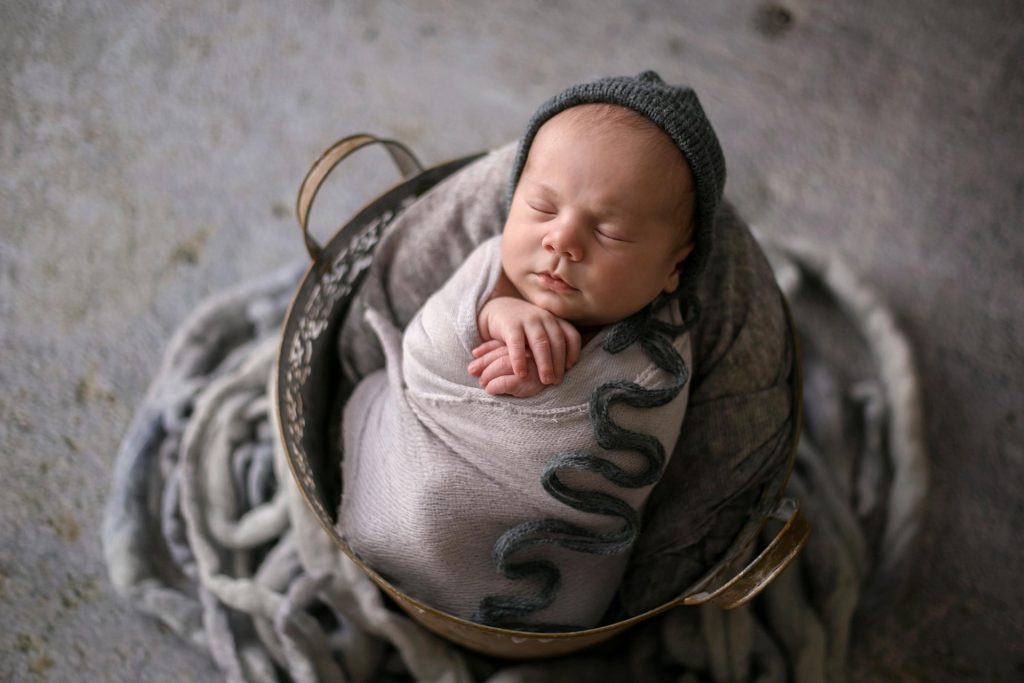
A blanket is adjustable but requires secure folding. A loose corner could cover the face.
Zippered sacks simplify dressing and may suit babies who prefer hands near their face. Hook-and-loop wraps offer adjustable wings but can be noisy to open for diaper changes. Neither is automatically safer. Choose the design you can fasten reliably, and examine the finished fit every time. A backup wrap can be useful for overnight leaks, but buying several sizes ahead is unnecessary until you know which style works.
How to Swaddle a Newborn With a Blanket
Use a lightweight blanket on a flat changing surface, staying beside your baby.
- Spread the fabric like a diamond and fold the top corner down.
- Lay your baby on their back with the shoulders positioned close to the folded edge, keeping the head fully uncovered.
- Bring one corner across the chest and tuck it securely beneath the opposite side.
- Bring the other corner across the body and tuck it firmly without compressing the chest.
- Loosely fold or twist the lower section and secure it to the side, allowing enough space for the legs to bend and move outward.
Check the wrap cannot reach the face; place baby on their back. If it loosens, choose a wearable wrap instead.
Keep the Chest Comfortable and the Hips Free
A good wrap feels secure around the upper body but never squeezes it. The American Academy of Pediatrics suggests leaving enough space for two or three fingers between the chest and fabric. Breathing must remain unrestricted.
Below the waist, the legs need more freedom. Let the knees stay bent and the hips move outward naturally instead of straightening the legs and wrapping them tightly together. That position can contribute to developmental hip problems. Choose a roomy lower pouch.
How to Find the Right Swaddle Size
For wearable swaddles, start with the manufacturer’s current weight and length chart, not the age printed on the packaging. Babies vary greatly in size. A neckline that slips toward the chin or over the face is too loose.
Inspect shoulders, fasteners, and leg pouch. There should be no tight pressure at the neck or chest, while the lower half should permit natural movement. Recheck after growth spurts or clothing changes.
Choosing Fabric and TOG for the Nursery
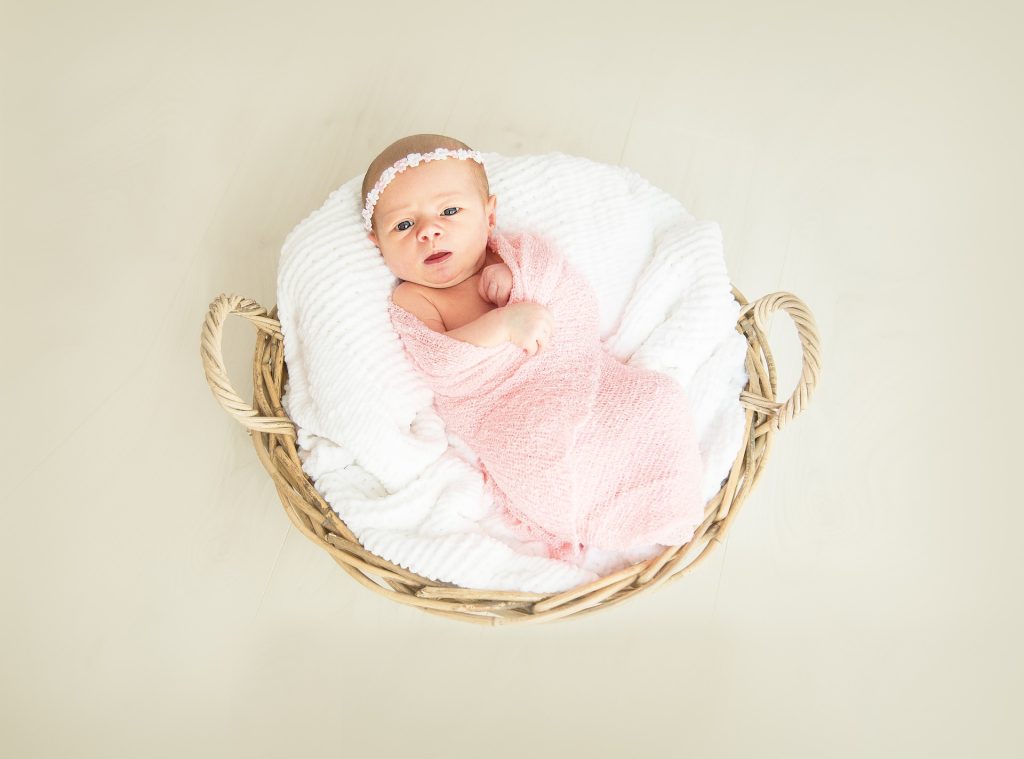
Cotton and muslin vary in thickness and warmth. TOG is a warmth rating: a higher number generally means more insulation, not greater safety or better sleep. Labels from different manufacturers may recommend different clothing combinations, so follow the guidance for your specific garment.
Choose the garment and any clothing underneath based on the room temperature and the manufacturer’s recommendations. In general, dress an infant in no more than one extra layer compared with a comfortable adult. Check the chest or back for overheating; sweating, hot skin, and damp hair mean you should reduce warmth. Leave the head uncovered.
Safe Sleep Rules That Still Apply When Swaddled
For every sleep, place baby on their back on a firm, flat, non-inclined crib, bassinet, or play-yard mattress. Use only a fitted sheet; keep pillows, toys, bumpers, and extra blankets out.
Have your baby sleep in your room while using their own separate sleep area, ideally for at least the first six months. Never use weighted swaddles or add weights to a wrap. Swaddling cannot make sofas, loungers, or swings safe sleep surfaces. Move babies who fall asleep in seats to a suitable sleep surface. Keep the crib away from dangling cords and window coverings. A wearable swaddle is never a substitute for an uncluttered, properly assembled sleep space.
What Can You Do If Your Newborn Dislikes Being Swaddled?
Check for hunger, wet diapers, heat, or tight fabric. Some babies dislike having their arms held down and prefer an arms-up design. Others sleep better unwrapped.
Try settling with a calm voice, gentle rocking while awake in your arms, or a brief, familiar pre-sleep routine. Our guide to baby sleep cues can help you notice when your newborn is becoming tired before fussiness escalates. Do not force swaddling.
Making the Transition From Swaddle to Sleep Sack
You can practice arms-free sleep before rolling begins, especially if your baby already gets their hands out or seems uncomfortable. Try a correctly sized, noncompressive sleep sack.
Some transition products have removable wings, but don’t treat gradual steps as a reason to continue restrictive swaddling once rolling attempts appear. They then need unrestricted movement. Keep your usual routine and meet feeding needs during the adjustment.
Recommended Swaddle for Newborn Products
These options suit different preferences and stages. Check sizing before use.
1. HALO SleepSack Swaddle, Cotton, 1.5 TOG, Baby Blue, Newborn
Best for: Caregivers who want adjustable arm positions.
The cotton HALO has a zippered sack and adjustable wings for arms-in, hands-near-face, or arms-out positioning. Its roomy lower section leaves space for bent legs, and the zipper helps with diaper access. The 1.5 TOG warmth rating may be too insulated for some nurseries, so check room conditions and clothing layers.
2. Love to Dream Swaddle Up, Grey, 1.0 TOG, Small
Best for: Newborns who prefer their arms raised.
This zip-up design positions the arms near the face rather than pinned alongside the torso. It also avoids learning a blanket fold, which can make changes simpler at night. The fitted shape requires careful weight-based sizing, and the enclosed arm wings mean use must end as soon as rolling attempts begin.
3. SwaddleMe by Ingenuity Original Baby Swaddle, Winnie the Pooh, 2-Pack
Best for: Families wanting reusable, adjustable wraps.
These 100% cotton wraps use fastening wings to hold the fabric around babies within the listed 7–14-pound range. Having two gives caregivers a clean replacement after laundry or a diaper leak. The hook-and-loop closure takes practice to align securely, and the wraps are for the pre-rolling stage only.
4. Momcozy Muslin Swaddle Blankets, 4-Pack, Ocean Pixie Dream
Best for: Families who prefer traditional blanket wrapping.
This set includes large 47-by-47-inch, two-layer gauze blankets suitable for practicing a manual swaddle. The generous fabric provides flexibility in folding and can serve other supervised, awake uses later. However, the technique must be secure every time; a blanket that comes undone is unsafe in a baby’s sleep space.
5. Love To Dream 2-in-1 Transition Bag, Grey, 1.0 TOG, Medium
Best for: Planning an arms-free transition before rolling begins.
The Transition Bag has zip-off wings and a double zipper, offering a way to try arms-out sleeping without changing the entire garment. The listed medium fits approximately 6–8.5 kilograms. Once rolling attempts start, remove both wings and make sure the remaining bag allows unrestricted movement; otherwise switch to a loose-fitting sleep sack.
What Pediatric Research and Guidance Say About Swaddling
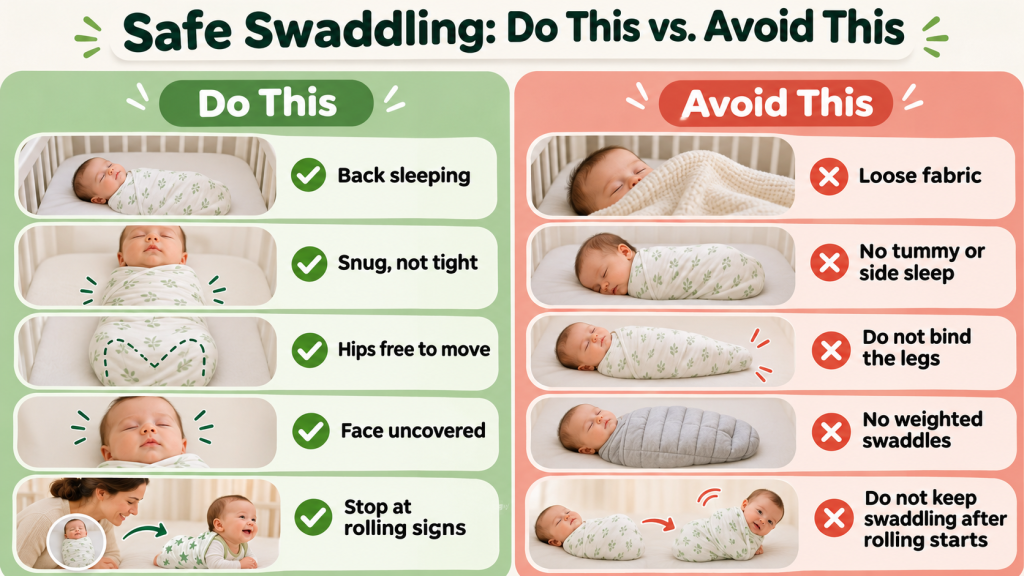
The American Academy of Pediatrics’ 2022 safe-sleep policy says there is no evidence that swaddling reduces SIDS risk. It warns of increased danger when a swaddled infant is placed face-down or rolls onto the stomach. The recommendation is clear: back sleeping, no weighted wraps, and stopping restrictive swaddling at the first signs of rolling.
The International Hip Dysplasia Institute’s hip-healthy swaddling guidance explains why wrapping the legs straight and together is problematic. Knees and hips should be able to bend and spread naturally.
For the wider sleep environment, the CDC’s infant safe-sleep guidance supports a separate firm, flat sleep surface without soft bedding. These recommendations do not promise longer sleep.
Frequently Asked Questions About a Swaddle for Newborn Babies
Is it safe for a newborn to stay swaddled throughout the night?
Yes, a newborn who has not shown rolling attempts may sleep in an appropriately fitted, nonweighted swaddle during naps and nighttime, provided every safe-sleep rule is followed. Use a clear crib or bassinet. Swaddling doesn’t remove the need for feeding or supervision appropriate to their age and health.
Is it better to swaddle a baby with their arms up or down?
Either position may suit a newborn before rolling attempts, as long as the wrap fits and leaves breathing and hip movement unrestricted. Some babies prefer hands near their face, while others settle with arms down. Neither position prevents SIDS. Once rolling attempts begin, stop any design that restricts movement.
Is it safe to swaddle a baby during hot weather?
Possibly, but reduce clothing layers and choose a suitable lightweight garment if the room is warm. A thin fabric is not a guarantee against overheating. Feel your baby’s chest or back and watch for sweating, flushed skin, or damp hair. If overheating remains a concern, skip swaddling.
Which is better for a baby: a swaddle or a sleep sack?
Neither is universally better. A swaddle may calm a young newborn who enjoys gentle arm containment, while an ordinary arms-free sleep sack provides wearable warmth without restricting the arms. An arms-free sleep sack is useful after swaddling ends.
What should I do if my baby escapes the swaddle?
Stop using a blanket wrap that repeatedly comes loose, because free fabric may cover the face. Check whether the blanket is too small or the fold is insecure; a properly fitted wearable option may be easier. Never add pins or restraints. If your baby is starting to roll, transition immediately to unrestricted sleep clothing.
Conclusion: Choosing the Right Swaddle for Newborn Sleep
The right swaddle for newborn sleep is one that fits your baby, matches the room’s warmth, and stays securely in place without limiting breathing or hip movement. A manual muslin blanket suits caregivers comfortable with careful folding, while HALO’s adjustable wrap or Love to Dream’s arms-up style may be easier to manage during night changes.
Not every baby needs a swaddle. Watch development more closely than the size label: at the first attempt to roll, stop restrictive swaddling and use an appropriate arms-free sleep sack. Comfortable sleep without a wrap is fine. Prioritize a clear, flat sleep space and a comfortable, freely moving baby over any promise of longer nights.