7 Signs Your Baby’s Sleep Environment Needs Adjusting
We may earn a commission for purchases made using our links. Please see our disclosure to learn more.
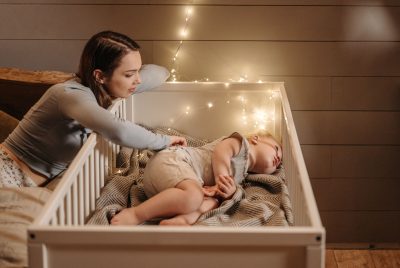
A baby who wakes often, fusses during naps, or feels sweaty after sleep may be reacting to something in the room. An unsettled night does not automatically call for new equipment. Your Baby’s Sleep Environment deserves a closer look because temperature, light, noise, and the safety of the sleeping space all matter.
Some fixes are obvious; others need observation as your baby grows. The seven signs below will help you spot potential problems, make sensible adjustments, and recognize when a sleep issue needs more than a nursery makeover. Safety comes first; longer sleep is never worth compromising it.
1. Your Baby Wakes Sweaty or Feels Too Warm
A hot chest or sweating may mean your baby is overdressed or too warm. Check your baby’s chest or back instead of relying on cool hands and feet, since those can feel chilly even when your baby is comfortable.
Try lighter sleepwear or adjusting the heating. The American Academy of Pediatrics generally advises no more than one extra clothing layer compared with a comfortably dressed adult. Leave their head uncovered indoors.
No thermostat setting fits everyone. Use the reading as context, then assess how your baby feels. Fever or lethargy needs medical advice.
2. Daylight or Bright Lamps Keep Disturbing Naps
If sunlight or overnight care wakes your baby, lighting may contribute. Streetlights, television screens, and bright bedside lamps can also disturb a calm room.
Try room-darkening curtains for naps and a low, indirect light for overnight care. Keep coverings and cords out of reach. A curtain that works at night may still leak afternoon sunlight.
A pitch-black nursery is not a medical requirement. Allow daylight while awake; reduce disruptive brightness during sleep. You do not need to spend heavily to make a noticeable difference.
3. Everyday Noises Trigger Repeated Startles
Barking, slamming doors, or television can interrupt settling. Notice whether waking follows particular sounds before assuming your baby needs background noise.
Close doors gently or move noisy activities away. A sound machine may mask sudden noise, but it requires caution.
The AAP warns that some infant sound machines reach potentially harmful levels. Place yours far from your baby’s head, use a low volume, and limit playback. Keep equipment and cables outside the crib. Quiet is fine, too.
4. The Room Feels Damp, Stuffy, or Irritating
Condensation, mustiness, or mold needs attention. Smoke and strong fragrances also irritate.
The Environmental Protection Agency recommends indoor humidity around 30–50% to help control moisture. A basic meter can show patterns, although readings cannot explain every cause of discomfort. For example, repeated condensation after overnight heating may point to a ventilation or moisture issue.
Fix leaks, ventilate appropriately, and keep the room clean and smoke-free. Clean humidifiers regularly. Avoid essential-oil diffusers and heavily scented products around the sleeping area, especially if they appear to irritate your baby. Discuss persistent coughing, congestion, or breathing concerns with your pediatrician.
5. The Crib Has Collected Soft or Loose Items
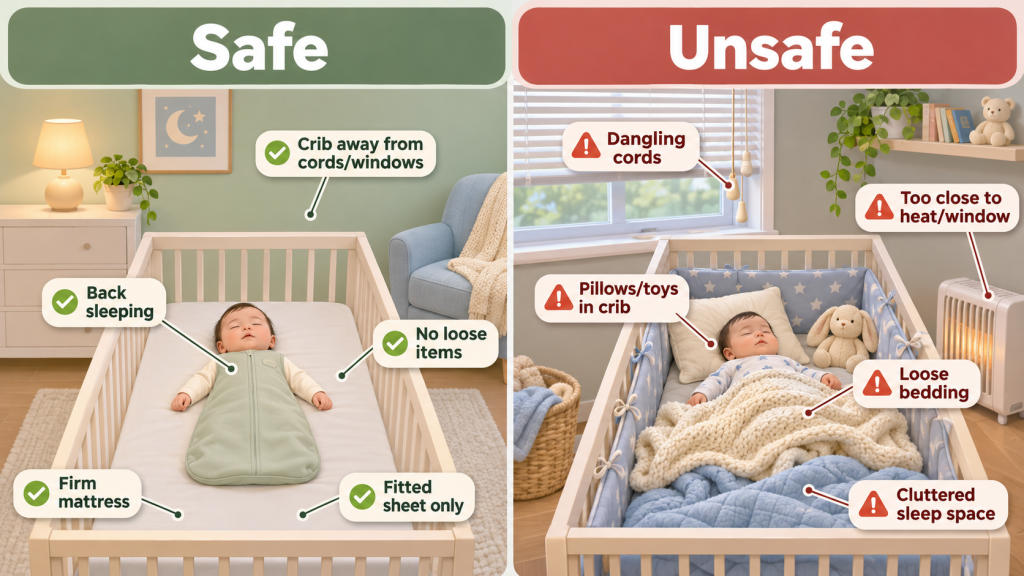
Remove pillows, toys, loose blankets, bumpers, and positioners. These pose suffocation or entrapment hazards.
For babies under 12 months, use a firm, flat, approved mattress covered only by a fitted sheet. Choose appropriate clothing or a correctly sized, non-weighted wearable blanket for warmth instead of a quilt.
Check sheet fit after washing; remove extra padding. Never prop the mattress at an angle to treat congestion or reflux without specific medical direction. A clear sleep area matters even when your baby seems content with the decorations.
6. The Crib Sits Too Close to Windows or Cords
A safe newborn layout can become hazardous as reaching develops. Watch blind cords, monitor wires, and hanging fabric.
Move the crib away from windows, reachable cables, shelves, and objects that could fall. Secure furniture, and choose cordless window coverings wherever children live. Tying a cord high does not eliminate the hazard.
Check sunlight and heating vents, too. Choose a location without reachable hazards or concentrated heat. Recheck after moving furniture or installing equipment. Mounting a monitor above the crib does not make an accessible cord safe, so follow the maker’s placement instructions.
7. Your Baby Has Outgrown Their Current Setup
Your baby may outgrow their bassinet quickly. Check its weight, height, and developmental stopping limits; stop use when any limit is reached.
Watch for rolling attempts. End swaddling as soon as your baby shows signs of trying to roll, even earlier than expected. A properly fitted, arms-free wearable blanket is a possible replacement.
For help, see how to transition from a swaddle to a sleep sack. Avoid positioning wedges or towels meant to restrict movement. Your setup needs to follow your baby’s development.

Start With a Safe Sleep Foundation
Confirm the basics before shopping. Place your baby on their back for every sleep, on a firm, flat, non-inclined mattress in a safety-approved crib, bassinet, or play yard. Use the intended mattress and fitted sheet, without extra items.
The AAP advises room-sharing without bed-sharing for at least the first six months. Keep their separate bed nearby. This makes nighttime care easier without bed-sharing.
Car seats, swings, loungers, adult beds, and sofas are not substitutes for an approved infant sleep surface. Transfer a sleeping baby from a sitting device to a safe surface. Avoid makeshift wedges.
Do a Ten-Minute Nursery Safety Check
A walk-through reveals overlooked problems. Inspect at crib level, including after dark.
- Surface: Firm, flat, assembled correctly, with only a fitted sheet.
- Placement: Clear of cords, windows, heaters, and falling objects.
- Clothing: Comfortable, without loose or weighted bedding.
- Light and sound: Gentle, with sound devices distant and quiet.
- Air: Smoke-free, without leaks, mold, or overpowering fragrance.
Check recalls and instructions. Fix hazards immediately; change comfort settings individually. If naps remain difficult, note environmental triggers.
Adjust the Room as Your Baby Grows
Needs change as babies roll, sit, and pull up. Bassinets and clothing can become unsuitable.
Recheck sleep-sack fit after growth spurts. Once swaddling ends, avoid garments restricting arm movement. Follow crib instructions for lowering the mattress as mobility develops.
Keep bedtime cues recognizable. Dimming lights may help with settling, but development can still bring irregular naps or nighttime waking. Reinspect the room whenever your baby gains a new skill. Move reachable shelves as your child gains mobility.
Know When the Room Is Not the Real Problem
Waking does not prove the nursery is uncomfortable. Babies wake for feeding, comfort, or development.
If your baby seems well, note sleep timing and triggers. Avoid constant equipment adjustments. An ordinary feeding-related wake-up will not be solved by adding more white noise or making the room colder.
Ask your pediatrician about persistent difficulties, poor feeding, unusual snoring, or ongoing congestion. Seek urgent medical care for breathing difficulty, blue or gray skin, or a baby who is difficult to awaken. These require medical attention.
What Research Says About a Safer Baby’s Sleep Environment
The American Academy of Pediatrics’ 2022 safe-sleep policy recommends back sleeping, a firm non-inclined surface, room-sharing without bed-sharing, and avoiding soft bedding and overheating. Its guidance draws largely on observational evidence; researchers cannot ethically assign infants to hazardous sleep conditions in randomized trials. Established precautions still matter.
The CDC’s safe-sleep guidance reinforces those precautions. They reduce known risks but cannot guarantee prevention of sudden infant death syndrome (SIDS).
For environmental details, EPA indoor-air guidance recommends monitoring moisture, while the CPSC’s window-cord guidance favors cordless coverings. These recommendations support safer decisions; they do not establish that blackout curtains, humidity meters, or sound machines will make every baby sleep longer.
Helpful Products for Adjusting Your Baby’s Sleep Environment
These products serve distinct needs. Prioritize the problem you observed and check that any product suits your space. Keep accessories and cables outside the crib.
HALO SleepSack 100% Cotton Wearable Blanket, 0.5 TOG
Best for: Replacing loose blankets after swaddling.
This sleeveless cotton wearable blanket offers an arms-free alternative to loose bedding. Its 0.5 TOG rating suits lighter layers, and the zipper helps with changes. Choose the exact size using the brand’s fit guide rather than age alone; an oversized neckline or unsuitable layering can undermine an otherwise sensible choice.
Hatch Rest 2nd Gen Baby Sound Machine and Night Light
Best for: Customizable, low-key sound and light routines.
The Rest combines adjustable sounds, colored lighting, and routines managed through the Hatch Sleep app. It can provide a dim light for night feeds without switching on an overhead lamp. App setup adds complexity; volume needs care. Position the unit far from the crib, with its cable inaccessible.
TempPro TP50 Digital Hygrometer Indoor Thermometer
Best for: Checking temperature and humidity without an app.
The TP50 displays room temperature and relative humidity on a compact screen, with a simple indicator for moisture conditions. It reveals moisture and temperature patterns. It does not control the air or tell you how your baby feels, so pair its readings with observation and sensible adjustments.
NICETOWN Blackout Curtains Drapery Panels, 52 x 84 Inches, Set of 2
Best for: Reducing strong daylight in a nursery.
These polyester grommet-top panels are designed to block much of the incoming light, although performance varies with color and installation. They can soften bright afternoon conditions without changing the baby’s bed. Measure first, secure the rod, and keep curtains far from the crib.
VTech DM111 Digital Audio Baby Monitor
Best for: Hearing your baby while you are elsewhere in the home.
The DM111 uses DECT 6.0 digital audio transmission and provides a sound-level indicator on the parent unit. It offers straightforward listening without needing a video feed. Walls affect range; a monitor cannot prevent accidents or replace supervision. Keep the baby unit and power cord away from the sleep space.
Frequently Asked Questions About Your Baby’s Sleep Environment
What is the ideal room temperature for a baby?
No universal temperature guarantees safe infant sleep. Keep the room comfortable for a lightly dressed adult and avoid overheating. Check your baby’s chest or back for excessive warmth, adjust clothing layers, and follow garment instructions. Sweating or a hot chest is a stronger warning than cool hands.
Does a baby need complete darkness in the nursery to sleep well?
No. Total darkness is not required. Reducing bright sunlight or harsh nighttime lighting may make the room more restful, especially during naps or overnight care. Keep normal daytime light during waking hours, and make sure any curtains, shades, and cords are safely positioned away from the crib.
Can white noise be safely used every night?
Some sound machines play too loudly. If you choose one, place it as far from your baby’s head as possible, keep the volume low, and limit use rather than assuming continuous playback is harmless. It is optional, and it should never sit on the mattress or near reachable cables.
When is the right time to transition my baby from a bassinet to a crib?
Move your baby when the bassinet’s manufacturer says to stop using it, whether because of weight, length, or a developmental milestone such as pushing up or rolling. Limits vary. Check the manual early. Do not add pillows or inserts to extend use.
Can a better sleep environment stop nighttime waking?
It may reduce waking from heat, noise, or light, but normal waking continues. Babies still wake for feeding, comfort, or developmental reasons. Start by correcting safety hazards, then address a specific comfort issue. Discuss persistent or concerning changes with your pediatrician rather than buying more sleep gadgets.
Conclusion: Make Safety the First Adjustment
Improving your Baby’s Sleep Environment starts with identifying the actual problem, not filling the nursery with gadgets. Check for overheating, disruptive light or noise, poor air quality, loose bedding, nearby cords, and a sleep space your baby may have outgrown. Keep back sleeping, a firm flat surface, and an uncluttered crib nonnegotiable.
If a specific issue remains, choose the smallest useful adjustment. A correctly sized HALO SleepSack can replace loose blankets, while a simple temperature-and-humidity monitor can help you understand changing room conditions. Neither replaces your judgment or established safe-sleep practices. Start tonight with a careful crib-and-room inspection, then address one comfort concern at a time and ask your pediatrician about anything unusual.