Arms Up Swaddling: Safety, Benefits, Products & When to Stop

We may earn a commission for purchases made using our links. Please see our disclosure to learn more.
If your newborn keeps wriggling their hands toward their cheeks no matter how neatly you wrap them, you are not alone. Some babies seem happiest with bent elbows and hands close to the face, which is exactly what arms up swaddling is designed to allow. The style can offer the contained feeling of a swaddle without holding both arms straight at the sides.
Still, the arm position is only one piece of the sleep-safety picture. A good choice also depends on fit, temperature, your baby’s stage of development, and—most importantly—whether rolling has begun. This guide explains how arms-up designs work, what research can and cannot tell us, when to stop swaddling, and how to compare practical product options.
Affiliate disclosure: We may earn a commission from qualifying purchases made through links on this site, at no additional cost to you.
What Is Arms Up Swaddling?
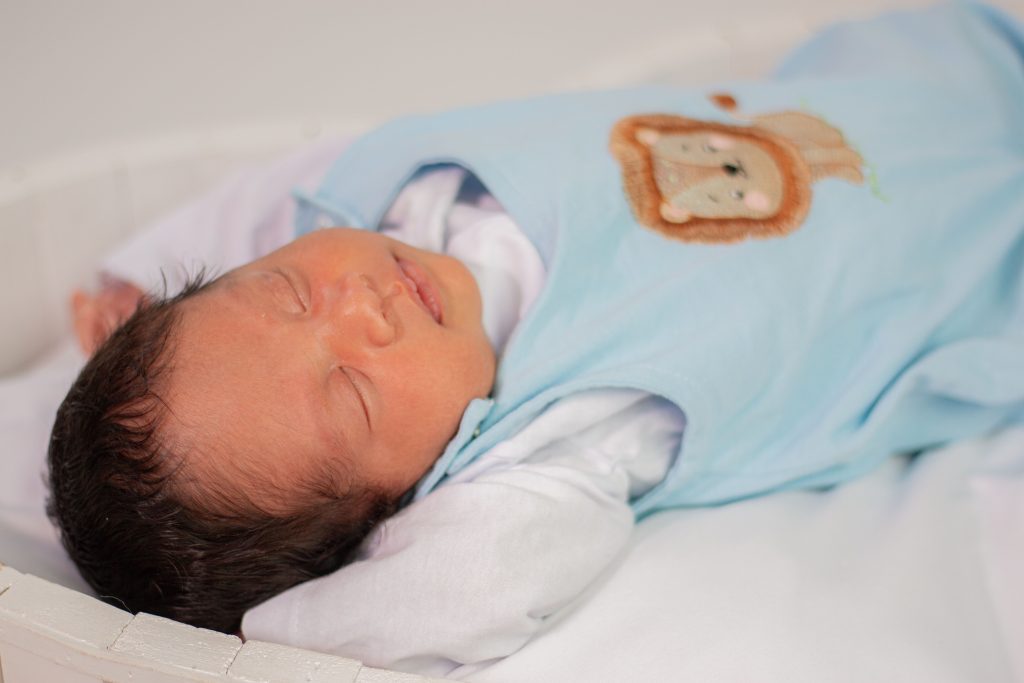
Arms up swaddling keeps a baby’s torso gently contained while the elbows stay bent and the hands rest near the face or above the shoulders. The hands may sit inside fabric wings, short sleeves, or hand-access openings.
Unlike a classic arms-down wrap, this posture allows more hand-near-face positioning. It is still a swaddle, however, if it restricts arm or torso movement—a crucial distinction once rolling attempts begin.
Why Some Newborns Prefer Their Hands Near Their Face
Newborns often stretch, startle, turn their heads, and bring their hands toward their mouths. Some become frustrated when both arms are pinned straight down, so an arms-up shape can feel less restrictive while retaining some containment.
Still, babies vary. Some prefer arms down; others settle best with arms free. Arms up swaddling is an option, not a developmental requirement.
Arms Up Swaddling vs Traditional Arms-Down Swaddling
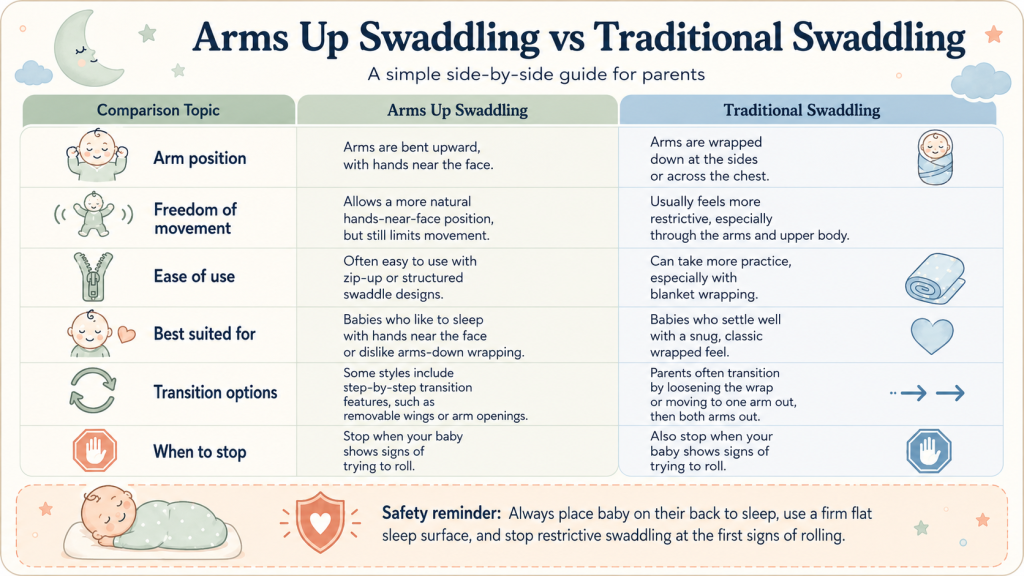
Traditional swaddling usually limits arm movement with the arms alongside the body or across the chest. Arms-up styles keep the elbows flexed and the hands closer to the face.
Neither position has been proven safer for SIDS. The American Academy of Pediatrics says evidence does not show a SIDS-risk difference based on whether the arms are swaddled in or out. Back sleeping, safe fit, and stopping at rolling attempts matter more.

Is Arms Up Swaddling Safe?
Arms up swaddling can fit within safe-sleep guidance, but the hand position does not make it inherently safer. Place your baby on their back for every sleep on a firm, flat, level surface with only a fitted sheet; keep loose and soft objects out.
When your baby begins to roll, which can happen as early as two months, stop swaddling them. Weighted swaddles and weighted sleepwear are not recommended.
What Research Says About Swaddling and Infant Sleep
A 2022 systematic review of swaddling, sleep, and arousal found that swaddling was associated in some studies with longer quiet-sleep periods and fewer sleep-state changes. However, methods and participants differed substantially, limiting how broadly the findings can be applied. The review does not establish that arms up swaddling works better than other arm positions.
The AAP’s 2022 safe-sleep policy statement says there is no evidence to recommend swaddling as a strategy to reduce SIDS risk. Its parent guidance on swaddling stresses back sleeping and stopping at rolling attempts.
So, swaddling may help some babies settle, but it is a comfort technique—not protection against SIDS.
Who May Benefit From an Arms-Up Style
An arms-up style may suit a young, not-yet-rolling baby who repeatedly works their hands toward the face or dislikes having both arms pinned down. It can also be convenient for caregivers who prefer a purpose-made zippered garment over blanket wrapping.
If your baby already settles with arms free, swaddling is unnecessary. If rolling attempts have begun, choose arms-free sleepwear instead.
How to Choose an Arms Up Swaddle
Start with the manufacturer’s size chart and your baby’s current weight and measurements. Avoid sizing up for “room to grow,” because excess fabric can compromise fit.
Then compare the fastening system, diaper-access design, fabric weight, and transition options. The best arms up swaddling product is one that fits correctly, suits the room temperature, and matches your baby’s current developmental stage.
Fit, Fabric, TOG, and Temperature
A swaddle should be snug without compressing the chest. AAP wrapping guidance suggests room for two or three fingers between the swaddle and the baby’s chest, while the hips and knees should remain free to flex naturally.
TOG describes thermal insulation. Because layering guidance differs by brand, follow the product instructions and watch for sweating or unusually hot skin rather than assuming thicker is better. The AAP specifically cautions that swaddling can contribute to overheating.
How to Use Arms Up Swaddling Safely
Before sleep, check that the swaddle fits, fastens as intended, and stays below the chin with no loose fabric near the nose or mouth. Place your baby flat on their back in an empty, approved infant sleep space.
For warmth, adjust clothing layers or garment weight rather than adding a loose blanket. Inspect zippers and seams regularly. Arms up swaddling never makes side or stomach placement appropriate for a swaddled baby.
When to Stop Swaddling and Free the Arms
Stop restrictive swaddling at the first sign your baby is trying to roll; do not wait for a completed roll. Some babies show attempts as early as 2 months, so watch development rather than the calendar.
Afterward, use nonrestrictive arms-free sleepwear. If the transition terminology feels confusing, this sleep sack vs swaddle guide explains the practical differences by sleep stage.
Recommended Arms Up Swaddling Products
These options cover different positioning, temperature, and transition needs. Always use the current size and fit instructions.
| Product | Best for | Key design |
| Love to Dream Swaddle UP Original 1.0 TOG | Hands-near-face newborns | Zippered arms-up wings |
| Love to Dream Swaddle Up Transition Swaddle 1.0 TOG | Gradual transition | Zip-off wings |
| SwaddleDesigns Transitional Swaddle Sack | Hand access | Half-length sleeves with mitten cuffs |
| Amazing Baby 6-Way Omni Swaddle Sack | Flexible positioning | Adjustable wrap with arms-up sleeves |
| ergoPouch Cocoon Swaddle Sack 0.2 TOG | Warm rooms | Arms-in-to-arms-out transition design |
Love to Dream Swaddle UP Original 1.0 TOG
Best for: Newborns who strongly prefer their hands near their face
This zippered design holds the arms in an elevated, bent position while keeping the torso contained. The current small listing is made with 93% cotton and 7% elastane. It is simple to fasten and avoids blanket-folding guesswork. However, it remains a restrictive swaddle, so it should not be used once rolling attempts begin.
Love to Dream Swaddle Up Transition Swaddle 1.0 TOG
Best for: Families planning a gradual move toward arms-free sleep
This transition model uses patented zip-off wings, allowing caregivers to remove one wing and then the other as the baby moves toward arms-free sleep. The listed fabric is 93% cotton. The staged design is practical for babies approaching a transition, but rolling signs still take priority over any gradual schedule or age range on the package.
SwaddleDesigns Transitional Swaddle Sack
Best for: Babies who want hand access with lighter arm containment
The Transitional Swaddle Sack uses arms-up half-length sleeves with mitten-style cuffs, creating a different feel from enclosed wing-shaped swaddles. That can suit babies who dislike having their hands fully covered. The tradeoff is that the less conventional design may take a little more attention to sizing and fit, especially as your baby’s mobility changes.
Amazing Baby 6-Way Omni Swaddle Sack, Watercolor Little Roses, 6-14 lbs
Best for: Parents who want flexible arms-up positioning
The Amazing Baby 6-Way Omni Swaddle Sack combines an adjustable wrap with half-length arms-up sleeves and foldover mitten cuffs, giving caregivers several ways to position a newborn’s hands and arms. A two-way zipper also simplifies diaper changes. The 6–14 lb size suits smaller newborns, although restrictive swaddling should stop as soon as rolling attempts begin.
ergoPouch Cocoon Swaddle Sack 0.2 TOG
Best for: Warm rooms and families wanting an arms-in-to-arms-out option
This lightweight 0.2 TOG cocoon is designed to convert from a snug swaddle setup to arms-out use through shoulder openings. Its low insulation can be appealing in warmer conditions, and the transition feature reduces the need for an entirely different garment immediately. In cooler rooms, however, caregivers need to follow the brand’s layering guidance carefully.
Common Problems and Simple Fixes
If a hand escapes or fabric rides upward, check sizing and fastening before making the swaddle tighter. Stop using any setup that lets fabric approach the face.
If your baby seems too warm, reduce layers or choose a lighter TOG. If arms up swaddling consistently causes frustration, try arms-free sleepwear instead. Swaddling is optional, not something every newborn must learn to tolerate.
What to Do If Your Baby Hates Being Swaddled
Some babies simply prefer more movement. An appropriately fitted, arms-free wearable blanket can support warmth without forcing a swaddled posture.
Before changing sleepwear, also check hunger, diaper comfort, room temperature, and whether your baby is becoming more mobile. If disrupted sleep comes with breathing concerns, fever, unusual lethargy, feeding problems, or persistent distress, contact your child’s healthcare professional.
Frequently Asked Questions About Arms Up Swaddling
Is arms up swaddling safer than arms-down swaddling?
There is no good evidence that the arm position itself makes one swaddling style safer than another for SIDS. The AAP specifically notes that evidence does not show a SIDS-risk difference based on whether the arms are swaddled in or out. Focus instead on back sleeping, a clear sleep space, correct fit, appropriate temperature, and stopping swaddling when rolling attempts begin.
Can a newborn sleep with hands near their face?
Yes, a newborn can have the hands near the face in a correctly fitted, purpose-designed garment, provided the fabric stays away from the nose and mouth and the baby is placed on their back on a firm, flat sleep surface. Some babies like this posture; others do not. Hand position should never require loose fabric or an improvised wrap around the face.
When is it appropriate to stop arms-up swaddling?
Even if your baby hasn’t finished a full roll yet, stop them as soon as they begin to roll. The AAP notes that rolling attempts can begin as early as 2 months. Do not wait for a particular birthday or rely solely on the product’s stated age range. Afterward, choose nonrestrictive, arms-free sleepwear appropriate for your baby’s size and room conditions.
Does arms up swaddling help with the startle reflex?
Swaddling limits some sudden arm movement, and research suggests swaddling can alter sleep and arousal patterns in some infants. However, evidence specifically comparing arms-up positioning with other swaddle positions is limited. So it is reasonable to judge the style by whether your baby settles comfortably, but not to assume that it has a proven sleep advantage over every other swaddling method.
Can I use an arms-up swaddle after my baby rolls?
Do not continue a restrictive swaddle once your baby is trying to roll. Move to sleepwear that leaves both arms free. At the beginning of each sleep, continue to place your infant on their back. NICHD says that once babies can roll both ways independently, they can remain in the position they choose after being placed on their back.
Final Recommendation: Is Arms Up Swaddling Worth Trying?
Arms up swaddling can be a useful option for a young newborn who dislikes having both arms pinned down and naturally keeps reaching toward the face. The Love to Dream Swaddle UP Original offers a straightforward arms-up shape, while the HALO SleepSack Swaddle gives caregivers more positioning flexibility. For a baby nearing the end of swaddling, a transition-focused design may be more practical than buying another newborn-only style.
Whichever product you choose, prioritize fit, breathable layering, back sleeping, and an empty, firm, flat sleep space. Most importantly, stop restrictive swaddling at the first sign of rolling attempts. If your baby is comfortable with arms free, there is no need to force swaddling at all.