How To Spot Baby Sleep Cues

We may earn a commission for purchases made using our links. Please see our disclosure to learn more.
A baby can shift from happily studying your face to crying through a nap attempt in minutes. Often, the missing piece is timing. Baby Sleep Cues are small changes in movement, expression, attention, and sound that suggest your baby is becoming tired before distress takes over. Learning them does not require perfect instincts or a strict schedule; it takes observation, context, and repetition.
This guide explains which signals matter, how they change with age, how to separate tiredness from hunger or overstimulation, and what to do once you notice them. You will also find research-backed guidance, practical product options, and a simple approach to building calmer sleep transitions without treating every yawn like an emergency.
What Baby Sleep Cues Actually Tell You
Sleep cues are communication, not commands. A yawn, distant stare, quieter body, or sudden loss of interest can suggest alertness is dropping, but one behavior rarely tells the whole story.
Look for two or three changes together, then consider the last nap, feed, activity, illness, or travel. The pattern matters most. Your goal is to notice when your baby may be ready for less stimulation and a familiar settling routine.
Early Baby Sleep Cues to Watch For
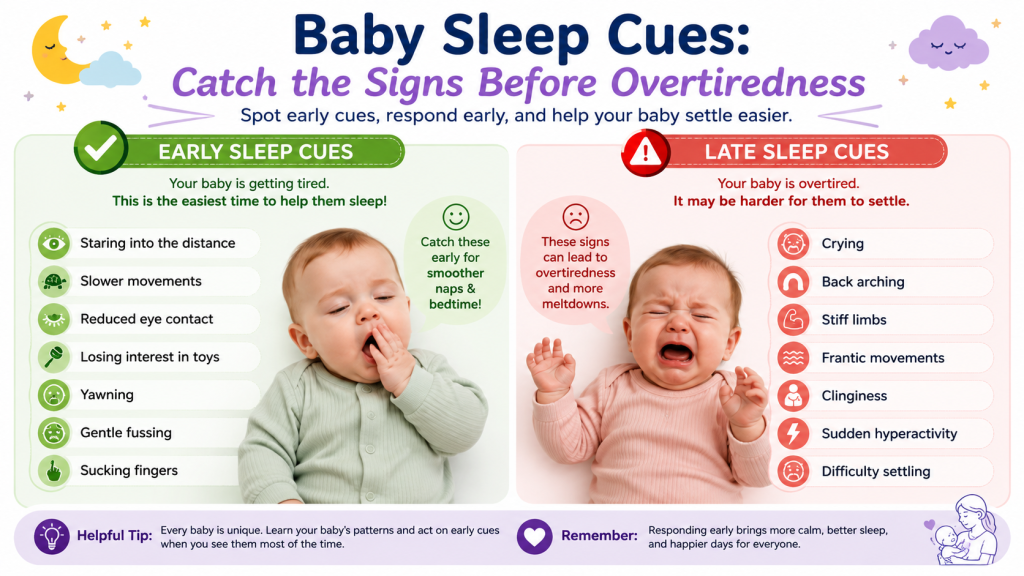
Early cues are quiet. Your baby may stare past you, stop engaging, blink slowly, turn away, or move less smoothly. Other signs include fluttering eyelids, finger-sucking, yawning, gentle ear pulling, or mild fussing.
These Baby Sleep Cues often create the easiest settling window. Treat them like a soft knock: lower your voice, dim the lights, and end active play before crying becomes the main signal.
Late Cues and Overtiredness
Crying, frantic movement, back arching, stiff limbs, and intense clinginess often appear after earlier signs pass. Some overtired babies look unusually energetic, almost as if they found a second wind.
Move somewhere quieter, speak softly, and use your normal calming steps. Missing a window does not ruin the day. Treat late Baby Sleep Cues as feedback and begin winding down earlier next time.
How Sleep Cues Change With Age
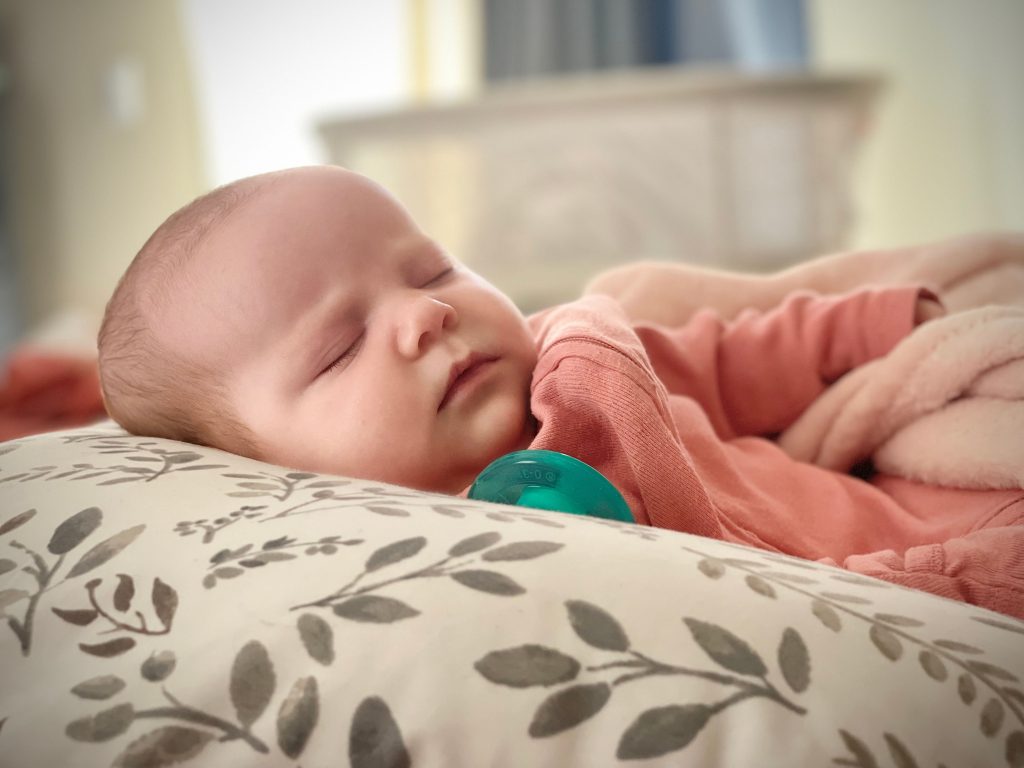
Newborn cues are frequent and subtle. A baby may lose eye contact, move jerkily, or become drowsy after feeding. By three to six months, signs may include turning away, eye rubbing, or losing interest in play.
Older babies may become clingy, clumsy, or unusually active. New motor skills can also delay settling. The most useful cues are the recurring signs your child shows across several days.
Baby Sleep Cues vs Hunger, Gas, or Boredom
Signals overlap. Hand-to-mouth movements can mean hunger, tiredness, teething, or self-soothing. Turning away may mean sleepiness or a need for a break.
Use context. Rooting and eager sucking suggest hunger; disengagement soon after feeding points more toward tiredness. If a quieter activity restores bright eye contact, overstimulation may be the issue. Seek medical advice for unusual crying, fever, breathing difficulty, poor feeding, rash, vomiting, or reduced responsiveness.
Use Wake Windows as a Guide, Not a Stopwatch
A wake window is the time between waking and the next sleep. It can show when tiredness is likely, but online charts offer averages, not appointments.
Sleep needs shift with age, nap quality, feeding, illness, travel, and development. Use time beside behavior. As the usual window approaches, watch for Baby Sleep Cues. If your baby remains calm and engaged, do not force sleep only because a chart says the window has closed.
What to Do When You Spot a Sleep Cue
Pause stimulating play, lower your voice, soften the lighting, and check feeding, diapering, and clothing comfort.
Then follow a familiar sequence: perhaps a cuddle, sleep sack, short song, and placement in the sleep space. If your baby protests, reassess calmly; they may need a feed, burp, more soothing, or a brief reset. The goal is a predictable bridge from tiredness to a safe chance to rest, not instant sleep.
Build a Short, Repeatable Sleep Routine
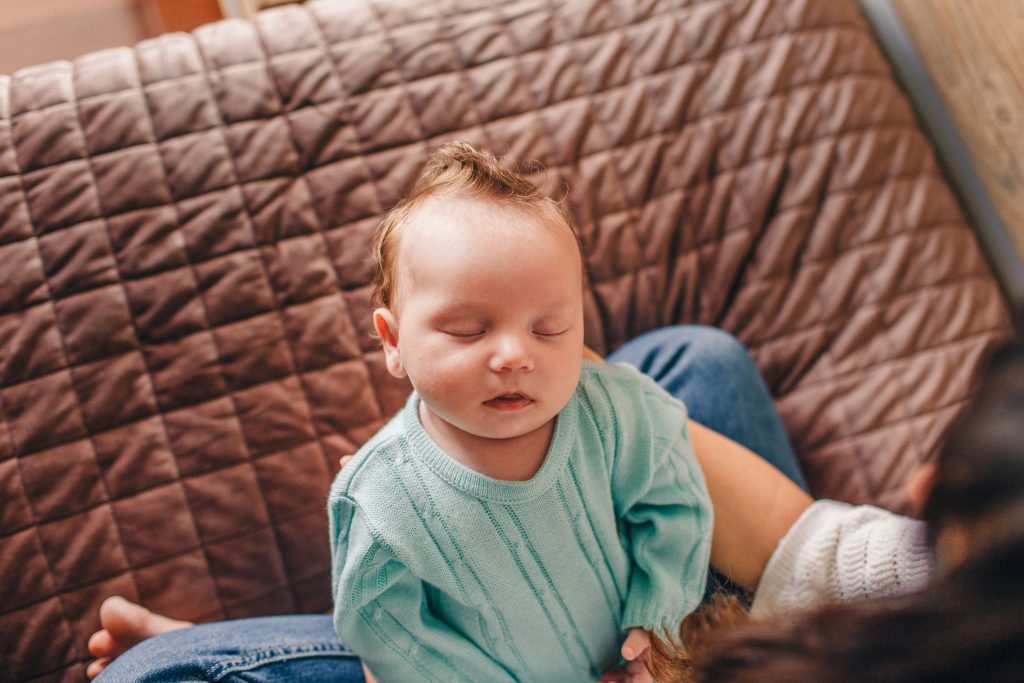
A routine gives meaning to cues you control. Dim lights, a fresh diaper, a quiet song, and the same phrase can signal that active time is ending.
Consistency matters more than complexity. A brief routine used most days beats an exhausting production. This guide to creating a bedtime routine for babies offers a practical framework. Begin when early Baby Sleep Cues appear, treating the routine as an invitation rather than a guarantee.
Keep Every Sleep Response Safe
Safe-sleep guidance remains the same whatever cue appears. Place babies on their backs on a firm, flat, non-inclined infant sleep surface. Toys, positioners, bumpers, pillows, and loose blankets should be kept away.
Use a separate sleep surface even when room-sharing. Do not leave a baby sleeping on a sofa, nursing pillow, swing, or sitting device. Stop swaddling at signs of attempted rolling, avoid weighted sleep products, and ask your pediatrician about medical concerns.
When Cues Change During Developmental Leaps
Growth spurts, motor skills, separation awareness, illness, teething, travel, and feeding changes can shift sleep timing. A familiar cue may appear earlier or later.
Watch the whole pattern, keep transitions calm, and avoid rebuilding the routine after one hard night. Observe for several days and change one thing at a time. Contact a healthcare professional about persistent changes with pain, snoring, breathing pauses, feeding difficulty, or poor growth.
Track Patterns Without Obsessing
For three to five days, note wake time, feeds, the first cue, when settling began, and when sleep occurred. Add context such as “short nap” or “visitors.”
Look for sequences and share them with other caregivers. Stop tracking if it increases anxiety or makes you ignore the baby in front of you. Baby Sleep Cues are flexible communication, not a scorecard.
Recommended Products for Responding to Baby Sleep Cues
Products cannot teach sleep or replace responsive care, but a well-chosen tool can make a calm routine easier to repeat. These options address different budgets, spaces, and priorities.
| Product | Best for | Main strength | Consideration |
| Hatch Rest 2nd Gen | Routine-focused families | Programmable light and sound | Uses app and Wi-Fi |
| Yogasleep Hushh | Travel | Compact, rechargeable | Three sound choices |
| Infant Optics DXR-8 PRO | Non-Wi-Fi video | Dedicated parent unit | No remote phone access |
| VTech DM221 | Budget audio | Sound and vibration alerts | No video |
| Nanit Smart Monitor | App-based insights | Video and notifications | Some insights require membership |
| HALO SleepSack Cotton | Wearable warmth | No loose blanket needed | Fit and warmth level matter |
Hatch Rest 2nd Gen Baby Sound Machine & Night Light
Best for: Routine-focused families
This sound machine and night light supports recurring light-and-sound routines, app adjustments, and consistent bedtime or wake cues. It suits families who value repeatability across naps and nights. Its flexibility is useful, although caregivers wanting a completely offline, button-only device may prefer a simpler model.
Yogasleep Hushh Portable White Noise Sound Machine for Baby
Best for: Travel and small living spaces
The Hushh offers three sounds, adjustable volume, an amber night light, child lock, USB recharging, and a portable clip. It helps preserve a familiar routine during travel or room-sharing. The sound library is limited, and both the device and charging cord must remain safely away from the sleep space.
Infant Optics DXR-8 PRO Video Baby Monitor
Best for: Families who prefer monitoring without Wi-Fi
This monitor uses a dedicated five-inch 720p display with pan, tilt, zoom, active noise reduction, and interchangeable-lens support. It works well for local video monitoring without a phone app. However, the parent unit needs charging, and caregivers cannot view the camera remotely while away from home.
VTech Communications DM221 Audio Baby Monitor
Best for: Budget-conscious audio monitoring
The DM221 provides audio monitoring, talk-back communication, vibration and sound alerts, a night-light loop, and a stated range of up to 1,000 feet under suitable conditions. It fits caregivers who mainly need to hear waking or fussing. The clear limitation is that it offers no camera or visual check.
Nanit Smart Baby Video Monitor – Camera & Floor Stand
Best for: Data-minded caregivers who want app access
This Wi-Fi monitor combines 1080p video, night vision, two-way audio, cry and motion notifications, plus room temperature and humidity information. Its floor stand avoids wall mounting and enables remote phone viewing. Full sleep-history tools may require a membership, and reliable use depends on Wi-Fi connectivity.
HALO SleepSack Wearable Blanket, 100% Cotton
Best for: Families seeking wearable warmth without loose blankets
This cotton wearable blanket has a roomy lower shape and inverted zipper for diaper access. It can become a recognizable routine step after early Baby Sleep Cues appear. Select the correct size and warmth rating for your baby and room; the garment should fit properly and must never be weighted.
What Studies Show About Sleep Cues in Infants
Evidence supports responsive routines more strongly than rigid charts. The American Academy of Sleep Medicine’s 2016 consensus recommendations advise 12–16 hours of sleep per 24 hours, including naps, for babies aged four to twelve months.
The 2016 INSIGHT responsive-parenting trial found that guidance on age-appropriate routines and responsive settling improved several parent-reported sleep behaviors. A related 2023 trial among Black families reported about 40 additional nighttime minutes and 73 additional total minutes at 16 weeks in the intervention group. These study-specific results are encouraging, not a promise for every baby.
The Raising Children Network’s cue guidance lists staring, jerky movements, yawning, fussing, finger-sucking, and loss of interest as common tired signs, while emphasizing individual variation. Finally, all cue-based settling should follow the AAP’s 2022 safe-sleep recommendations: back sleeping, a firm non-inclined surface, and no soft bedding or weighted sleep products.
Frequently Asked Questions
Which baby sleep cues are most reliable?
Repeated clusters are more useful than one behavior. Look for a change from your baby’s usual state, such as slower blinking, reduced eye contact, staring away, quieter movement, yawning, or mild fussing. Note what normally follows. Your baby’s recurring sequence across several days will be more dependable than a universal checklist.
Is crying an early or late sleep cue?
Crying is usually a late cue, although babies also cry from hunger, discomfort, pain, or wanting closeness. Reduce stimulation and check basic needs rather than assuming sleep is the only answer. Over time, look backward for quieter signals that appeared before crying began; those are often easier points for starting the routine.
Should I put my baby down after his first yawn?
Not automatically. One yawn may suggest tiredness, but context matters. Pause active play and watch for another cue. If yawning comes with staring, slower movement, or lost interest near the usual sleep period, begin your short settling routine rather than waiting for stronger fussing.
Why does my baby fight sleep even when tired?
A tired baby may resist because of overstimulation, hunger, discomfort, a new skill, or a need for more help settling. Keep your response calm, reduce light and activity, and check feeding and diaper needs. A brief reset can help when frustration builds. Discuss persistent, severe sleep difficulty with your pediatrician.
Can baby monitors identify sleep cues accurately?
A monitor can reveal sound, movement, or waking when you are outside the room, but it cannot reliably interpret every cue or explain distress. Video and sleep analytics may help identify patterns; caregiver observation and context remain essential. Consumer monitors do not replace safe-sleep practices or medical assessment.
Final Recommendation: Trust Your Baby Sleep Cues
Start with quiet changes: a distant gaze, slower engagement, softer movements, or early fussiness. Check context, lower stimulation, and use a short routine you can repeat without exhausting yourself. Wake windows can direct your attention, but your baby’s pattern should guide the decision.
Choose products only when they solve a real household need. The Yogasleep Hushh suits travel, while the Hatch Rest 2nd Gen supports programmable routine cues. Neither replaces a safe sleep surface or attentive care.
Treat Baby Sleep Cues as a conversation you learn over time, not a test you can fail. Observe, respond, adjust, and ask your pediatrician about unusual breathing, illness, pain, or persistent concerns. The best final recommendation is a calm, safe, repeatable response.