Anti Colic Baby Bottles: How They Work and How to Choose

We may earn a commission for purchases made using our links. Please see our disclosure to learn more.
A baby who squirms, gulps, or cries after a bottle can leave you wondering if feeding is making their tummy uncomfortable. Anti-colic baby bottles are made to control airflow during feeds, which can help reduce the amount of air some babies swallow. But they cannot prevent every cause of crying, and a more expensive bottle is not automatically better.
Understanding the difference between trapped gas and true infant colic can save you from buying several bottles that solve the wrong problem. This guide explains the common vent designs, how nipple flow affects feeding, and what changes are worth trying first. You will also find practical bottle options, cleaning advice, and signs that your baby needs medical attention rather than another feeding accessory.
What Anti-Colic Baby Bottles Actually Do
Anti-colic bottles use vents to balance pressure as milk leaves the bottle. Without enough airflow, suction can interrupt feeding or make a nipple collapse.
Depending on the design, air enters through the nipple, a separate tube, or a valve near the base.
The aim is a smoother feed with less swallowed air. However, less air does not necessarily mean less colic. Colic refers to prolonged crying, and its causes are not fully understood.
Why Babies Swallow Air During Bottle Feeds
Babies may swallow air when milk flows too quickly, their latch slips, or they cry while drinking.
Some gas is normal as an infant’s digestive system matures. Watch what happens during feeding instead of judging by crying afterward alone.
Gulping, milk spilling from the mouth, coughing, or pulling away may suggest a flow or feeding-technique problem. Persistent crying between meals may have another cause that changing bottles will not address.

How the Main Anti-Colic Bottle Designs Compare
Anti-colic designs differ most in assembly and cleaning:
- Nipple vents: Openings admit air with fewer separate parts.
- Internal vents: A channel controls pressure but adds pieces to clean.
- Base vents: A valve lets air enter from the bottom and needs careful assembly.
- Collapsible liners: A soft insert contracts as milk is removed, limiting air entering the chamber.
A design that washes quickly may suit frequent feeds, while another nipple shape may help a baby who struggles to latch.
Choosing the Right Nipple Flow
Nipple flow can matter more than the bottle’s anti-colic label. Newborns generally start with slow flow, though individual needs vary.
Milk spilling from the lips, coughing, or gulping may mean the flow is too fast. Very slow feeding or obvious effort may signal another issue, including an unsuitable flow or latch.
Age labels are only guides. If your baby has ongoing swallowing trouble, ask a pediatrician or feeding specialist before experimenting with faster nipples.
Bottle Size, Shape, and Material Choices
Smaller bottles suit modest feeds; larger ones can accommodate growing appetites. Do not fill them automatically.
Wide necks offer easier access for cleaning, while narrow bottles may be easier to grip. Plastic is light, glass is heavier and breakable, and silicone has a softer feel. Always check heating and cleaning instructions.
Neither its material nor its shape guarantees that your baby will accept the nipple.
How to Feed With an Anti-Colic Bottle
The NHS guidance on responsive bottle feeding recommends holding your baby semi-upright and the bottle almost horizontal.
Gently touch the nipple to your baby’s upper lip and allow them to latch onto it on their own. Pause if they stop sucking, turn away, or spill milk. Let them stop when full.
Follow the manufacturer’s vent-position instructions; some inserts must face a specific direction. Never prop a bottle or leave a baby feeding alone, regardless of the nipple’s speed.

Burping and Comfort After Feeding
When your baby squirms, pause and try a gentle burp. Hold them against your shoulder or supported on your lap and rub their back.
The American Academy of Pediatrics suggests trying a burp after roughly 2 to 3 ounces during bottle feeds, while following your baby’s cues.
If burping feels tricky, these newborn burping techniques offer simple positions to try. When it is time to sleep, always place your baby on their back on a firm, flat sleep surface.
Cleaning and Sanitizing Vents and Valves
Disassemble bottles after each feed, including valves, tubes, rings, and nipples. Wash in a dedicated basin, rinse, and air-dry thoroughly.
The CDC’s bottle-cleaning guidance advises daily sanitizing for babies under two months, premature babies, and those with weakened immune systems. Older healthy babies may not require it daily when items are cleaned well; local guidance can differ.
Use manufacturer-approved methods. Inspect narrow vents for residue or damage before reassembling the bottle.
Common Bottle Problems and Simple Fixes
Leaks often result from a misaligned valve, poorly seated nipple, or incorrectly tightened ring. Reassemble the parts carefully and look for wear.
If a nipple collapses, check for a blocked vent. If milk gushes out, try a slower compatible nipple. Never enlarge nipple holes yourself.
Parts from different lines may not fit. Repeated bottle refusal can reflect nipple shape or flow rather than a problem with the entire bottle. Check those first.
When Fussiness Needs Medical Attention
A bottle cannot treat allergies, infection, or feeding disorders. Speak with a clinician if crying persists, feeds are difficult, or your baby gains weight poorly.
Get urgent medical advice for fever in a young infant, green or bloody vomit, breathing problems, dehydration, unusual weakness, or forceful vomiting. Blood in stools also needs prompt assessment.
The NHS information on colic explains that excessive crying can have different causes. Do not delay an examination while trying another bottle or changing formula independently.
Are Anti-Colic Bottles Worth Trying?
They are worth considering if your baby gulps, seems uncomfortable after feeding, or struggles with collapsing nipples. Begin with one bottle rather than an entire set.
Keep nipple flow and feeding technique consistent while you monitor comfort, spit-up, and settling. One calm evening proves little.
If feeds already go smoothly and growth is on track, switching may offer little benefit. A standard bottle and attentive, paced feeding can be enough.
Recommended Anti Colic Baby Bottles
These five options have different vent systems, nipple styles, and practical strengths. Choose based on your baby’s feeding behavior rather than assuming one model treats colic.
Dr. Brown’s Anti-Colic Options+ Narrow Baby Bottle, 4 oz, 4-Pack
Best for: Newborns who may benefit from an internal vent system.
This four-pack includes 4-ounce bottles with Level 1 slow-flow nipples. Its removable internal vent is designed for steady, vacuum-free feeding, making it a practical first option when air intake is a concern. The trade-off is extra pieces to take apart and scrub carefully after every feed. Removing the vent later should follow the manufacturer’s instructions.
Philips Avent Anti-Colic Baby Bottle with AirFree Vent, 9 oz, 4-Pack
Best for: Growing babies who need a larger bottle and an optional vent.
The AirFree insert is designed to keep milk in the nipple even when the bottle is held nearly horizontal. This four-pack has 9-ounce bottles and Flow 2 nipples, so check whether that flow suits your baby. The insert is removable, but it must be positioned correctly during feeding and works with compatible Avent anti-colic parts only.
MAM Easy Start Anti-Colic 5 Baby Bottle & 3 Pacifier Newborn Gift Set
Best for: Families setting up bottles in more than one size.
This set combines three 5-ounce and two 9-ounce Easy Start bottles, plus pacifiers and additional nipples. The bottles use a vented base and offer a microwave self-sanitizing function when assembled as directed. That convenience may appeal to busy caregivers, although the separate bases and seals increase the number of parts requiring washing and inspection.
Pigeon Anti-Colic Glass Baby Bottles, 5 oz, 2 Pack, Extra Slow Flow, 0M+
Best for: Families seeking a glass bottle for newborn feeds.
These two 5-ounce bottles use borosilicate glass and include extra-slow-flow silicone nipples with a latch-on guide line. Their glass bodies offer an alternative to plastic without giving up an anti-colic nipple design. However, glass is heavier and can break if dropped, and the extra-slow flow may not suit every baby’s feeding pace.
Lansinoh Anti-Colic Baby Bottles, 5 Ounces, 3 Count
Best for: Breast-and-bottle feeding with an extra-slow nipple.
These 5-ounce bottles include extra-slow-flow NaturalWave nipples with an air-venting design. Their wide nipple base may suit a baby who needs a different latch shape, without a separate internal wand to clean. Nipple acceptance varies, however, and an extra-slow flow is not suitable for every baby; observe feeding effort and seek help for ongoing difficulties.
What Research Says About Anti-Colic Bottle Benefits
The evidence is more cautious than many product claims suggest. A 2026 randomized clinical trial published in JAMA Network Open compared bottom-vented and nipple-vented bottles in infants up to 90 days old.
Among 1,041 infants analyzed, mild gastrointestinal discomfort at two weeks occurred in 35.5% of the bottom-vented group and 37.9% of the nipple-vented group. That difference was not statistically significant. An exploratory analysis suggested possible benefits in older infants, but the researchers said confirmation was needed.
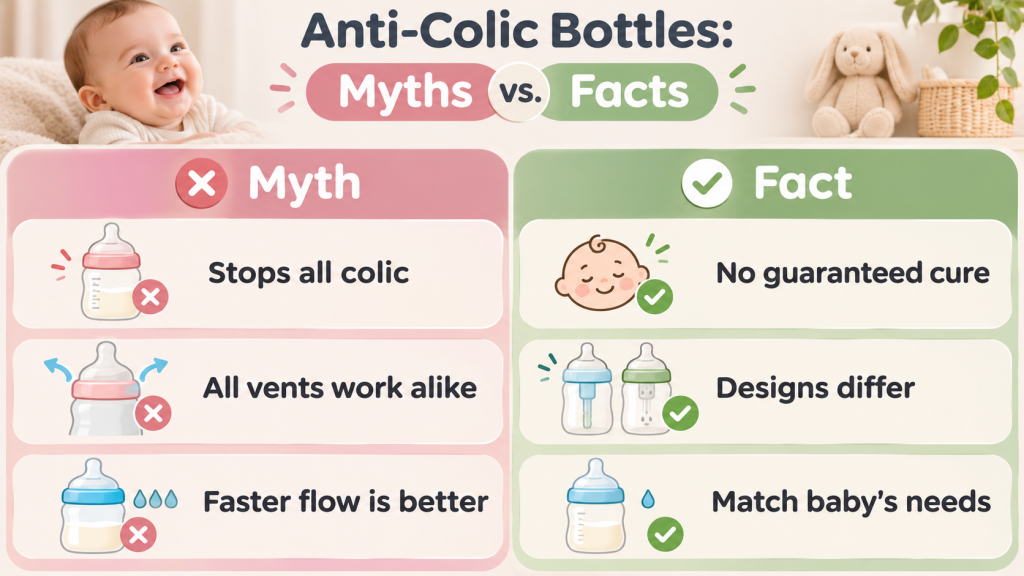
The trial compared two vent designs, not anti-colic bottles against every ordinary bottle. It cannot establish that any particular product cures colic. For parents, the practical lesson is to value comfortable feeding, appropriate flow, and correct technique over sweeping promises about stopping crying.
Frequently Asked Questions About Anti Colic Baby Bottles
Do anti-colic bottles actually stop colic?
No bottle is proven to stop all cases of infant colic. Vent systems may reduce swallowed air, which could help some babies with gas-related discomfort. True colic can occur for reasons unrelated to air intake. If crying continues for long periods, talk to your pediatrician rather than assuming another bottle will provide a cure.
Can I use an anti-colic bottle for expressed breast milk?
Yes. Most anti-colic bottles can hold expressed breast milk as well as prepared formula, provided they are used according to their instructions. Choose a nipple flow that allows comfortable feeding and follow current breast-milk handling guidance. A vented design does not change the rules for safe storage, warming, or discarding leftover milk.
How can I tell if a bottle nipple flows too quickly?
Coughing, gulping, milk running from the mouth, or repeatedly pulling away can suggest that milk is arriving too quickly. Pause the feed, check the baby’s position, and consider a slower compatible nipple. Persistent coughing or difficulty coordinating sucking and swallowing deserves assessment by a pediatrician or feeding specialist.
Can I remove the anti-colic vent as my baby grows?
It depends on the bottle. Some designs, including certain Dr. Brown’s Options+ and Philips Avent models, can be used without their removable vent, according to manufacturer instructions. Others rely on their venting assembly to function properly. Check the exact model manual rather than removing a part simply because your baby is older.
Will an anti-colic bottle help my baby sleep longer?
A calmer feed might make settling easier for a baby bothered by gas, but there is no reliable guarantee that an anti-colic bottle will lengthen sleep. Night waking is normal in young infants and has many causes. Focus on comfortable feeding and safe sleep practices rather than using bottle marketing claims to predict longer sleep stretches.
Conclusion: Choosing a Bottle That Fits Your Baby
The best anti colic baby bottles are the ones your baby can latch onto comfortably, drink from at a manageable pace, and use without frequent interruptions. Vent design matters, but nipple flow, feeding position, and careful cleaning matter just as much.
Dr. Brown’s Options+ is worth considering if you want a dedicated internal vent for early feeds. Philips Avent AirFree offers a different removable insert, while Lansinoh may appeal to families balancing breastfeeding and bottles. None guarantees an end to colic.
Start with a small trial, watch your baby’s cues, and avoid changing several feeding variables at once. If crying seems excessive or feeding remains difficult, consult a healthcare professional. Choose the simplest well-fitting bottle that supports a calm, responsive feed.