Crib Bumper Pads and Newborn Sleep Safety
We may earn a commission for purchases made using our links. Please see our disclosure to learn more.
You want your baby’s crib to feel soft, cozy, and protected. That instinct is pure love. So when you see crib bumper pads in sweet nursery photos, it makes sense to wonder, “Should I add those too?”
Here’s the gentle truth: crib bumpers may look comforting, but they are not recommended for newborn sleep. In fact, U.S. safety guidance has moved strongly away from them. In this guide, you’ll learn why crib bumper pads raise safety concerns, what experts recommend instead, and how to create a calm, beautiful, safe sleep space without filling the crib with extras.
What Are Crib Bumper Pads?
Crib bumper pads are padded fabric pieces that tie or attach around the inside edges of a crib. Parents often use them to cover the slats.
They became popular because they seemed to solve common worries:
- Baby bumping their head
- Arms or legs slipping between crib slats
- The crib looking too “empty”
- Drafts near the crib
- A nursery feeling unfinished
The problem is that newborn sleep safety works differently than adult comfort. For adults, soft bedding feels cozy. For babies, soft items in the crib can create breathing and entrapment risks.
Why Parents Consider Crib Bumper Pads
Let’s be honest: a bare crib can look a little sad at first. You spend months choosing colors, sheets, blankets, toys, and maybe a theme. Then safe sleep guidance basically says, “Great! Now remove almost everything.”
It can feel weird.
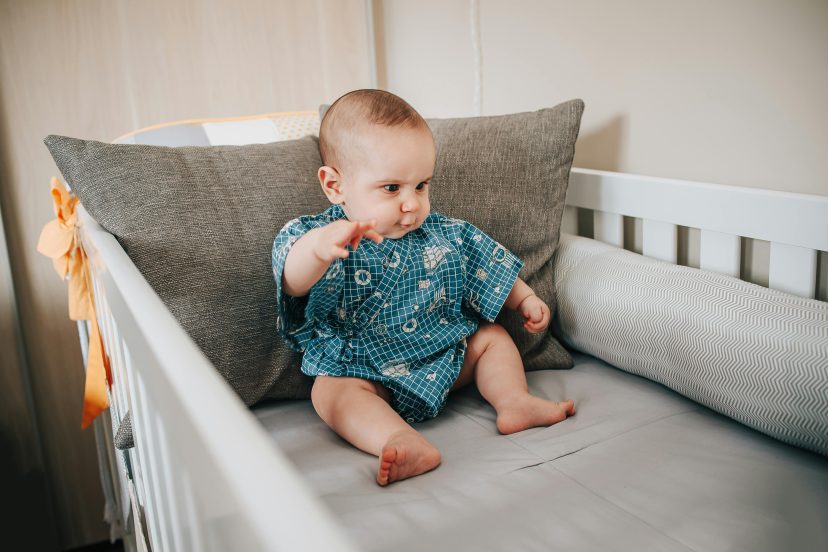
But a safe newborn crib is more like a clear runway than a decorated couch. The goal is simple: give your baby open space to breathe, move, and sleep without loose or padded items nearby.
Are Newborns Safe Using Crib Bumper Pads?
No. Crib bumper pads are not considered safe for newborn sleep.
The U.S. Consumer Product Safety Commission says that, under the Safe Sleep for Babies Act, crib bumpers are banned hazardous products in the United States as of November 12, 2022. The law makes it unlawful to sell, manufacture, distribute, or import crib bumpers covered by the Act.
The American Academy of Pediatrics also recommends keeping bumper pads, pillows, blankets, toys, and other soft items out of a baby’s sleep space because they can increase the risk of suffocation, strangulation, or entrapment.
What Experts Recommend Instead
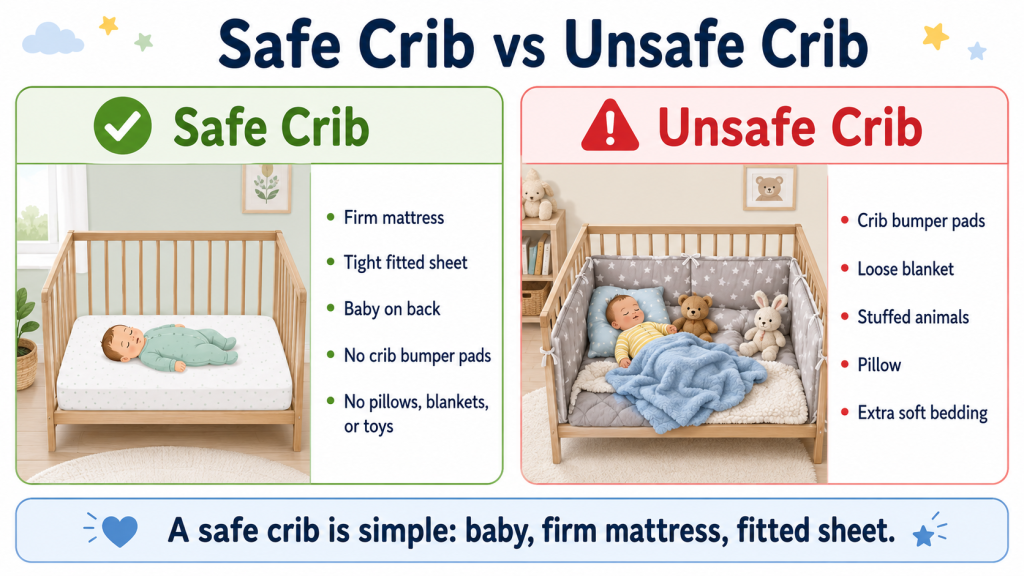
Experts recommend the simplest setup:
- Baby on their back
- Firm, flat sleep surface
- Safety-approved crib, bassinet, or play yard
- Tight fitted sheet
- No bumpers, pillows, blankets, toys, or loose bedding
The AAP’s 2022 safe sleep policy recommends a firm, non-inclined sleep surface without padded sides and avoiding soft objects and loose bedding.
Think of it like this: the safest crib is not the fluffiest crib. It is the clearest crib.
The Simple Safe Sleep Setup
A safe newborn sleep space does not need much. That is actually good news for tired parents and stretched budgets.
Use a firm crib mattress
Choose a mattress made for your crib size. It should fit snugly with no big gaps along the edges.
Add only a fitted crib sheet
A fitted sheet should hug the mattress tightly. If it bunches, slips, or pulls loose, replace it.
Keep everything else out
No loose blankets. No stuffed animals. No pillows. No crib bumper pads. No decorative cushions.
It may look plain, but plain is doing important work here.
What About Mesh Crib Liners?
This is where parents get confused. The CPSC definition of “crib bumper” under the Safe Sleep for Babies Act excludes non-padded mesh crib liners.
However, that does not mean every mesh liner is automatically a good idea for newborn sleep. The AAP still recommends keeping items that attach to crib sides out of the sleep space.
So, for a newborn, the safest and clearest choice is still: no liner, no bumper, no extra crib attachments.
Common Myths About Crib Bumper Pads
“But what if my baby hits the crib rails?”
A small bump against a crib rail is usually less concerning than soft padding near a baby’s face. Modern cribs must meet spacing standards, so the old worry about wide crib slats is less relevant when using a current, safety-approved crib.
“My baby’s legs get stuck sometimes.”
This can happen, and yes, it can scare you at 2 a.m. But babies usually fuss before they are seriously hurt. Instead of adding crib bumper pads, check that your crib meets current safety standards and speak with your pediatrician if it happens often.
“The crib looks too empty.”
Totally fair. But decorate around the crib, not inside it. Use wall art, a cozy rug, curtains placed safely away from the crib, or a cute fitted sheet.
How to Keep Baby Warm Without Bumpers
If your real worry is warmth, crib bumper pads are not the answer.
Use baby sleep clothing instead:
- Footed pajamas
- A wearable blanket
- A properly fitted swaddle for younger newborns who are not rolling
- Light layers based on room temperature
The AAP says parents can dress babies in layers or use a wearable blanket instead of loose blankets. It also suggests dressing baby in only one more layer than you would wear in the same room.
Quick check: feel your baby’s chest or back of the neck. Remove a layer if they feel overheated, flushed, or sweaty.
Building a Calmer Bedtime Routine
Safe sleep is not only about the crib. It is also about rhythm.
A predictable bedtime routine can help your baby learn, “Okay, we’re winding down now.” You might try a warm bath, soft pajamas, feeding, gentle rocking, a short lullaby, then placing baby down on their back.
For more help creating that peaceful rhythm, read this guide on building a bedtime routine for babies.
Small routines can feel ordinary, but to a baby, they are little signals of safety.
Safer Amazon Sleep Essentials Instead of Crib Bumper Pads
These are not crib bumper pads. They are safer sleep-support products that fit current safe sleep principles when used correctly.
1. HALO 100% Cotton SleepSack Swaddle
The HALO 100% Cotton SleepSack Swaddle is designed as a wearable swaddle with adjustable fasteners and a roomy sack shape. Amazon’s listing notes a 2-way zipper and a hip-friendly design.
Features:
- Adjustable swaddle wrap
- 2-way zipper
- Wearable blanket design
- Helpful for newborn startle reflex
Best for: Parents who want warmth without loose blankets.
2. Burt’s Bees Baby Beekeeper Wearable Blanket
Made entirely of organic cotton, the Burt’s Bees Baby Beekeeper Wearable Blanket is intended to take the role of loose blankets in the crib.
Features:
- Organic cotton
- Sleeveless sleep sack style
- Lightweight or medium-weight options
- Simple zipper design
Best for: Parents who prefer breathable cotton sleepwear.
3. Graco Premium Crib & Toddler Mattress
The Graco Premium Crib & Toddler Mattress is a standard crib mattress option. Its Amazon listing notes GREENGUARD Gold Certification, which screens for many chemical emissions.
Features:
- Fits standard cribs and toddler beds
- GREENGUARD Gold Certified
- Water-resistant outer cover
- Lightweight foam design
Best for: Parents setting up a safe, firm crib foundation.
4. American Baby Company Cotton Fitted Crib Sheet
The American Baby Company 100% Natural Cotton Fitted Crib Sheet is made for standard crib and toddler mattresses and has elastic for a snug fit.
Features:
- 100% cotton jersey
- Fits 28 x 52-inch crib mattresses
- Elastic edges
- Machine washable
Best for: Parents who want soft bedding while still keeping the crib simple.
5. Philips Avent Soothie Baby Pacifiers
The Philips Avent Soothie Baby Pacifiers are one-piece silicone pacifiers for babies 0–3 months. Amazon’s listing describes them as BPA-free and designed for newborns.
Features:
- One-piece silicone design
- BPA-free
- Made for 0–3 months
- Easy to clean
Best for: Parents considering a pacifier for naps and bedtime. The AAP says offering a pacifier at sleep time may help reduce SIDS risk, but breastfed babies may need to wait until breastfeeding is established.
Research-Backed Safety Insights
Crib safety can feel confusing because so many nursery photos still show soft, padded, picture-perfect cribs. But the research and expert guidance are very clear: a newborn’s sleep space should be firm, flat, and free of soft extras.
A major study published in The Journal of Pediatrics found that crib bumpers were linked to 48 infant suffocation deaths, and 67% of those deaths involved the bumper alone, not extra clutter in the crib. That makes the concern hard to brush off as “just another parenting rule.” You can read the findings in this review of crib bumper-related infant deaths and injuries.
The American Academy of Pediatrics also recommends a firm, flat sleep surface with a fitted sheet only—no blankets, pillows, stuffed toys, or bumper pads. Their parent-friendly guide explains that these items can block airflow if a baby rolls into them. For a practical safety breakdown, see the AAP’s guide to keeping your sleeping baby safe.
Quick Crib Safety Checklist
Before naps and bedtime, do this quick scan:
- Baby is on their back
- Mattress is firm and flat
- Sheet fits tightly
- No crib bumper pads
- No pillows or blankets
- No stuffed toys
- No cords near the crib
- Room feels comfortable, not hot
- Baby is dressed in safe sleep clothing
It takes ten seconds, but it can bring real peace of mind.
When to Talk to Your Pediatrician
Talk to your pediatrician if:
- Your baby often gets limbs stuck in crib slats
- Your baby rolls early
- Your newborn spits up often and you worry about back sleeping
- Your baby was premature
- You feel unsure about swaddling
- You received crib bumper pads as a gift and do not know what to use instead
No shame. Parenting comes with a million tiny decisions, and nobody hands you a magic manual at discharge.
FAQs About Crib Bumper Pads
Are crib bumper pads illegal in the United States?
Many crib bumpers are banned hazardous products under the U.S. Safe Sleep for Babies Act. Since November 12, 2022, selling, manufacturing, distributing, or importing covered crib bumpers in the U.S. has been unlawful.
Can I use crib bumper pads if my baby is supervised?
No. Crib bumper pads are not recommended for newborn sleep, even if you check often. Sleep risks can happen quietly and quickly, so the safer choice is a clear crib every time.
What can I use in place of bumper pads for cribs?
If your infant needs warmth, use a wearable blanket, a tight-fitting sheet, and a firm mattress. Decorate the nursery outside the crib with wall art, safe lighting, rugs, or themed sheets.
Are padded crib bumpers safer than mesh crib liners?
Non-padded mesh liners are treated differently under the CPSC definition, but the AAP still recommends avoiding crib-side attachments and keeping the baby’s sleep space clear. For newborns, skip liners altogether.
How do I make a newborn crib cozy without bumpers?
Choose a soft fitted sheet, dress your baby in comfortable sleepwear, use a wearable blanket when needed, and build a soothing bedtime routine. Cozy does not have to mean padded.
Final Thoughts
Crib bumper pads may look sweet, but newborn safety asks us to think differently. A bare crib is not cold or careless. It is intentional. It gives your baby space to breathe, wiggle, stretch, and sleep as safely as possible.
So keep the crib simple: firm mattress, fitted sheet, baby on their back, and no extras. Then pour your creativity into the rest of the nursery. You can still make the room beautiful, warm, and full of love—just keep the sleep space clear.