The Do’s & Don’ts Of Crib Placement In Nursery
We may earn a commission for purchases made using our links. Please see our disclosure to learn more.
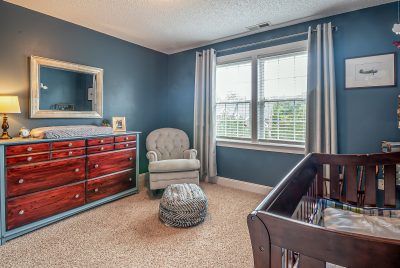
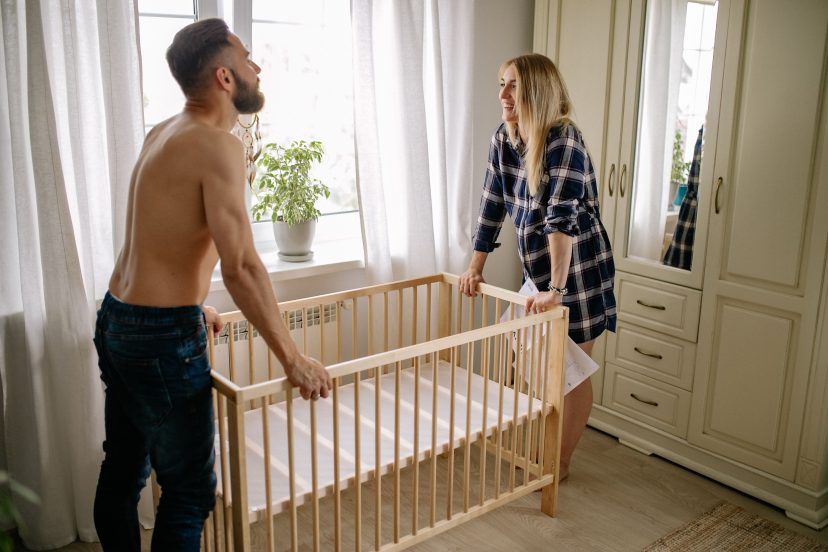
A nursery can look calm and beautifully organized while still hiding a few awkward placement problems. A crib beside a sunny window, beneath a floating shelf, or within reach of a monitor cord may seem convenient now, yet babies become mobile surprisingly quickly. Good Crib Placement In Nursery planning is really about creating a sleep zone that stays practical as your baby grows.
This guide walks you through where to place the crib, what to keep away from it, how to handle small rooms and room-sharing, and which nursery products can support a smarter layout. You’ll also see what current pediatric and consumer-safety guidance actually says, so you can make decisions based on more than decorating advice.
Why Crib Placement In Nursery Matters
The crib’s position affects what your baby can eventually reach, how easily you can respond at night, and whether cords, windows, heat, or direct airflow create problems.
Treat Crib Placement In Nursery as a safety decision first and a decorating decision second. A less photogenic wall is often the better choice if it creates a clearer sleep zone.
The Best Place for a Crib in the Room
A simple wall with open space is often the easiest starting point, and you should be able to approach the crib comfortably at night.
Before committing, imagine a standing baby in that spot. Can little hands reach a curtain, lamp cable, shelf, frame, or tabletop? If yes, rethink the Crib Placement In Nursery before those objects become reachable.
Keep the Crib Away From Windows
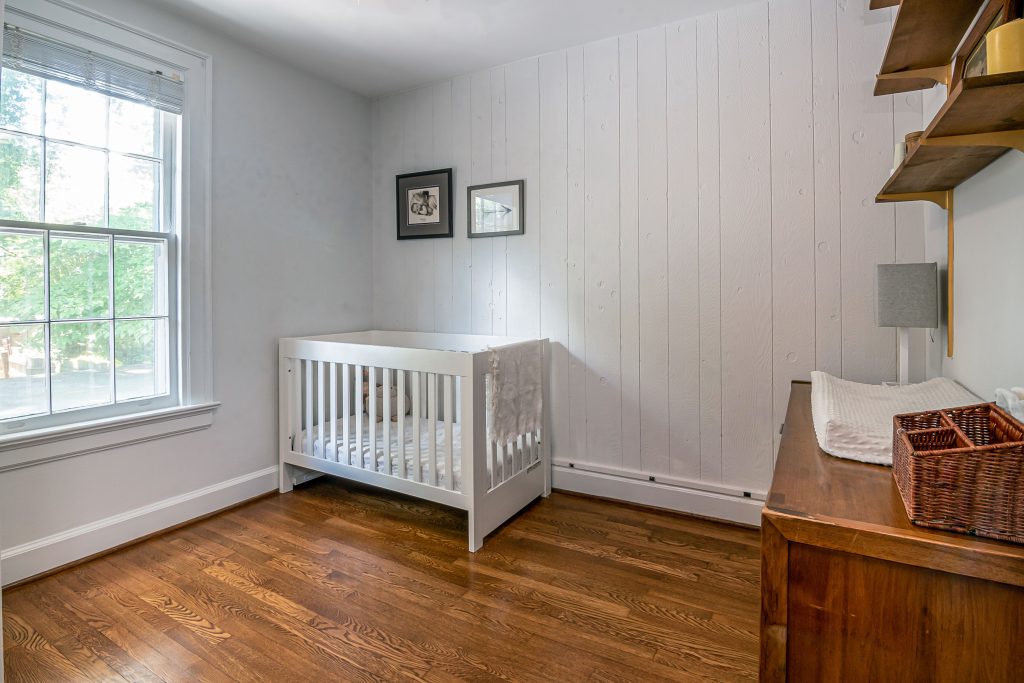
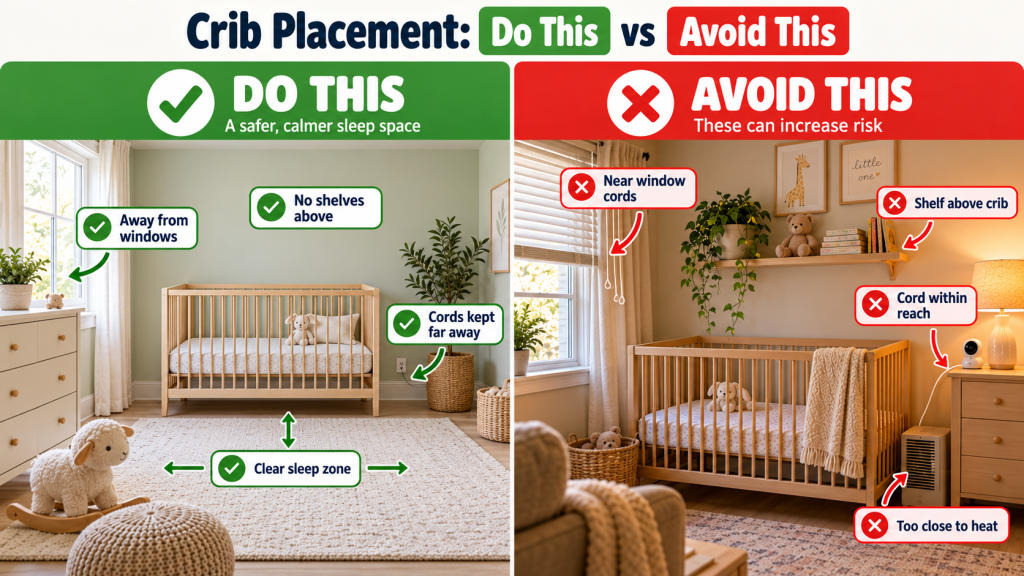
Windows can introduce several concerns around a baby’s sleep space, including blind cords, curtain fabric, opening hardware, and objects resting on the sill. The U.S. Consumer Product Safety Commission recommends moving cribs, beds, and other furniture away from window-covering cords, preferably to another wall.
If daylight is one reason you are considering placing the crib close to a window, blackout curtains for nursery can help reduce unwanted light while allowing you to position the crib in a more suitable part of the room. Keep the curtains, cords, tiebacks, and other window hardware completely beyond your baby’s reach.
Put Distance Between the Crib and Cords, Outlets, and Electronics
Monitor, lamp, charger, humidifier, and sound-machine cords can turn a convenient corner into a poor layout. CPSC guidance says baby-monitor cords and monitor parts should stay at least three feet from any part of the crib.
Plan outlets before placing furniture, route cables beyond a standing baby’s reach, and never drape a cord over a crib rail. Outlet covers can help, but they do not replace distance.
Skip Shelves, Frames, and Heavy Decor Above the Crib
Keep the space above the crib free of heavy or breakable items. HealthyChildren guidance advises against heavy wall decorations over the sleep area and recommends keeping the crib away from nearby reachable surfaces.
Put shelves, large frames, mirrors, and storage on another wall instead.
Plan Around Heating, Cooling, and Airflow
Avoid positioning the crib beside a radiator, space heater, fireplace, or strong HVAC stream. The AAP advises avoiding overheating during infant sleep.
There is no universal clearance for every vent or heater. Follow the manufacturer’s instructions, keep heating devices out of reach, and move the crib if that area feels noticeably warmer or draftier.
Think Ahead to the Pulling-Up and Toddler Stage
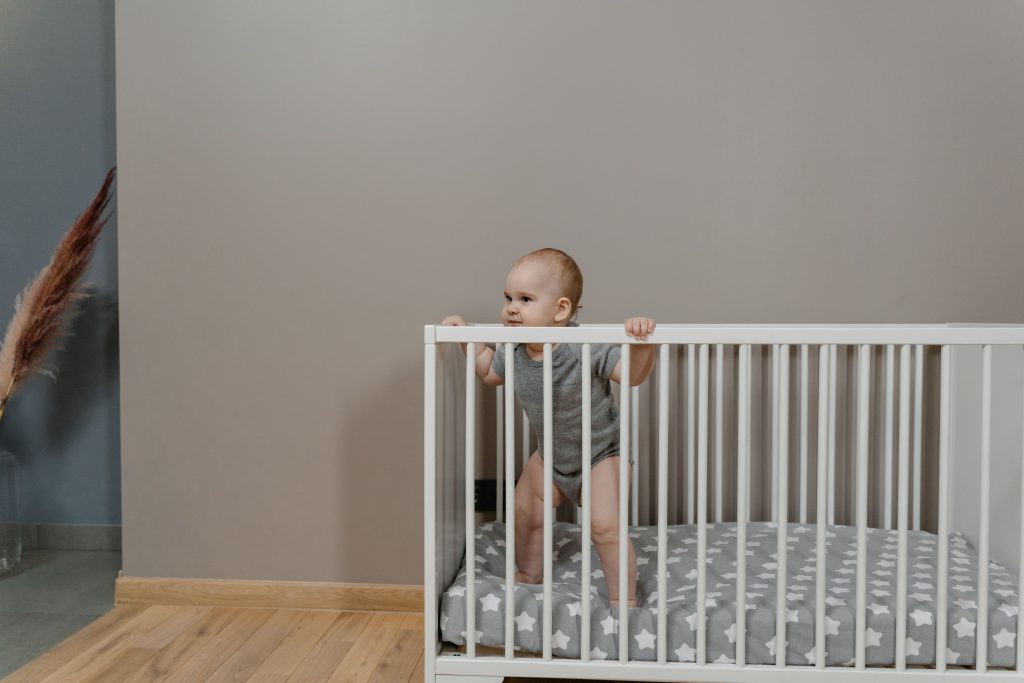
Newborns stay put; older babies reach, pull, and grab. For better Crib Placement In Nursery, scan the area at crib-rail height and move lamps, curtain panels, furniture hardware, plants, mobiles, baskets, and cables beyond reach.
Recheck the setup whenever you lower the mattress, your baby starts pulling to stand, or you add furniture.
Crib Placement In Nursery for Small Rooms
A compact nursery does not require crowding the crib. Prioritize one clear crib wall, then make the rest of the room work harder with a narrow dresser, closed storage, or wall storage placed elsewhere.
Measure door swing, closet access, and walking space first. If two layouts fit, choose the Crib Placement In Nursery with fewer windows, cords, and reachable objects, even if it is less symmetrical.
Crib Placement In Nursery When You’re Room-Sharing
For young infants, the nursery may initially be part of your bedroom. The AAP recommends room-sharing without bed-sharing, with the infant on a separate sleep surface designed for babies, ideally for at least the first six months.
Keep the crib close enough for feeding and checking while keeping adult bedding, lamps, chargers, and bedside cords away. When you move it later, reassess the new room from scratch.
Research-Backed Guidance on Safe Crib Placement
Research on Crib Placement In Nursery focuses more on the overall sleep environment than on one exact spot in the room. The American Academy of Pediatrics’ safe sleep guidance recommends a firm, flat infant sleep surface and room-sharing without bed-sharing for at least the first six months.
Placement around windows and cords also matters. The U.S. Consumer Product Safety Commission recommends keeping cribs away from window-covering cords and advises keeping baby-monitor cords and components at least three feet from the crib.
The AAP also advises avoiding overheating during sleep. In practical terms, choose a crib location away from reachable cords, windows, heavy overhead objects, and direct heat sources. Evidence does not identify one universally perfect crib position, so the safest layout is the one that removes the most avoidable hazards.
Recommended Products for Crib Placement In Nursery
These products support the room around the crib rather than adding anything to the sleep surface. Each addresses a different Crib Placement In Nursery need.
| Product | Best for | Useful feature |
| VTech VM819 Baby Monitor | Cord-conscious monitoring | Dedicated parent unit; no Wi-Fi |
| NICETOWN Blackout Curtains | Bright rooms | Light-blocking curtain panels |
| Safety 1st Outlet Cover with Cord Shortener | Managing a used outlet | Encloses plug and stores excess cord |
| Govee H5100 | Tracking room conditions | Bluetooth temperature/humidity readings |
| Yogasleep Hushh | Small rooms and travel | Compact rechargeable sound machine |
VTech Baby Monitor No WiFi – 19Hr Video Battery, 1000ft Range, Night Vision, Two-Way Talk, Temperature Sensor, Sound-Activated Screen, Lullabies | VM819
Best for: Parents who want a dedicated video monitor without Wi-Fi.
The VM819 uses a dedicated parent unit and encrypted 2.4 GHz FHSS transmission, with infrared night vision, two-way talk, sound activation, and a nursery temperature sensor. Its practical strength is keeping monitoring separate from your phone. The camera still needs thoughtful placement: keep the unit and cord at least three feet from the crib.
NICETOWN White 100% Blackout Curtains 84 inch Long for Bedroom 2 Pieces | Thermal Insulated, Noise Reducing, Heat Blocking, Cold & Full Light Blocking Grommet Window Drapes for Living Room & Nursery
Best for: Bright nurseries where the crib should stay away from the window.
These two 84-inch curtain panels are designed to block incoming light, making them useful when you want a darker room without shifting the crib toward the window. They suit standard-height windows, but curtain fabric and hardware must remain completely beyond a child’s reach, and the rod should be securely installed.
Safety 1st Outlet Cover with Cord Shortener for Baby Proofing
Best for: Nurseries where one necessary device uses a reachable wall outlet.
This cover encloses an outlet and provides space to shorten excess cord, helping reduce loose cable near floor level. It can be useful for a lamp or other room device located well away from the crib. However, it is not permission to place corded equipment beside the crib; physical distance remains the better first control.
Govee Hygrometer Thermometer H5100, Mini Bluetooth Temperature Humidity Sensor with APP Notification Alert, 2 Years Free Data Storage Export, 230 Feet Connecting Range
Best for: Parents who want simple temperature and humidity trends.
The compact H5100 tracks temperature and humidity and can send app alerts when your preset ranges are exceeded. Because the sensor itself is small and wireless in use, it is easier to position away from the crib than many corded displays. Bluetooth range can vary with walls and interference, and it is not a medical monitor.
Yogasleep Hushh Portable White Noise Sound Machine for Baby, 3 Soothing Natural Sounds with Volume Control, Compact Size, Noise Canceling for Sleep Aid, Office Privacy, & Meditation, Registry Gift
Best for: Small nurseries, shared rooms, and travel.
The Hushh is a compact rechargeable sound machine with three sound options and volume control, so it can run without a charging cable stretched toward the crib. That makes placement more flexible in tight rooms. Keep the device itself out of reach, charge it away from the sleep space, and use moderate volume rather than positioning it beside the baby.
A Simple Crib Placement Checklist
Before you finish the room, check the crib from a mobile baby’s point of view:
- Use a firm, flat, safety-compliant crib and mattress setup.
- Prefer a wall away from windows and window cords.
- Keep monitor cords and parts at least three feet away.
- Keep heavy decor and reachable objects away from the crib.
- Avoid heaters and strong direct airflow.
- Leave a clear route for nighttime care.
- Recheck Crib Placement In Nursery as your baby becomes more mobile.
Common Crib Placement Mistakes to Avoid
The biggest mistake is designing around appearance first. Avoid cribs under windows, monitors on rails, power cables behind the crib, and dressers within reach.
Also avoid trading one problem for another. Moving the crib away from a window does not help if the new spot is beneath a heavy shelf or beside a heater.
Frequently Asked Questions About Crib Placement In Nursery
How far should a crib be from a window?
There is no universal crib-to-window distance. CPSC recommends moving cribs and furniture away from windows and window-covering cords, preferably to another wall. If that is impossible, keep cords, curtain fabric, hardware, and reachable window components well beyond your child’s reach rather than relying on a small measured gap.
Can a crib go against a wall?
Yes, a crib can generally sit by a wall when used according to the manufacturer’s instructions and the location introduces no other hazards. Check nearby outlets, cables, curtains, shelves, frames, and furniture. For Crib Placement In Nursery, what your child can reach around that wall matters more than the wall itself.
How far should a baby monitor be from the crib?
CPSC says baby-monitor cords and monitor parts should stay at least three feet from any part of the crib. Place the camera on a secure wall, shelf, or furniture surface farther away if needed. Never attach a corded monitor to the crib rail or route its cable along, beneath, or through the crib.
Can a crib be near an air vent or radiator?
Avoid placing the crib beside a radiator, space heater, fireplace, or strong stream of heated or cooled air. The AAP advises avoiding overheating during infant sleep. Since equipment varies, follow the manufacturer’s clearance requirements. If the crib area feels noticeably warmer or draftier than the rest of the room, choose another spot.
Where should I put a crib in a small nursery?
Start with the safest available wall, not the most symmetrical one. Keep the crib away from windows, cords, heavy overhead items, and reachable furniture, then fit storage around it. In a tight nursery, use a compact dresser, closed storage, and vertical organization on another wall so the crib area stays clear.
Final Recommendation for Crib Placement In Nursery
Good Crib Placement In Nursery starts with one priority: create a clear sleep zone before you decide where the decorative pieces go. Favor a wall away from windows and cords, keep monitors and electronics at a sensible distance, avoid heavy objects overhead, and check for direct heat or airflow. If your baby is still in the first six months, room-sharing on a separate infant sleep surface also deserves serious consideration under current AAP guidance.
Products such as the VTech VM819 can support monitoring from a distance, while blackout curtains can help manage light without putting the crib beside the window. Whatever your room size or style, choose the layout with the fewest reachable hazards—and reassess it as your baby becomes more mobile.