Best Blankets and Swaddles: A Safe, Practical Buying Guide
We may earn a commission for purchases made using our links. Please see our disclosure to learn more.
Choosing baby sleepwear sounds simple until you meet muslin squares, zip-up sacks, wrap wings, TOG ratings, and size charts. Suddenly, bedtime feels like a small engineering project. The right blankets and swaddles should simplify your routine while keeping your baby comfortable.
This guide explains each style, the features that matter, and how to avoid products that do not suit your baby’s stage. You will also find options for different budgets, sleep positions, climates, and transition needs. Preparing for a newborn or replacing an outgrown swaddle can feel personal. Most importantly, every recommendation follows current safe-sleep guidance.
Affiliate disclosure: This article may contain affiliate links. We may earn a commission from qualifying purchases at no extra cost to you.
Blankets and Swaddles: What Is the Difference?
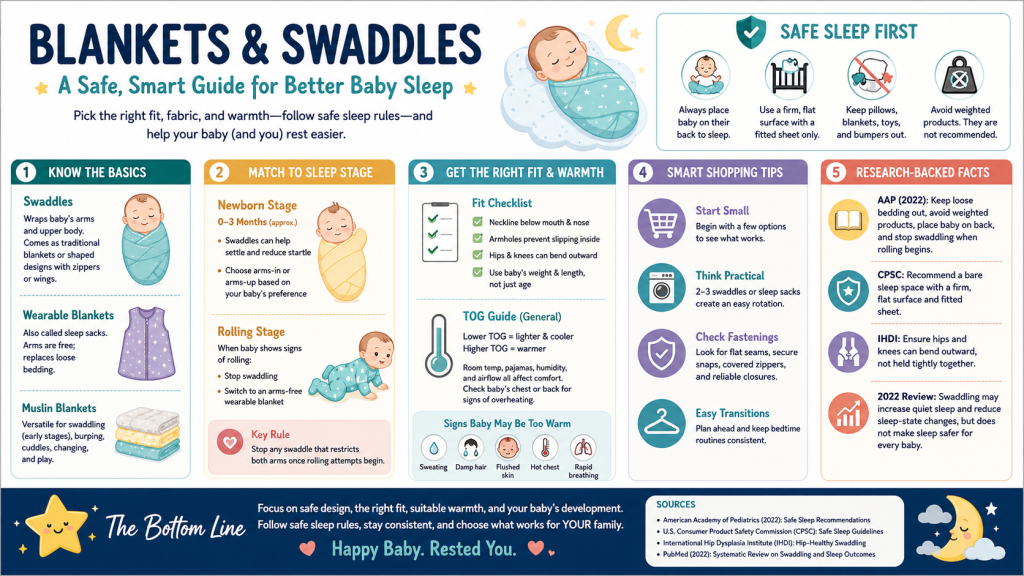
A swaddle wraps a young baby around the torso and arms while leaving room for bent hips and knees. Traditional versions use a square cloth; shaped styles use zippers or wrap wings.
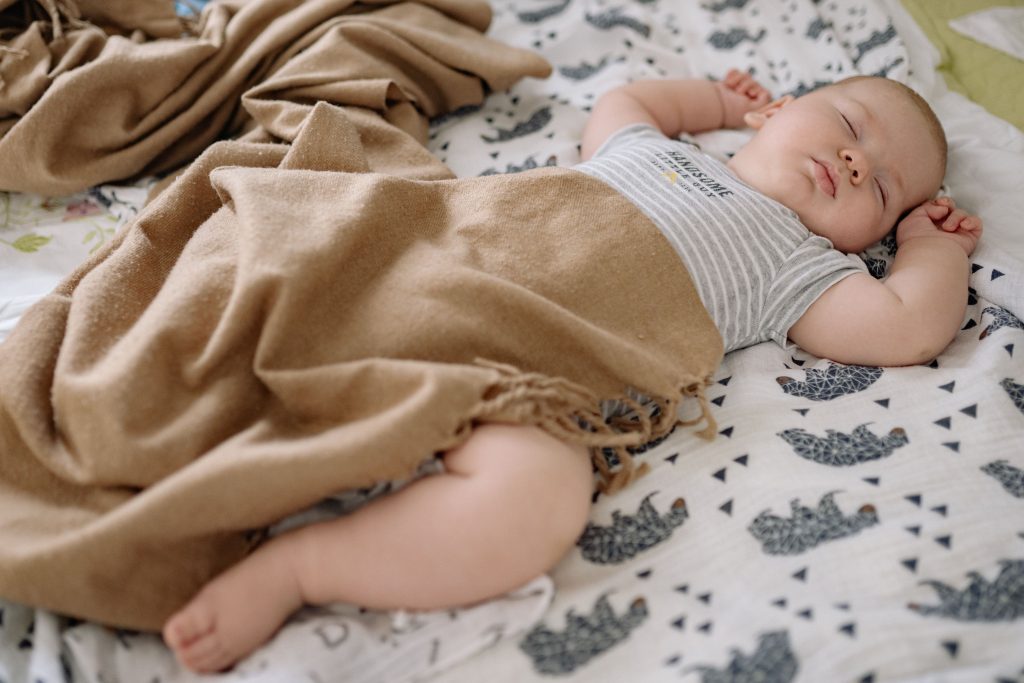
A wearable blanket, or sleep sack, leaves the arms free and replaces bedding. Muslin squares remain useful for supervised cuddles, burping, floor time, and early swaddling. However, loose blankets do not belong in an infant sleep space.
Put Safe Sleep Ahead of Shopping Hype
Place your baby on their back on a firm, flat infant sleep surface with only a fitted sheet. Keep loose blankets, pillows, toys, bumpers, and positioners out.
Avoid weighted blankets and swaddles, even when marketing promises deeper rest. Current guidance does not support them for infants. Swaddling may soothe some babies, but it does not reduce sudden infant death syndrome risk.
Match the Style to Your Baby’s Sleep Stage
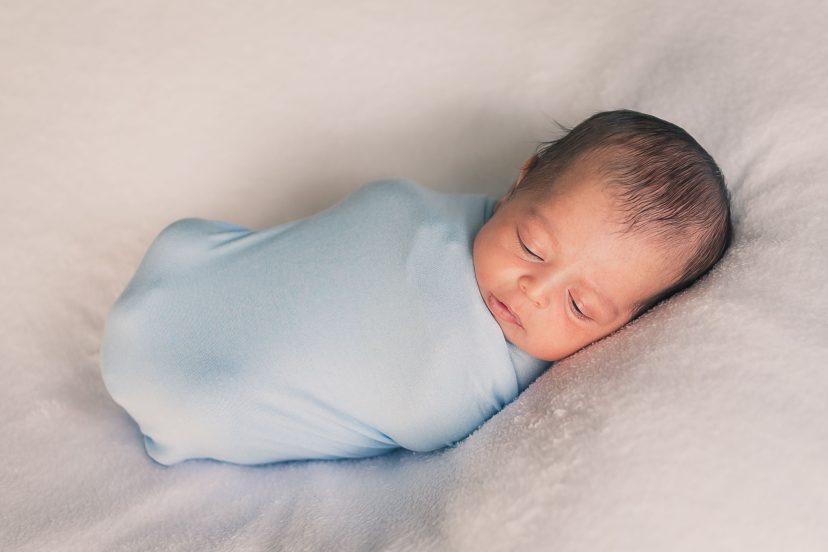
Newborns who settle with their arms close may suit a traditional or winged swaddle. Babies who bring their hands toward their face may prefer an arms-up design. Tiny escape artists often do better in a shaped product than blanket origami at 2 a.m.
Once your baby tries to roll, stop using anything that restricts the arms. Move to an arms-free wearable blanket. Developmental signs matter more than package age.
Choose Fabrics for Blankets and Swaddles
Cotton and cotton muslin feel soft, wash easily, and suit most homes. Stretch cotton blends create a closer fit in shaped swaddles, while merino wool can help manage moisture and temperature.
Judge the whole garment rather than one fiber. Thickness, layers, pajamas, humidity, and room temperature affect comfort. Fleece may suit a cool room but feel too warm in tropical homes. “Breathable” fabric does not make loose crib bedding safe.
Understand TOG Ratings for Blankets and Swaddles
TOG indicates insulation: lower numbers are generally lighter, while higher numbers provide more warmth. Yet TOG is not a universal bedtime formula. Airflow, humidity, pajamas, and individual comfort also matter.
Follow the garment’s dressing guide, then check your baby’s chest or upper back. Sweating, damp hair, flushed skin, or a hot chest can signal overheating. Choose lighter layers when uncertain, and seek medical guidance for premature babies or children with health concerns.
Fit Matters More Than the Age on the Label
The neckline must stay below the mouth and nose, while armholes prevent slipping inside. Meanwhile, the hip area needs room for the legs to bend and move outward.
Compare your baby’s weight and length with the brand chart. Do not size up for extra wear; loose fabric can bunch toward the face. Recheck fit after washing and during growth spurts.

Choose Fastenings That Work at 2 A.M.
Two-way or inverted zippers simplify diaper changes by opening from below. Hook-and-loop wings offer adjustability but may sound loud, collect lint, or catch on laundry.
Look for chin guards, flat seams, and closures curious fingers cannot reach. Fasten every component exactly as directed. Partly secured wings and improvised folds can create loose fabric, which defeats the purpose of a shaped swaddle.
Transition Beyond Blankets and Swaddles Before Rolling
Do not wait for a dramatic midnight roll. As that stage approaches, learn how to transition from a swaddle to a sleep sack or use a model that converts into an arms-free wearable blanket.
Keep bedtime familiar: the same feed, song, dim lights, and sleep space. Some babies adjust quickly; others strongly object. Once rolling signs appear, do not replace one restrictive product with another. Choose a correctly fitted, non-weighted sleep sack instead.
Research-Backed Guidance on Blankets and Swaddles
The American Academy of Pediatrics’ 2022 safe-sleep recommendations advise keeping loose bedding out of infant sleep spaces, using wearable blankets instead, avoiding weighted products, placing swaddled babies on their backs, and ending swaddling when rolling attempts begin. The U.S. Consumer Product Safety Commission similarly recommends a bare sleep space with only a fitted sheet.
The International Hip Dysplasia Institute advises leaving room for the hips and knees to flex and move outward instead of wrapping the legs straight.
A 2022 systematic review of six eligible studies found that swaddling may increase quiet sleep and reduce sleep-state changes. However, varied methods and limited evidence mean it does not improve every baby’s sleep or make sleep safer.
Recommended Blankets and Swaddles for Different Needs
These blankets and swaddles cover distinct situations rather than repeating one design six times.
| Product | Best suited to | Key design |
| HALO SleepSack Swaddle | Flexible positioning | Three arm configurations |
| Love to Dream Swaddle Up | Arms-up sleepers | Zippered wing shape |
| SwaddleMe Original | Budget-friendly rotation | Adjustable wrap wings |
| aden + anais Essentials | Multipurpose muslin use | Four cotton squares |
| Burt’s Bees Baby Beekeeper | Arms-free daily sleep | Organic cotton sack |
| Woolino Ultimate | Long-term premium use | Merino-lined sleep bag |
HALO 100% Cotton SleepSack Swaddle, 3-Way Adjustable Wearable Blanket, TOG 1.5, Baby Blue, Newborn, 0–3 Months
Best for: Parents who want a swaddle that supports gradual change
This cotton wearable swaddle allows arms in, hands near the face, or arms out, which helps as preferences change. Adjustable wings and an inverted zipper support a close wrap and easier diaper access. The 1.5 TOG construction suits moderate conditions, although warmer rooms may call for a lighter option.
Love To Dream Swaddle UP Original 1.0 TOG, Gray, Small, 7–13 Pounds
Best for: Newborns who naturally sleep with their arms raised
The fitted wings hold the arms upward while allowing access to the mouth through the fabric. A dual zipper simplifies diaper changes, and the cotton-elastane blend adds stretch. However, this Original model is less adaptable than the brand’s transition version because its wings do not detach.
SwaddleMe by Ingenuity Original Swaddle, 100% Cotton, 0–3 Months, 1.0 TOG, 3-Pack, Pink Polka Whale
Best for: Families seeking several affordable newborn wraps
This three-pack uses adjustable hook-and-loop wings, so you do not need to master a large blanket fold. The small size is intended for young babies within its listed range. Strong fasteners help contain active arms, but they may catch on other laundry and usually require wider opening for diaper changes.
aden + anais Essentials Muslin Swaddle Blankets, 100% Cotton, 4-Pack, Tanzania
Best for: Parents who want versatile, lightweight cloths
These cotton muslin squares can serve as early swaddles, supervised cuddle blankets, burp cloths, changing covers, or tummy-time layers. The four-pack is handy when laundry piles up. Their flexibility is the main appeal, but safe wrapping takes practice, and no loose blanket should remain in the sleep space.
Burt’s Bees Baby Infant Wearable Blanket, Organic Cotton Beekeeper, 0.5 or 1.5 TOG
Best for: Babies ready for arms-free sleep
The sleeveless Beekeeper uses organic cotton and comes in different thermal weights. It offers a simple alternative to loose crib bedding once the arms need freedom. Select the exact size and TOG for your room, since an oversized garment can leave too much space around the neck or armholes.
Woolino Ultimate Baby Sleep Sack, 4 Season Merino Wool, Organic Cotton Outer, 2–24 Months, Night Sky
Best for: Families prioritizing longevity and natural fibers
Designed for approximately 2 to 24 months, this premium sleep bag combines a merino wool lining with an organic cotton outer and adjustable features for a broad size range. It may reduce the need for multiple seasonal sacks, although the upfront cost is higher and the care instructions require attention.
How Many Do You Actually Need?
Three swaddles or sacks create a practical rotation: one in use, one clean, and one awaiting the inevitable spit-up surprise. Some families may prefer four or five.
Avoid buying many pieces in one newborn size before learning which arm position and fastening style your baby accepts. Muslin blankets remain useful outside the crib, while wearable blankets should be bought gradually so you can confirm the fit and warmth before duplicating them.
Wash Blankets and Swaddles Without Ruining Them
Follow the care label because heat can shrink cotton, affect wool, and damage elastane or fasteners. Close fasteners before washing.
Inspect blankets and swaddles after washing. Retire anything with stretched neck openings, broken snaps, damaged zippers, weak fasteners, unraveling seams, or fabric that bunches near the face. Keep a clean backup, but never store extras inside the crib.
Blankets and Swaddles Buying Mistakes to Avoid
The biggest mistake is choosing by age alone. Weight, length, fit, room temperature, and rolling development give a clearer answer. Do not treat “breathable” or “temperature regulating” as permission to ignore layering.
Do not buy weighted products, oversized sacks, or swaddles that hold the legs straight. Also, resist stocking one style before birth. A small trial mix—arms-down, arms-up, and muslin—shows what works without filling a drawer with unused sleep burritos.
Frequently Asked Questions About Blankets and Swaddles
Are blankets and swaddles safe for newborn sleep?
A properly used, non-weighted swaddle can suit a newborn who sleeps on their back and is not trying to roll. Loose blankets should stay out of the crib, bassinet, or play yard. The swaddle must remain clear of the face, fit securely around the chest, and allow generous hip and knee movement.
When should I stop swaddling my baby?
Stop as soon as your baby shows signs of attempting to roll, which may happen earlier than expected. Do not wait for a specific birthday or weight. Move to a correctly fitted, arms-free wearable blanket, and continue placing your baby on their back at the start of every sleep.
Is an arms-up swaddle better than an arms-down swaddle?
Neither position is universally better. Some babies settle with their hands near their face, while others prefer their arms closer to the torso. Choose a secure, non-weighted design that fits properly and leaves the hips mobile. Regardless of arm position, stop restrictive swaddling when rolling attempts begin.
How can I tell whether my baby is too warm?
Feel the chest or upper back rather than relying on cool hands or feet. Sweating, damp hair, flushed skin, rapid breathing, or a hot chest may indicate overheating. Adjust pajamas and the garment’s thermal weight to the room, following the product-specific dressing guide instead of piling on heavy layers.
Can I use a muslin blanket after my baby starts rolling?
Yes, but not as a restrictive swaddle and never loose in an infant sleep space. Muslin remains useful for supervised cuddling, burping, floor play, or as a changing cover. For sleep after rolling begins, choose an arms-free wearable blanket that cannot move over the face.
Final Recommendation: Choose Blankets and Swaddles with Confidence
The best blankets and swaddles fit your baby’s body, sleep preference, development, and room—not an idealized nursery photo. For flexible newborn use, the HALO SleepSack Swaddle provides several arm configurations. Babies who favor hands-up sleep may prefer the Love to Dream Swaddle Up. When rolling approaches, switch promptly to an arms-free option such as the Burt’s Bees Baby Beekeeper.
Whichever style you choose, keep the sleep surface bare, avoid added weight, allow free hip movement, and recheck fit after growth spurts. Start with a small rotation rather than a giant bundle. Your baby may reject the product everyone else loves, and that is normal; the safest workable routine is the one that fits your actual child and home.